

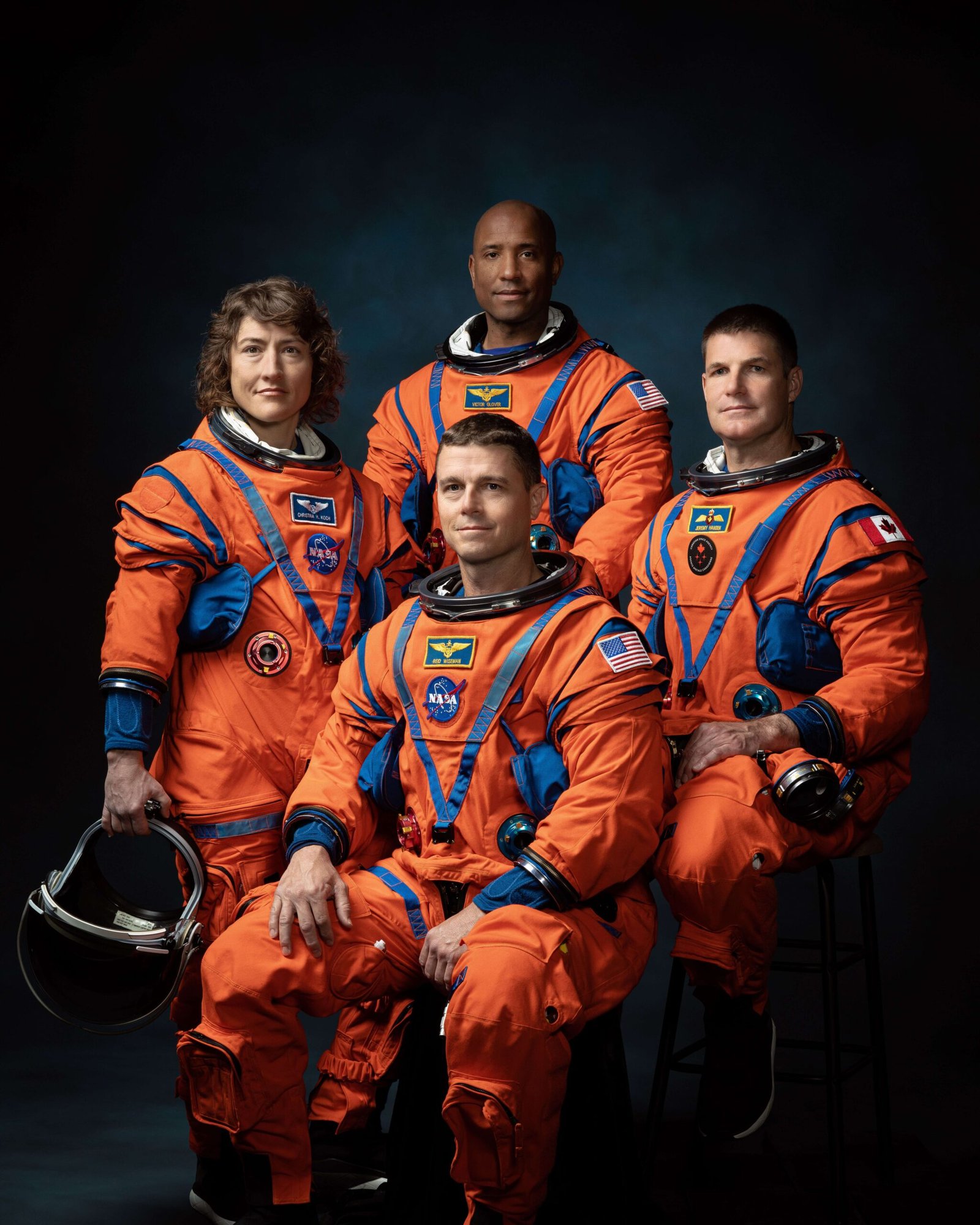
A Flawless Splashdown Seals Historic Journey (Image Credits: Upload.wikimedia.org)
The first crew to orbit the Moon in more than five decades has safely returned to Earth, concluding NASA’s Artemis II test flight with precision and poise. Aboard the U.S. Navy’s amphibious transport dock USS John P. Murtha in the Pacific Ocean, astronauts Reid Wiseman, Christina Koch, Victor Glover, and Jeremy Hansen gathered for a group photo that captured their relief and exhilaration. This recovery marked the culmination of a 10-day mission that pushed the boundaries of human spaceflight.[1][2]
A Flawless Splashdown Seals Historic Journey
The Orion spacecraft, dubbed Integrity by the crew, pierced Earth’s atmosphere at Mach 33 before splashing down off California’s coast on April 10, 2026. Navy divers and recovery teams sprang into action, swiftly extracting all four astronauts from the capsule in a textbook operation.[3][4] Within minutes, helicopters airlifted the team to the waiting USS John P. Murtha, where medical checks confirmed their excellent condition.
Cheers erupted across the ship’s deck as the astronauts emerged, waving to the assembled sailors. This seamless handover highlighted years of joint training between NASA and the Navy, ensuring no detail was overlooked. The mission surpassed Apollo 13’s duration records for crewed lunar flights, proving the SLS rocket and Orion spacecraft’s reliability.[5]
Navy Sailors: Unsung Heroes of the Recovery
Positioned strategically in the Pacific, the USS John P. Murtha served as the primary recovery vessel, equipped with specialized gear for astronaut extraction and spacecraft retrieval. Sailors aboard the ship executed a complex ballet of divers, swimmers, and helicopters to secure the Orion capsule and its crew.[6] Their preparation paid off handsomely, transitioning the astronauts from ocean to deck without incident.
Overnight, the crew remained on the Murtha for initial debriefs and health assessments in the onboard medical facility. The ship later sailed triumphantly to Naval Base San Diego, playing Elton John’s “Rocket Man” upon arrival to the delight of onlookers.[7] This collaboration underscored the Navy’s critical role in modern space missions, bridging sea and space in unprecedented ways.
Spotlight on the Trailblazing Artemis II Team
Commander Reid Wiseman led the charge, drawing on his extensive experience to guide the crew through the 10-day odyssey. Pilot Victor Glover handled the spacecraft’s maneuvers with expert precision, while mission specialist Christina Koch contributed her record-breaking stamina from prior long-duration flights. Canadian Space Agency astronaut Jeremy Hansen rounded out the international quartet, symbolizing global partnership in exploration.[8]
The team’s chemistry shone through in post-mission photos, where broad smiles reflected their shared accomplishment. Here are key highlights of their roles:
- Reid Wiseman: Mission commander, oversaw all operations.
- Victor Glover: Pilot, managed Orion’s flight path around the Moon.
- Christina Koch: Mission specialist, conducted science experiments.
- Jeremy Hansen: Mission specialist, represented CSA in lunar observations.
Paving the Way for Future Moon Missions
Artemis II validated critical systems for upcoming endeavors, including the Artemis III lunar landing targeted for later in the decade. Data from the flyby will refine procedures for deeper space travel, from life support to re-entry dynamics. NASA officials hailed the mission as a resounding success, setting the stage for sustained lunar presence.[5]
With the crew now stateside, focus shifts to analysis and public engagement. Their journey reignited global wonder about space, reminding humanity of our reach beyond the horizon.
Key Takeaways:
- Splashdown achieved on April 10, 2026, with all crew healthy.
- USS John P. Murtha enabled rapid, safe recovery in Pacific waters.
- Mission broke records, bolstering Artemis program’s momentum.
As NASA eyes the Moon’s south pole next, the Artemis II feat stands as a beacon of progress. What does this return mean for the future of space exploration? Share your thoughts in the comments.