

Most objects that pass through our solar system are easy to categorize. They follow predictable paths, behave like the rocks and ice balls we’ve cataloged for centuries, and carry no real surprises. ʻOumuamua was none of those things.
Formally designated 1I/2017 U1, it remains the first confirmed interstellar object ever detected passing through the solar system. It was discovered by Robert Weryk using the Pan-STARRS telescope at Haleakalā Observatory, Hawaii, on October 19, 2017, approximately 40 days after it had already passed its closest point to the Sun. By the time the world was paying attention, it was already leaving. That timing alone made a thorough study almost impossible, and the questions it left behind have only grown more detailed.
The story of ʻOumuamua is one of the most fascinating puzzles in modern astronomy. Research from 2023 and 2024 has added key pieces to that puzzle, though the picture remains far from complete. Three anomalies, in particular, stand out as the ones that have pushed scientists to reconsider whether “just a space rock” ever really captured what this object was.
Anomaly 1: An Acceleration That Defied Simple Explanation
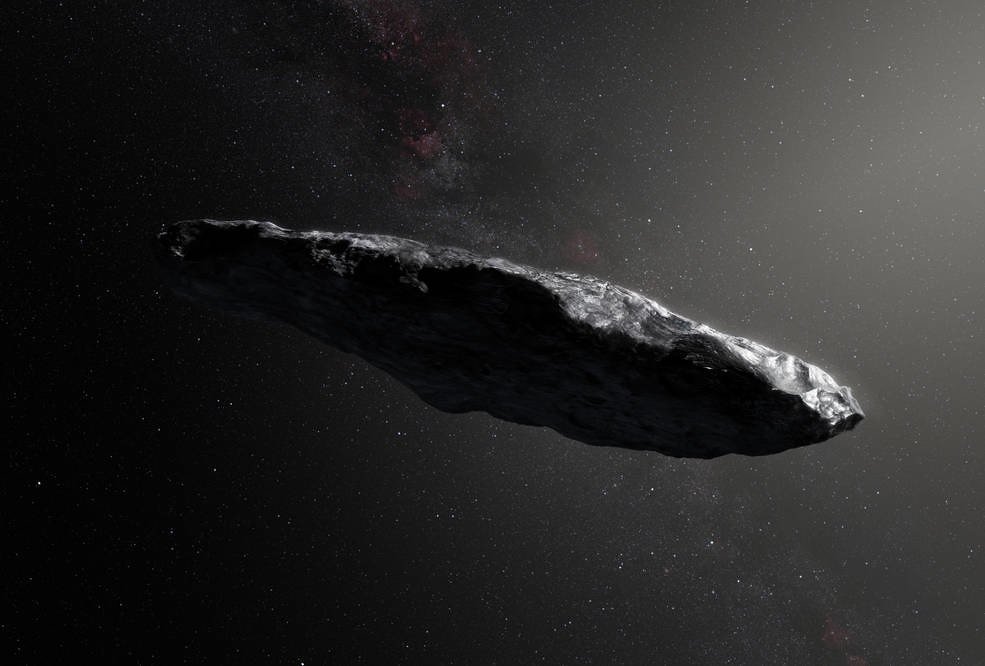
A non-gravitational boost to ʻOumuamua’s acceleration was measured, consistent with comet outgassing. The problem was that no outgassing could actually be seen. Astronomers could detect no coma, outgassed molecules, or dust around ʻOumuamua. Calculations showed that solar energy hitting the object would be insufficient to sublimate water or organic compounds from its surface. Only hypervolatile gases such as hydrogen, nitrogen, or carbon monoxide could provide enough acceleration to match observations.
The leading explanation to emerge came in March 2023. Researchers at the University of California Berkeley and Cornell University proposed that ʻOumuamua was a comet from another solar system that warmed enough near our Sun to get a push from outgassing hydrogen. The peer-reviewed study was authored by Jennifer Bergner and Darryl Seligman, published in the journal Nature on March 22, 2023.
Their conclusion was that the acceleration of ʻOumuamua is due to the release of entrapped molecular hydrogen formed through energetic processing of a water-ice-rich body, and that the object began as an icy planetesimal irradiated at low temperatures by cosmic rays during its interstellar journey, warming during its passage through the solar system. Still, not everyone accepted this. Avi Loeb from Harvard University contacted researchers claiming the study contained miscalculations regarding the surface temperature of ʻOumuamua. His rebuttal, co-authored with astrophysicist Thiem Hoang, suggested the miscalculations would affect the thermal speed of outgassing hydrogen and render their model untenable. The debate, as of 2026, has not been fully resolved.
Anomaly 2: A Shape Unlike Anything Seen Before
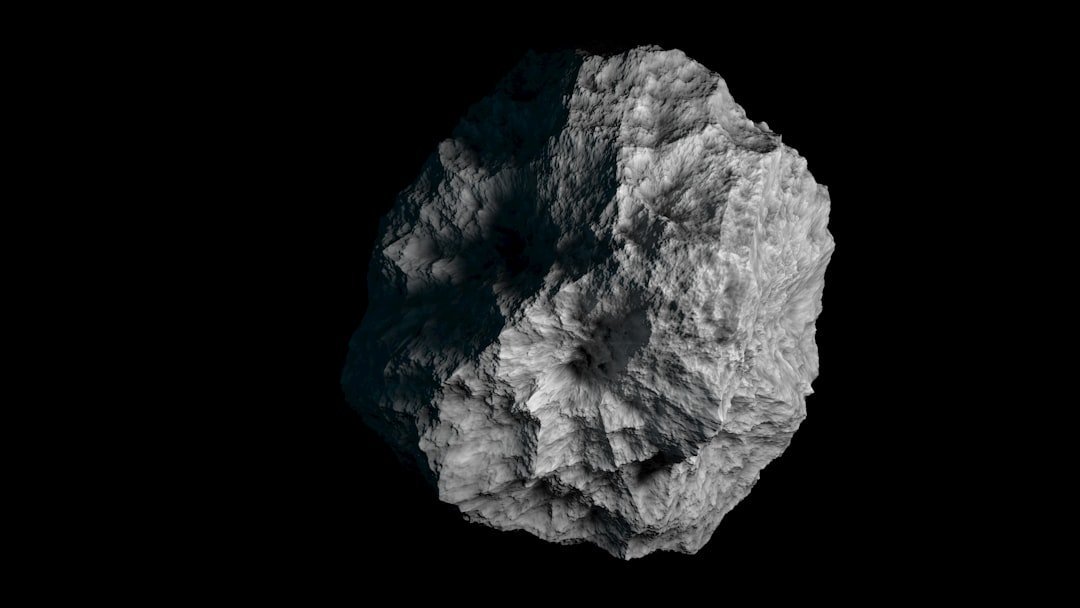
Using combined images from multiple large telescopes, a team of astronomers led by Karen Meech of the Institute for Astronomy in Hawaii found that ʻOumuamua varies in brightness by a factor of ten as it spins on its axis every 7.3 hours. No known asteroid or comet from our solar system varies so widely in brightness, with such a large ratio between length and width.
The ratio of its long to short axes was inferred from brightness variations to be at least 6:1, and later calculations placed it at around 6.6:1. Those are extraordinary numbers. The most elongated objects previously seen in our solar system were no more than three times longer than they are wide. ʻOumuamua was something else entirely.
Significant mass loss caused by sublimation would also explain the unusual cigar-like shape, comparable to how a bar of soap becomes more elongated as it is used up. A 2021 paper proposed that if ʻOumuamua is made of nitrogen ice, similar to the surface of Pluto, the extreme shape could be a result of evaporation, and that when the object entered the solar system it likely had an unremarkable 2:1 aspect ratio. The authors calculated that a month after perihelion, ʻOumuamua had potentially lost around 92 percent of the mass it had upon entering the solar system. Whether nitrogen ice, hydrogen ice, or something else entirely accounts for that shape remains open to debate among researchers.
Anomaly 3: It Belongs to an Entirely New Class of Object

ʻOumuamua lacks observed cometary characteristics and its dry, rocky surface suggests an asteroidal nature. However, its non-gravitational acceleration implies comet-like properties. That combination of traits doesn’t fit neatly into any existing category, and it turns out ʻOumuamua is not entirely alone in that regard.
By 2024, astronomers had identified 14 asteroids with the same unusual behavior, making ʻOumuamua the first member of another new class of objects now called dark comets. Since 2017, Bergner, Seligman, and colleagues have identified six other small comets with no observable coma but with small non-gravitational accelerations, suggesting that such dark comets are common.
Molecular hydrogen is very difficult to detect in space since it neither emits nor reflects light, which means that if ʻOumuamua was outgassing molecular hydrogen, we wouldn’t be able to see it the way we usually see tracers of cometary activity. That invisibility is precisely what makes the dark comet classification so scientifically significant. It raises the possibility that entire populations of such objects have been drifting through the galaxy, undetected, for far longer than anyone realized. Population studies of interstellar objects have indicated that about seven pass through our solar system every year.
What Science Currently Accepts, and What Remains Unresolved

By July 2019, most astronomers concluded that ʻOumuamua was a natural object, but its precise characterization remains contentious given the limited time window for observation. The hydrogen outgassing hypothesis from the 2023 Nature paper is currently the most widely cited natural explanation, though competing critiques of its assumptions remain active in the literature.
All natural-origin interpretations of ʻOumuamua’s anomalies have contemplated objects of a type never seen before, such as a porous cloud of dust particles, a tidal disruption fragment, or exotic icebergs made of pure hydrogen or pure nitrogen. That itself says something meaningful: even the natural explanations require invoking categories of objects that didn’t previously exist in scientific literature. Since ʻOumuamua first passed through our system, scientists have assigned a high value to interstellar objects, which represent material ejected from other solar systems. By obtaining samples and studying them up close, researchers could learn much about the formation of other stars and planets without actually sending missions there.
With next-generation instruments becoming operational, scientists anticipate a significant increase in the rate of interstellar object discoveries in the late 2020s and 2030s. Estimates suggest the Vera C. Rubin Observatory will detect about 15 interstellar objects in its first ten-year run, though other projections say up to 70 interstellar objects per year. More visitors will come, and the instruments waiting for them will be far better prepared than they were in 2017.
ʻOumuamua is long gone and will never be retrievable. What it left behind, though, is something harder to dismiss than any single anomaly: a permanent reminder that the categories we use to understand the cosmos don’t always survive first contact with something genuinely new.