

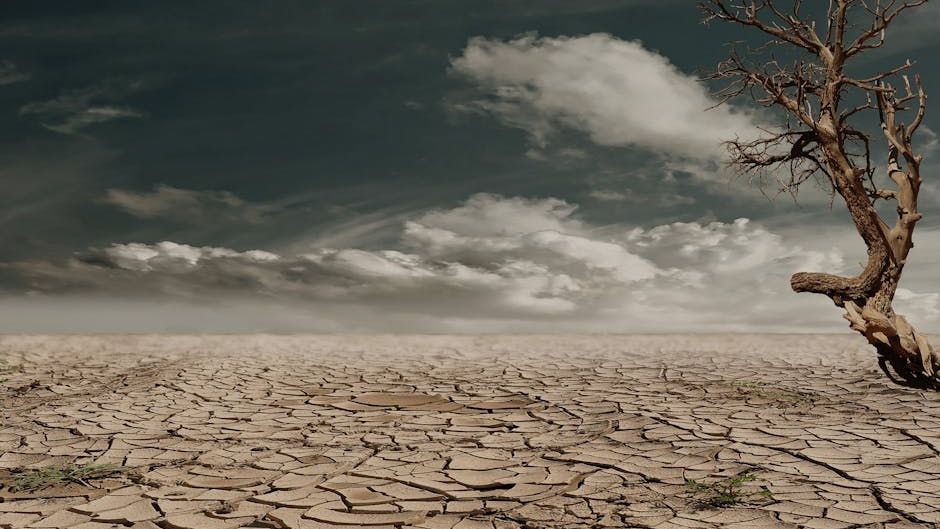
Seasonal patterns that farmers trusted for generations have suddenly turned unpredictable – Image for illustrative purposes only (Image credits: Pexels)
For generations, farmers have timed their planting, irrigation, and harvests around seasonal cues that rarely failed. Those patterns now shift without warning, leaving crops exposed to sudden floods, prolonged heat waves, and insect surges that arrive weeks or months ahead of schedule. The result is more than lost yields; it is a quiet erosion of the practical knowledge that has sustained communities through centuries of variable weather.
Traditional Indicators Lose Their Reliability
Planting calendars once aligned with the first reliable rains or the last frost. In many regions those signals have grown inconsistent, forcing growers to decide whether to sow early and risk drought or wait and face shortened growing seasons. The change does not appear in every field at once, yet its cumulative effect is visible in declining harvests reported across multiple continents.
Researchers note that the underlying drivers remain complex. While rising global temperatures are clearly linked to altered precipitation and temperature extremes, the precise timing and regional intensity of those shifts still carry wide margins of uncertainty. Farmers therefore operate with less margin for error than their predecessors.
Direct Pressures on Crops and Livelihoods
Intense rainfall events can saturate soils at critical growth stages, while extreme heat accelerates evaporation and stresses plants already struggling with irregular water supplies. At the same time, warmer conditions allow certain pests to survive winters or expand into new territories, producing outbreaks that older control methods no longer contain.
These overlapping stresses compound one another. A single unseasonal heat spell may weaken plants enough for insects to cause greater damage than they would under normal conditions. The combined pressure reduces both the quantity and quality of food reaching markets, with ripple effects felt by consumers far from the farm gate.
Adaptation Steps Under Active Consideration
Many producers are testing shorter-cycle crop varieties, adjusting planting dates on the basis of short-term forecasts, and experimenting with soil-management practices that retain moisture during dry spells. Others explore integrated pest management that relies less on calendar-based spraying and more on real-time monitoring.
Progress remains uneven. Not every farm has access to updated weather data or the capital needed for new seed types and irrigation upgrades. Policy support, research investment, and knowledge-sharing networks are therefore viewed as essential complements to on-farm changes.
What Remains Unknown and What to Watch
Scientists continue to refine models that project how seasonal patterns will evolve over the coming decades. Current forecasts carry acknowledged limitations, particularly at the local scale where individual farms must make daily decisions.
- Continued refinement of seasonal climate outlooks that extend beyond traditional three-month windows.
- Development of crop varieties bred specifically for greater tolerance to heat and erratic moisture.
- Expansion of early-warning systems that combine satellite data with ground observations.
- Assessment of how insurance and credit programs can better accommodate increased year-to-year variability.
The practical question facing agricultural communities is no longer whether change is occurring, but how quickly workable responses can be scaled. Until those responses mature, the margin between a viable harvest and a shortfall will continue to narrow for many who grow the world’s food.