

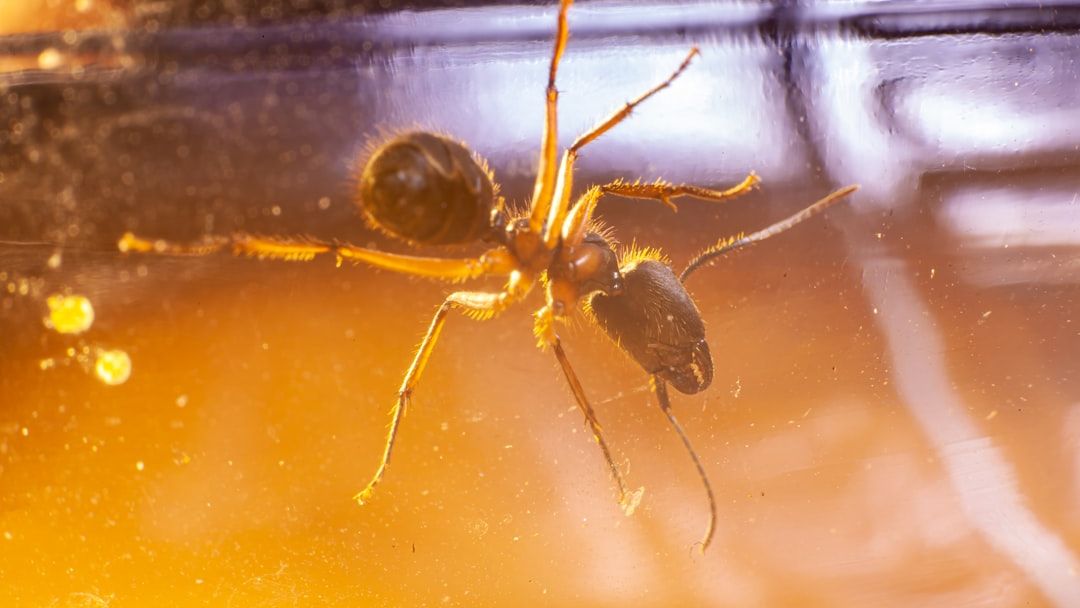
A new contribution to the study of subfamily Tridenchthoniinae Balzan, 1892 (Pseudoscorpiones: Chthoniidae) from the late Eocene Baltic amber with the description of Baltochthonius andrushchenkoi gen. et sp. nov. and Heterolophus eridanus sp. nov. – Image for illustrative purposes only (Image credits: Unsplash)
Scientists have identified two previously unknown pseudoscorpion species trapped in late Eocene Baltic amber, offering a clearer window into the diversity of an understudied group of arachnids that lived roughly 34 to 38 million years ago. The findings, published in the journal Zootaxa, include one entirely new genus and expand the known fossil record of the subfamily Tridenchthoniinae. Such amber-preserved specimens provide rare direct evidence of ancient arthropod communities that are otherwise difficult to reconstruct from rock fossils alone.
Why These Tiny Arachnids Matter
Pseudoscorpions are small, scorpion-like creatures that lack a tail stinger and instead rely on venomous pincers to capture prey. They inhabit leaf litter, soil, and tree bark in many modern ecosystems, yet their evolutionary history remains patchy because their delicate bodies rarely fossilize well. The new Baltic amber specimens help fill gaps in that history by preserving fine morphological details that allow researchers to place them within existing classification schemes.
The late Eocene period featured warmer global climates and extensive forests across what is now northern Europe. Amber from this time frequently captures insects, spiders, and other small invertebrates, creating snapshots of forest-floor life. Adding two new species to the Tridenchthoniinae subfamily strengthens the case that this group was already well established in European woodlands tens of millions of years ago.
The Newly Described Species
One specimen has been placed in a new genus, Baltochthonius, and given the species name andrushchenkoi. The second belongs to the existing genus Heterolophus and has been named eridanus. Both are assigned to the subfamily Tridenchthoniinae within the family Chthoniidae. The descriptions rely on detailed examination of body structures preserved in the amber, including features of the claws, legs, and body segments that distinguish them from previously known fossil and living relatives.
Researchers also produced an updated diagnostic key that covers the tribes, genera, and subgenera within Tridenchthoniinae. This tool is intended to help future workers identify additional specimens more consistently, whether they come from amber or other deposits. The key incorporates the new species and reflects current understanding of relationships within the subfamily.
Ancient Habitats and Modern Comparisons
The paper discusses the biogeographic distribution, possible paleohabitats, and ecological roles of the new species by comparing them with both extinct and living members of the same subfamily. Baltic amber is thought to have formed in a subtropical to temperate forest environment, and the presence of these pseudoscorpions suggests they occupied similar microhabitats to some of their modern counterparts, such as moist leaf litter or under bark.
While the exact ecological interactions remain uncertain, the fossils indicate that Tridenchthoniinae pseudoscorpions were part of a diverse predator community on the forest floor during the Eocene. Further study of additional amber inclusions may reveal whether these species shared habitats with particular prey or other arachnids, but current evidence is limited to the two described specimens.
What matters now
The new descriptions and updated identification key provide a firmer foundation for recognizing additional Tridenchthoniinae fossils. Continued examination of Baltic amber collections could uncover more species and refine understanding of how this subfamily responded to past climate shifts.
Looking Ahead
Amber fossils like these remain among the best sources of three-dimensional morphological data for small arthropods. As imaging techniques improve, researchers expect to extract even more anatomical information from existing specimens without damaging them. The current work demonstrates that targeted study of well-preserved inclusions can still yield meaningful additions to the fossil record of pseudoscorpions.
Over time, such incremental discoveries help build a more complete picture of how ancient forest ecosystems functioned and how lineages of small predators have persisted or changed through major environmental transitions.