

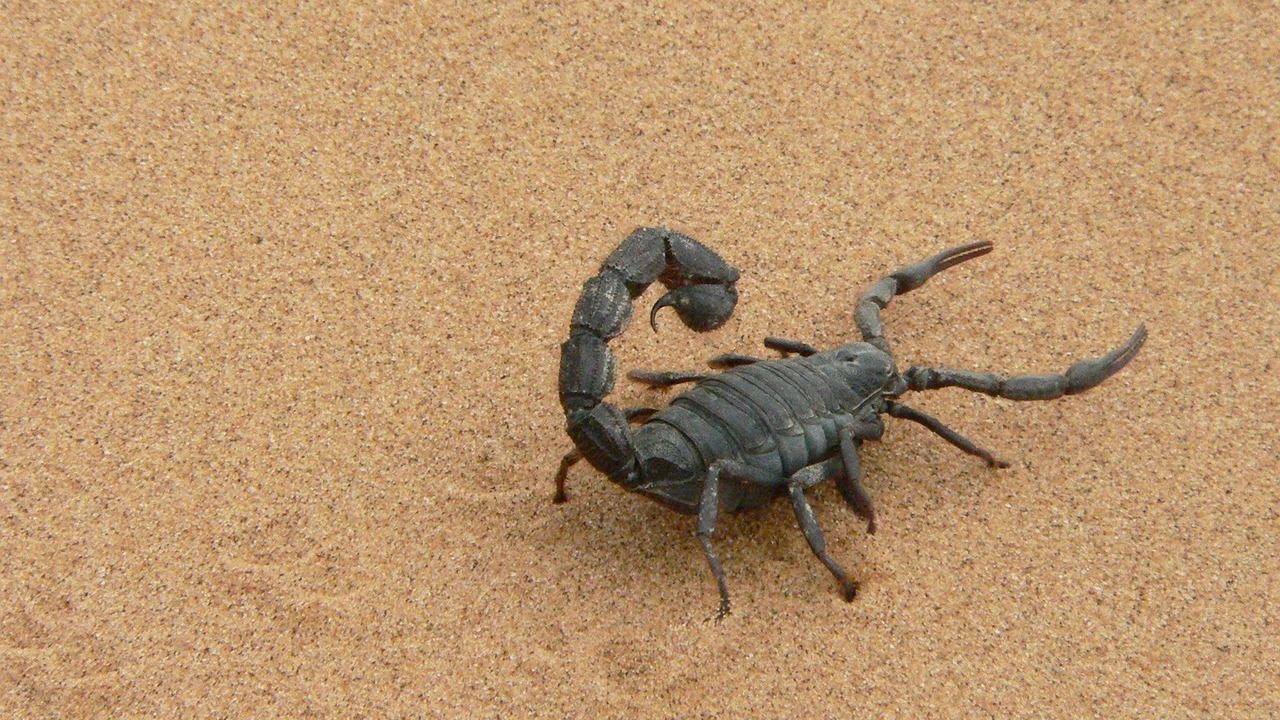
The genus Nebo Simon, 1878 (Scorpiones: Diplocentridae) in Oman – Image for illustrative purposes only (Image credits: Pixabay)
Oman’s scorpion populations have long intrigued researchers because of the country’s varied terrain and isolated coastal zones. A detailed examination of hundreds of specimens collected across the nation has now clarified long-standing questions about how these arachnids are distributed and how they differ from one another. The work highlights both familiar species and several previously unrecognized ones that appear restricted to specific stretches of coastline.
Extensive Fieldwork Across the Country
Researchers gathered 427 samples from 135 separate sites that stretch from the northern mountains to the southernmost regions. This broad geographic coverage allowed them to compare individuals from widely separated habitats and to test earlier assumptions about species boundaries. The effort focused on measurable traits such as body proportions, coloration patterns, and the fine structure of claws and carapaces. Such systematic sampling revealed that many populations had been grouped together too broadly in the past.
Redescribing the Known Species
Three species already on record received fresh descriptions based on the new material. N. franckei, N. omanensis, and N. whitei were each examined for consistent differences in size, granulation on the carapace, and the shape of the male pedipalp fingers. The updated accounts also incorporated statistical comparisons of multiple body measurements, which helped confirm that these forms remain distinct even where their ranges come close. A previously unreported population of N. henjamicus was additionally documented in the Musandam Peninsula, extending its known range.
Three Species New to Science
Three additional species were formally named and described for the first time. N. feulneri, N. masirahensis, and N. nebulicola all occur along the Arabian Sea coast and show clear separation from their neighbors in both appearance and habitat preference. Diagnoses relied on a combination of external features, including the degree of scalloping on the male claws and the density of granules on the female pedipalp fingers. These traits proved reliable for separating the new forms from one another and from the previously known species.
Four Distinct Centers of Endemism
The study shows that Nebo scorpions in Oman are not evenly spread but instead cluster in four separate centers of endemism. These areas include the Al Hajar mountains, the northern Central Coast, the southern Central Coast, and the Dhofar mountains. Some species live only within one of these zones, while others share limited overlap with neighbors. The pattern suggests that past geographic barriers, such as mountain ranges and stretches of unsuitable habitat, have shaped the current distribution. The findings underscore how much remains to be learned about even well-studied groups when thorough sampling is applied across an entire country. Continued fieldwork in Oman’s remote coastal and mountain regions will likely refine these conclusions further and may reveal additional undescribed forms.