

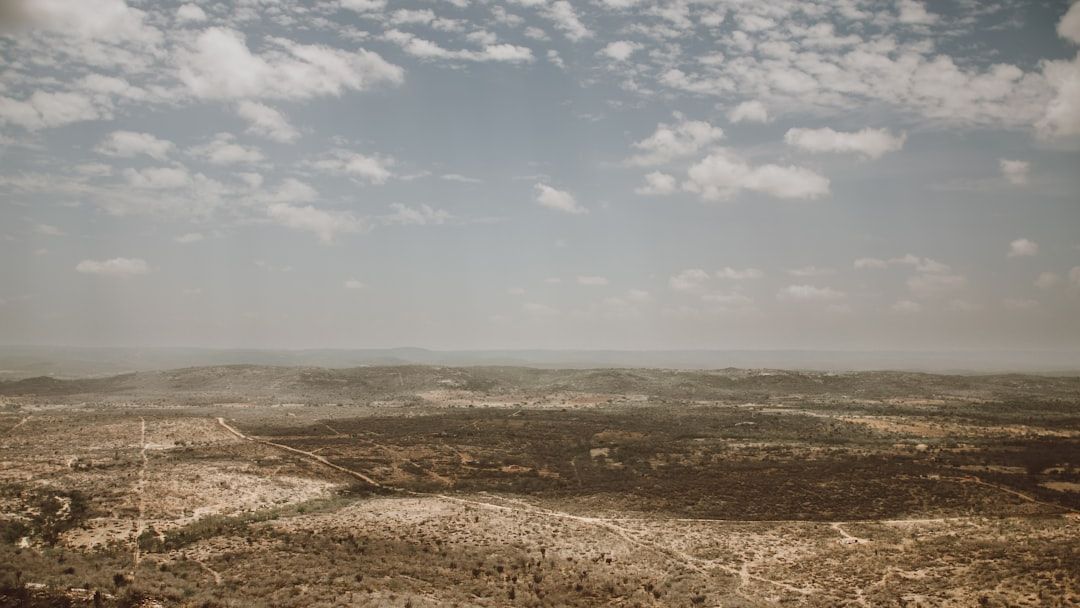
New Paper Shows Surges of Concentrated Precipitation Can Lead to Dryer Landscapes – Image for illustrative purposes only (Image credits: Unsplash)
The American West – Precipitation is arriving in sharper bursts rather than steady spreads, according to fresh analysis of regional climate data. Researchers tracking snow and rain patterns found this concentration occurring at one of the fastest rates observed anywhere on Earth. The shift is now recognized as a distinct driver of aridification, one that could alter long-standing assumptions about how drought develops and persists across continents.
Tracking the Shift in Precipitation Patterns
Measurements across the region show that total annual moisture has not changed dramatically in many areas. Instead, the same volume of water is falling in fewer, more intense events separated by longer dry intervals. This compression of wet periods leaves soils and vegetation with less consistent access to water, even when overall rainfall amounts appear stable on paper. The pattern stands out because similar trends elsewhere in the world have developed more slowly. Scientists compared historical records with recent decades and identified the American West as an outlier in the speed of this change. The finding adds a new layer to drought monitoring, which has traditionally focused on total deficits rather than the timing of delivery. As a result, some landscapes that once recovered between storms now enter extended dry spells with reduced resilience.
Effects on Ecosystems and Water Supplies
Natural systems respond quickly to the altered rhythm. Plants and trees that rely on gradual snowmelt or frequent light rains face longer stretches without recharge, increasing stress during critical growth seasons. Wildlife habitats that depend on steady stream flows also experience sharper fluctuations, with peak runoff arriving earlier and receding faster than before. Water managers confront parallel challenges. Reservoirs and aquifers receive large inflows during concentrated events, yet much of that water moves through the system before it can be stored or absorbed. This reduces the reliability of supplies that communities and agriculture have counted on for decades. The timing mismatch between supply surges and demand periods is becoming a central concern for long-term planning.
Links to This Year’s El Niño
The current El Niño phase is expected to interact with the existing concentration trend. Stronger storm systems associated with the event could deliver even larger pulses of precipitation in short windows, amplifying the contrast between wet and dry intervals. Forecasters note that while total seasonal moisture may rise in some locations, the delivery method could still leave soils drier on average between events. This interaction highlights how large-scale climate oscillations can reinforce regional patterns rather than override them. Monitoring networks are now paying closer attention to the spacing of storms rather than totals alone, a shift that could improve seasonal outlooks for the coming months.
Broader Implications for Drought Science
The discovery reframes aridification as more than a simple reduction in rainfall. It shows that changes in the distribution of precipitation over time can produce drier conditions even when annual averages hold steady. Similar dynamics are now being examined in other dryland regions to determine whether the American West example is an early signal of a wider global process. Researchers emphasize that the mechanism remains under study and that its full contribution to future drought severity is not yet quantified. Still, the evidence already suggests that drought assessments will need to incorporate timing metrics alongside traditional volume measures. This adjustment could lead to more accurate projections and better-targeted adaptation strategies in vulnerable areas.