

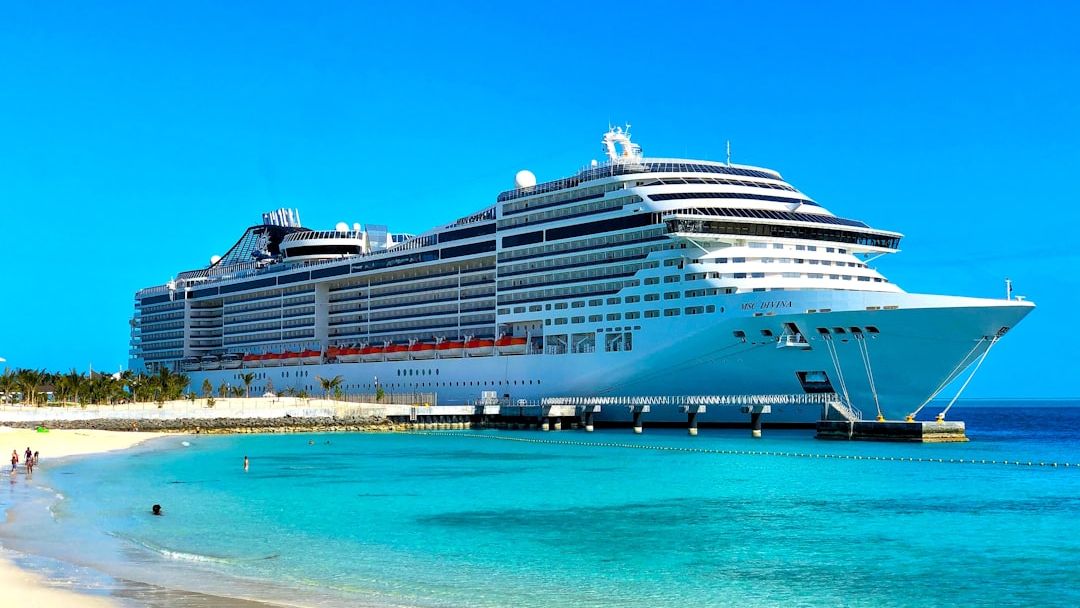
The Latest: Cruise ship with deadly hantavirus outbreak sails for Spanish islands – Image for illustrative purposes only (Image credits: Unsplash)
Praia, Cape Verde — Authorities evacuated three passengers suspected of carrying hantavirus from the MV Hondius cruise ship on Wednesday, marking a critical step in managing an outbreak that has claimed three lives. The Dutch-flagged vessel, carrying around 150 people, had anchored off these West African islands after a journey that began in Argentina. Laboratory tests confirmed five cases of the Andes strain among eight total infections reported by the World Health Organization. Officials emphasized that no symptoms appeared among the remaining passengers as the ship departed for Spain’s Canary Islands.
Rare Virus Emerges from Rodent Hotspot in Argentina
Investigators pinpointed the outbreak’s likely source to a bird-watching excursion in Ushuaia, Argentina, where a Dutch couple visited a landfill before boarding the ship on April 1. Rodents at the site almost certainly exposed them to hantavirus, carried in droppings and inhaled as contaminated dust. Argentine officials noted that Ushuaia and nearby Tierra del Fuego had never recorded the virus previously, highlighting the unusual nature of this incident.
Public health experts linked the event to a broader uptick in hantavirus across Argentina. Warmer temperatures from climate change have expanded rodent habitats, allowing carriers to proliferate in new areas. Hugo Pizzi, an Argentine infectious disease specialist, observed that shifting ecosystems have altered the virus’s epidemiology entirely. Though the ship case stands isolated for now, he warned that hantavirus persists as a growing concern.
Medical Evacuations and Onboard Precautions
The three evacuated patients flew to the Netherlands for specialized care, with two in serious condition and the third asymptomatic but linked to a deceased passenger. A medical evacuation flight touched down at Amsterdam, while preparations unfolded in Germany for further testing. Cape Verde authorities confirmed they fulfilled international obligations by facilitating the departures with utmost safety measures. One patient’s body, from a German national, remained aboard in cold storage, destined for the Canary Islands.
Aboard the MV Hondius, passengers confined themselves to cabins for isolation, supported by reinforced medical staff. The ship’s original doctor fell ill and required evacuation, prompting the arrival of two infectious disease physicians from the Netherlands and a World Health Organization doctor. The operator, Oceanwide Expeditions, coordinated these enhancements to handle potential new cases. The incubation period, spanning one to six weeks or longer, kept vigilance high despite the absence of current symptoms.
International Vigilance Tracks Potential Spread
Health officials in South Africa identified 62 contacts from two passengers who disembarked earlier and traveled there; one died, the other required intensive care. Tests confirmed the Andes strain in both, with 42 contacts cleared so far and none positive. Switzerland reported a new confirmed case tied to the ship. These efforts underscored the virus’s rare person-to-person transmission, limited to close interactions like sharing food or bedding.
Spain prepared for the ship’s arrival at a Tenerife port, with Health Minister Mónica García assuring no public risk. The roughly 140 remaining passengers faced repatriation via EU-coordinated flights, including military transport for 14 Spaniards. Canary Islands President Fernando Clavijo voiced concerns over inadequate protocols and late notifications from Madrid, urging better preparation. The vessel’s altered itinerary skipped planned Antarctic and South Atlantic stops, rerouting directly westward.
Assessing the Andes Strain and Broader Risks
The World Health Organization verified the Andes hantavirus variant, native to Argentina and Chile, through samples from evacuated patients. Unlike most hantaviruses, this strain spreads between humans occasionally, though containment remains feasible. Severe cases demand oxygen or ventilation for respiratory distress. WHO epidemic expert Maria Van Kerkhove stressed the low global threat: “This is not the next COVID, but it is a serious infectious disease.” Most people face negligible exposure risk.
Ann Lindstrand, WHO representative in Cape Verde, noted five lab-confirmed cases out of eight linked to the ship, calling the tally significant. The organization monitored developments closely, having never documented a hantavirus outbreak at sea before. As the MV Hondius steamed toward Tenerife, expected within days, authorities balanced urgent care with measured public health responses. This episode serves as a reminder of how environmental shifts and travel can intersect with rare pathogens, demanding swift, coordinated action.