

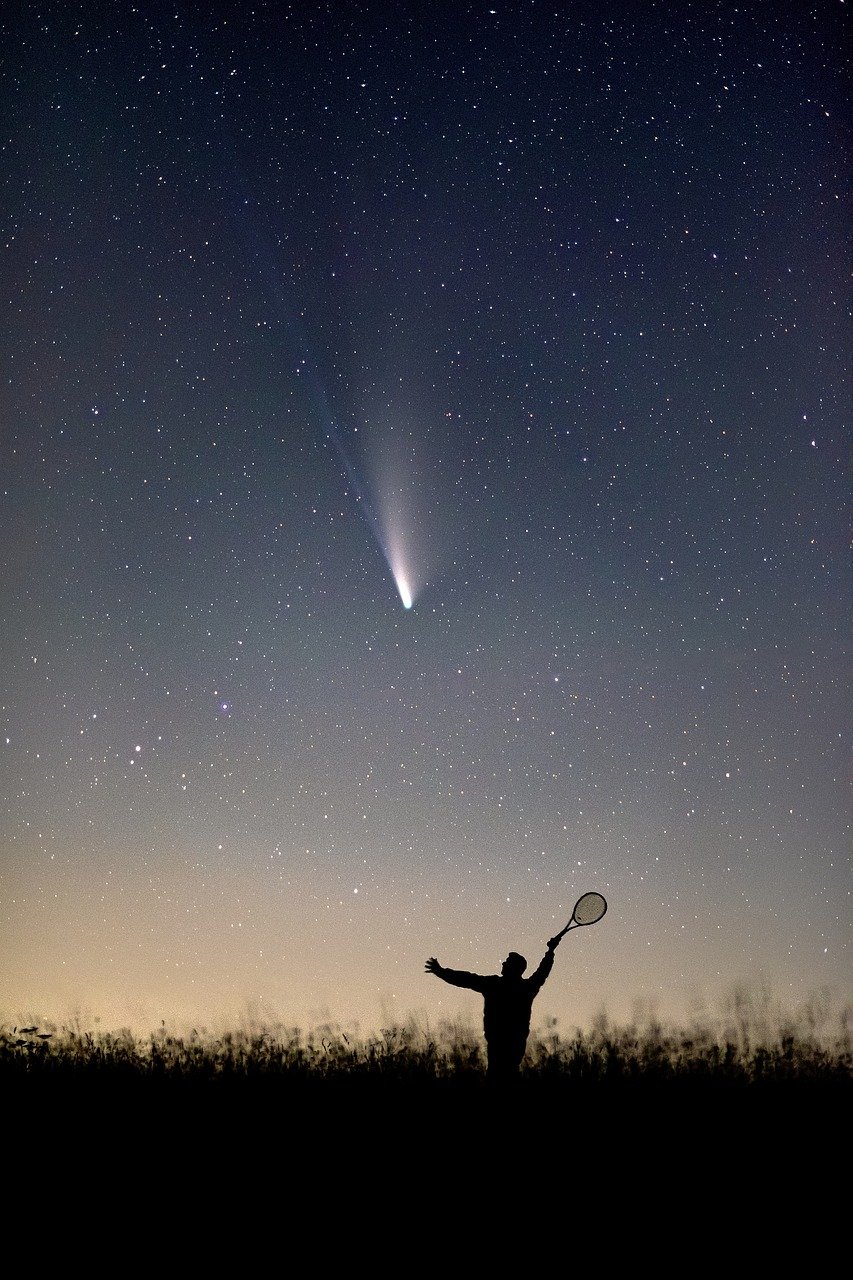
A Sudden Celestial Spotlight (Image Credits: Pixabay)
Early risers on April 12, 2026, can turn their gaze eastward for a treat from the cosmos. Comet C/2025 R3 (PanSTARRS) has surged to prominence in the pre-dawn sky, recently clocked at mid-fifth magnitude and edging toward naked-eye view under clear, dark conditions.[1][2] This visitor from the distant Oort Cloud, first spotted in September 2025 by the PanSTARRS telescope survey, now skims through Pegasus, offering a brief window before its solar approach dims the show.[3]) Observers worldwide report success with binoculars, revealing a fuzzy head and an impressive gas tail stretching over 10 degrees.
A Sudden Celestial Spotlight
Comet C/2025 R3 has transformed from a faint speck into the morning sky’s breakout performer. Recorded at around 4.4 to 4.9 magnitude as of April 12, it hovers on the brink of unaided visibility, though binoculars sharpen the view significantly.[4][2] Astronomers anticipate a peak near fourth magnitude later this month, coinciding with its perihelion on April 19 or 20.[1] The comet’s rapid brightening stems from solar heating, vaporizing ices into a glowing coma and tail.
Unlike steadier deep-sky objects, comets deliver unpredictability. This one follows a 170,000-year orbit, making its current pass a once-in-a-lifetime event for modern viewers.[5] Faint companions like Comets Wierzchoś and Tempel 2 linger in the background, but they remain elusive at higher magnitudes.
Finding the Comet in Pegasus
Locate the Great Square of Pegasus high in the east about an hour before sunrise. The comet sits 5.3 degrees northeast of Markab, Pegasus’s magnitude 2.5 alpha star at the square’s southwestern corner.[1] Both fit neatly in a binocular field, with the comet climbing to nearly 20 degrees altitude before the sky brightens.
Sky charts confirm its position amid the winged horse’s stars. As days pass, it sinks lower, rising only 30 minutes before the Sun by April 19, when twilight challenges even aided views.[1] Patience rewards those who scan near Markab starting in nautical twilight.
Optimal Viewing Strategies
Target the hour before local sunrise from a site with low eastern horizons and minimal light pollution. Binoculars or a small telescope reveal the coma and tail best; smartphones on tripods capture it in seconds-long exposures.[1]
- Arrive 90 minutes early to let eyes dark-adapt.
- Sweep slowly from Markab northeastward.
- Check weather for clear skies and steady air.
- Use apps like Stellarium for precise coordinates.
- Observe over multiple nights to track changes.
Urban dwellers may need averted vision or optical aid, as the comet’s glow competes with dawn haze.
Comet’s Path and Future Glimpses
After perihelion, C/2025 R3 swings toward Earth for closest approach on April 26 or 27, potentially enhancing tail visibility.[6] It then fades as it recedes, but dedicated followers might track it into May.
| Date | Altitude at Rise (degrees) | Approx. Magnitude |
|---|---|---|
| April 12 | 20 | 4.5-5.0 |
| April 19 | 10 | ~4.0 |
| April 26 | 15 (post-perigee) | Fading |
This table outlines the viewing window’s compression. Northern Hemisphere observers enjoy the best seats now.[1]
Key Takeaways
- Comet at peak naked-eye potential today near Markab in Pegasus.
- Best 1 hour pre-sunrise; binoculars essential for details.
- Window closes fast – act before April 20 perihelion.
Comet C/2025 R3 reminds us of the sky’s dynamic beauty, a frozen relic briefly ignited by sunlight. Seize these mornings before the dawn claims its prize. What do you think about it? Tell us in the comments.