

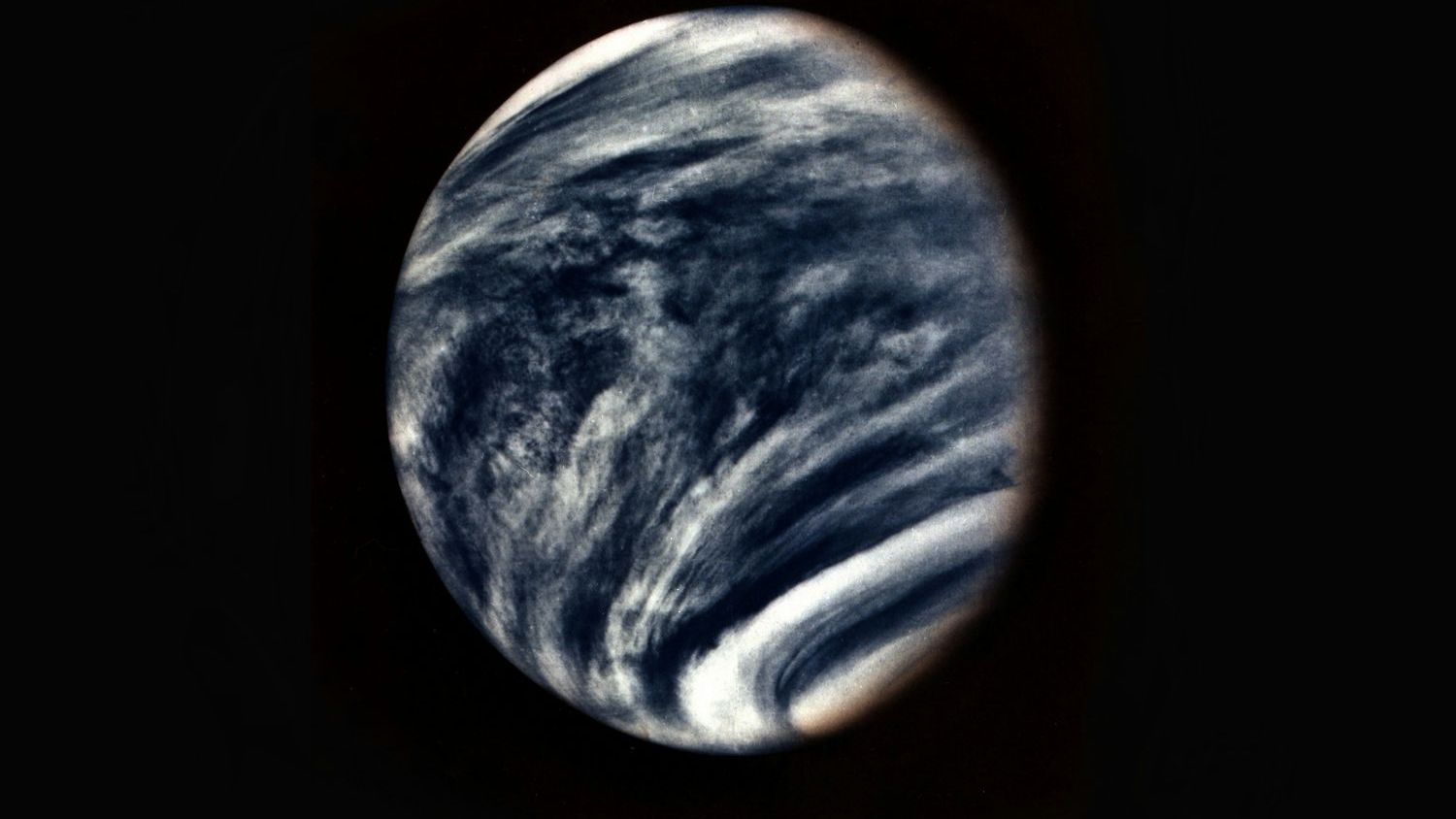
Bizarre Venus Surface Formations Puzzle Planetary Scientists – Image for illustrative purposes only (Image credits: Unsplash)
Venus has long stood out among the planets in our solar system for its extreme conditions and complex geology. A new analysis presented at the European Geosciences Union general assembly in Vienna this year draws fresh attention to distinctive crown-shaped surface features that could offer rare glimpses into the planet’s hidden layers. These formations, often called coronae, continue to challenge existing models of how Venus evolved over billions of years.
What These Crown-Shaped Features Actually Look Like
The structures appear as roughly circular or oval patterns on the surface, often surrounded by ridges and fractures that give them a distinctive crown-like outline. They range in size from tens to hundreds of kilometers across and stand out against the otherwise smooth volcanic plains that dominate much of Venus. Planetary scientists note that their raised rims and central depressions set them apart from typical impact craters or volcanic calderas found elsewhere in the solar system.
Observations from orbiting spacecraft have mapped hundreds of these features across the planet. Their distribution does not follow obvious patterns tied to latitude or longitude, which adds another layer of complexity to efforts to explain their formation. Researchers emphasize that the features remain visible despite the thick atmosphere and intense surface pressures that make direct study difficult.
How the Latest Research Connects Them to Venus’s Interior
The paper presented in Vienna argues that the coronae likely formed through processes linked to movement deep below the surface. Instead of simple surface volcanism, the structures may result from upwelling material that interacts with the rigid outer shell of the planet. This interpretation shifts focus from external impacts to internal dynamics that could still be active today.
By examining the shapes and surrounding fracture patterns, the analysis suggests that the features record stresses transmitted from the mantle upward. Such stresses would only occur if the interior retains enough heat and mobility to drive ongoing geological activity. The findings align with earlier data from radar mapping missions but add new detail on how these processes might differ from those on Earth.
Why Understanding These Features Matters Beyond Venus
Venus is often described as Earth’s twin in size and composition, yet its surface and atmosphere evolved along a dramatically different path. Unraveling the origin of the coronae could clarify why one planet developed plate tectonics while the other did not. This comparison helps refine models used to assess the habitability of rocky planets around other stars.
Improved knowledge of Venus’s interior also informs mission planning for future spacecraft. Instruments designed to measure gravity variations or seismic signals could test the ideas raised in the Vienna presentation. Such data would reduce reliance on surface imaging alone and provide more direct evidence of what lies beneath the clouds.
Remaining Questions and Next Steps for Researchers
Despite the new insights, many details about the coronae stay unresolved. Scientists still debate whether the features formed in a single episode or through repeated episodes of activity spread over long periods. The exact depth at which the driving forces originate also remains uncertain.
Upcoming missions equipped with advanced radar and spectrometers are expected to return higher-resolution images and compositional data. These observations should help distinguish between competing formation models. In the meantime, the Vienna presentation has already prompted renewed modeling efforts that incorporate the latest surface measurements.
Continued study of these puzzling formations underscores how much remains unknown about even our nearest planetary neighbors. Each new piece of evidence brings the scientific community closer to understanding why Venus took such a different geological route from Earth.