


Every spring, a quiet kind of restlessness takes hold. People start reassessing their bank accounts, rethinking their habits, wondering if this could finally be the month things turn around. And every year without fail, astrology finds its way into that conversation, offering a uniquely human blend of hope, symbolism, and cosmic narrative. It’s charming, honestly. Whether you’re a true believer or a healthy skeptic, there’s something undeniably compelling about the idea that the universe might have a plan just for you.
This article sits at the crossroads of that ancient fascination and some very real, very grounded financial reality. Because here’s the thing: four zodiac signs in particular tend to bring natural traits to the table in May that genuinely line up with smarter money behavior. Whether you credit the stars or pure psychology, the timing is interesting. Let’s dive in.
The ‘Cosmic Loophole’ Explained: What It Actually Means

The phrase “cosmic loophole” sounds mysterious, almost like a cheat code hidden somewhere between Jupiter and your credit score. In astrology, it generally refers to a moment when planetary alignments are interpreted as creating an unusually favorable window for growth, change, or abundance. Think of it like a green light in cosmic traffic: not a guarantee, but a perceived opening.
Historically, humans have observed celestial activities to understand and forecast events on Earth, a tradition that grew over time to include the analysis of economic and financial events, eventually giving rise to what is called financial astrology or astro-economics, a discipline that assumes planetary movements, lunar stages, and astrological charts can provide insight about economic fluctuations. I think it’s fair to approach this with curiosity rather than total conviction.
The fusion of astrology with finance offers a distinctive framework that connects planetary cycles with market movements, bridging the world of cosmic symbolism with the realm of human decision-making and collective psychology that drives economies. Poetic, right? Whether or not you buy it literally, the psychological dimension is real and worth exploring.
How Popular Is Astrology Really? The Numbers May Surprise You

A Pew Research Center report found that around a quarter of Americans, specifically 27%, believe in astrology, understanding it as the position of the stars and planets affecting people’s lives. That’s a lot of people. To put it in perspective, that’s roughly the entire population of Texas and California combined believing the cosmos has something to say about their future.
The study found that roughly three in ten U.S. adults say they consult astrology, tarot cards, or fortune tellers at least once a year, though the majority participate “just for fun” rather than for serious guidance. So most people aren’t planning their retirement around Mercury retrograde, but they’re also not entirely dismissing the idea either.
Over the past decade, media reports have described rising popular interest in New Age practices such as astrology, tarot card reading, and fortune-telling, practices frequently associated with young people that have developed their own social media cultures on TikTok and other platforms. The stars have genuinely found a home on social media, and that changes how financial anxiety and hope get channeled for millions of younger adults.
Aries: The Bold Trailblazer Who Charges Into New Financial Terrain

Aries energy in May tends to be assertive, decisive, and action-oriented. These are traits that, when channeled correctly, translate beautifully into financial behavior. Aries individuals often have a natural instinct to make the first move, which in money terms can mean initiating savings plans, starting side income streams, or finally having that conversation with a financial advisor they’ve been postponing for six months.
Here’s the thing, though: boldness without a plan is just risk. Although astrological interpretations are sometimes seen as aligning with historical financial phenomena, critics argue that these interpretations are often retrofitted, and it becomes difficult to differentiate between prediction and mere coincidence, especially when analysis is done after the incident has occurred. Smart Aries energy, then, pairs natural boldness with structured thinking rather than impulsive leaps.
Younger generations increasingly make decisions based on their personal ethics and beliefs, with half of Gen Zs and just over four in ten millennials having rejected assignments, and nearly as many having rejected employers based on those same values. Aries, in many ways, embodies this value-driven decisiveness perfectly. The real financial win in May comes from directing that drive toward disciplined, purpose-aligned money moves.
Taurus: The Earth Sign Sitting on the Season’s Strongest Financial Instincts

Taurus season overlaps directly with May, and it’s hard not to notice that this earth sign is practically purpose-built for financial thinking. Taurus is associated with material stability, patience, and a deep appreciation for long-term security. These aren’t just astrological myths, they’re genuinely useful psychological orientations for building wealth. Slow and steady wins the compound interest race.
Jupiter, the planet of expansion and growth, transits through Taurus for much of 2025. Taurus is an earth sign associated with stability, material wealth, and tangible assets, and this transit is expected to bring steady growth in sectors related to finance, agriculture, and real estate. Whether or not Jupiter literally influences your investment portfolio, the symbolic encouragement toward stable, value-driven assets is genuinely solid financial advice.
Taurus folks tend to resist impulsive decisions, which is honestly a superpower in a world where FOMO investing and trend-chasing wreck portfolios daily. According to Deloitte’s 2024 Gen Z and Millennial Survey, roughly three in ten young adults say they do not feel financially secure, and roughly six in ten live paycheck to paycheck. For a Taurus in May, the cosmic nudge toward stability isn’t just pleasant, it’s urgently relevant.
Scorpio: The Strategist Who Sees What Others Miss
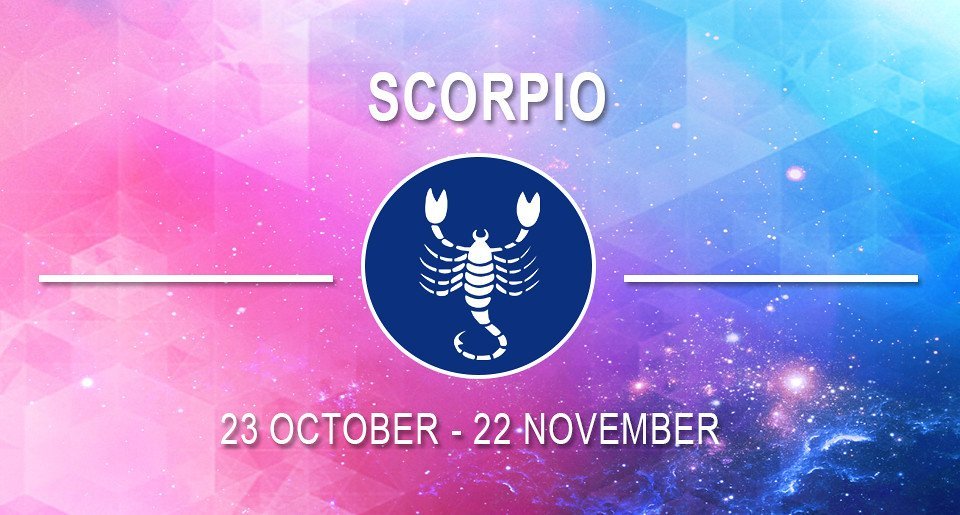
Scorpio has a reputation for intensity, and honestly, that intensity is a genuine financial asset when properly directed. Scorpios tend to dig deep, research thoroughly, and commit fully once they’ve made a decision. In May, when financial opportunities often surface quietly rather than loudly, that investigative instinct can be the difference between catching a good deal and missing it entirely.
Financial astrologers analyze planetary conjunctions, retrogrades, eclipses, and nodal transitions to forecast shifts in investor sentiment and liquidity flow, noting, for example, that the great Jupiter-Saturn conjunction of 2020 coincided with a massive economic realignment and the rise of digital industries. Scorpio’s natural tendency to look for patterns beneath the surface maps neatly onto this kind of layered financial thinking.
It’s hard to say for sure whether Scorpio’s depth comes from cosmic influence or simply from a personality type that tends toward rigor. What is clear is that the idea in financial astrology is not that planets control financial outcomes, but that human behavior, as a key driver of the market, might react predictably to certain cosmic conditions, and that as market sentiments swing from optimism to fear, understanding this behavioral cycle offers potential insight. Scorpios, by nature, are already fluent in that language.
Capricorn: The Sign That Treats Financial Discipline Like a Personal Religion

Let’s be real: Capricorn is the zodiac’s CFO. Disciplined, structured, goal-oriented, and deeply aware of the long game. These are exactly the qualities that financial research keeps pointing to as the true drivers of wealth accumulation. Not luck, not timing, not cosmic windows. Consistent habits. And in May, Capricorn energy aligns particularly well with the kind of strategic reviewing and planning that leads to actual financial momentum.
The Federal Reserve Bank of New York reported that total household debt increased by $184 billion, or 1.1%, in the first quarter of 2024, reaching $17.69 trillion. That’s a staggering number, and it underscores why Capricorn’s signature discipline isn’t just admirable, it’s practically necessary in the current financial environment. Ignoring debt doesn’t make it smaller.
People’s main financial challenges and concerns remained similar to those in recent years, with the share of people citing inflation and prices and the share citing housing as their main financial challenges ticking upward. Capricorn’s instinct to plan ahead, reduce unnecessary spending, and set realistic milestones is precisely the response this economic climate demands. No planet needed. Just focus.
The Real ‘Loophole’: What Science Says Actually Drives Financial Improvement

Here’s where honesty matters more than mystique. There is, so far, no consistent peer-reviewed research that proves astrology reliably predicts financial outcomes. That’s not a dismissal of the meaning people find in astrological thinking, but it is an important reality check before anyone reshapes their financial strategy based on a horoscope.
Income, education, and political ideology all correlate with belief patterns around astrology. Adults with lower incomes are about twice as likely as those in upper-income brackets to believe in astrology. This is a meaningful data point. Financial anxiety can drive people toward any available framework of hope, and there’s nothing wrong with finding comfort in cosmic narrative as long as it doesn’t replace practical action.
Financial insecurity continues to affect younger generations, with three in ten Gen Zs and millennials saying they do not feel financially secure, and roughly six in ten living paycheck to paycheck. The real loophole, if there is one, is straightforward: build a budget, reduce debt aggressively, diversify income, and save consistently. It’s not cosmic. It’s just compound interest doing its quiet, powerful thing over time.
Blending Cosmic Inspiration with Financial Reality: A Practical Path Forward
Honestly, I think there’s something genuinely useful about using astrology as a mirror rather than a map. If your zodiac profile tells you that May is the time to take bold action or deepen your commitment to financial security, and that framing helps you actually do those things? That’s a win. The belief matters less than the behavior it inspires.
The psychic services industry generated an estimated $2.3 billion in revenue in 2024, employing 105,000 people, and according to IBIS World, total revenue has increased by more than 4% annually since the start of the COVID-19 pandemic, when business closures, sickness, and loss of loved ones prompted a surge in demand for spiritual guidance services. People are clearly willing to invest in hope and meaning. The question is whether that investment also includes a solid emergency fund.
Deloitte’s 2024 Gen Z and Millennial Survey spotlighted two generations grappling with financial insecurity, high stress levels, and mounting anxiety, who are also considering how rapidly evolving technology will impact their jobs and longer-term career decisions. The wisest move for any sign, Aries through Capricorn, is to let the stars inspire the mindset and let the data guide the decisions. That combination, cosmic optimism married to financial discipline, might be the closest thing to a real loophole that actually exists.
The Conclusion: Your Sign Won’t Save You, But Your Habits Might

May is a genuinely energizing month. The light shifts. People feel more alive, more motivated, more ready to make changes. Astrology taps into that seasonal energy beautifully, giving people a narrative framework to organize their intentions. Four signs in particular, Aries, Taurus, Scorpio, and Capricorn, carry traits that genuinely align with smarter financial choices when those traits are consciously channeled.
Financial astrology has increasingly gained attention as people seek alternative insights into market behavior, though it is widely understood not to replace traditional analysis but to provide a nuanced perspective that can guide strategic decision-making. That framing is fair and reasonable. Use it as a lens, not a ledger.
The actual work of financial rebirth, regardless of birth chart, comes down to reducing debt, saving intentionally, spending in alignment with values, and staying consistent long enough for small decisions to become transformative ones. Twenty-seven percent of Americans say they believe astrology can affect people’s lives, virtually unchanged from 2017. The stars haven’t changed. Neither have the fundamentals of building financial stability. What changes is whether you act on them. So, which sign do you think has the real edge this May?