

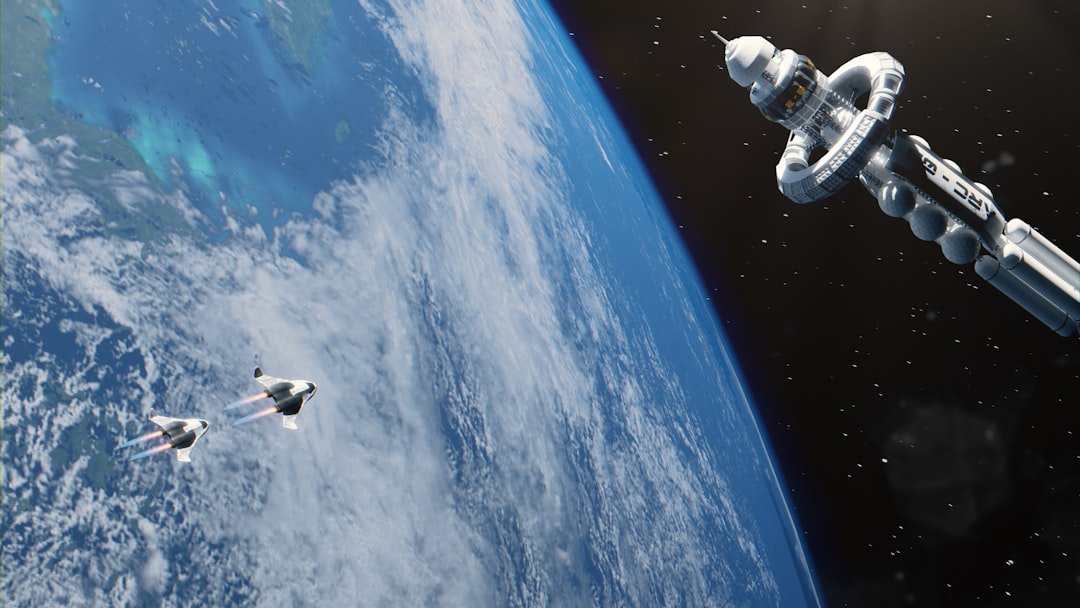
Sergei Korolev’s Survival Ignites Change (Image Credits: Unsplash)
The Apple TV+ series For All Mankind crafts a gripping alternate history where the Cold War space race extended far beyond 1972. A pivotal survival in 1966 propelled the Soviet Union to the Moon first, igniting decades of rivalry that led to lunar colonies and early Mars landings. This divergence not only accelerated exploration but also altered political landscapes and social milestones.[1][2]
Sergei Korolev’s Survival Ignites Change
On January 14, 1966, Soviet rocket engineer Sergei Korolev underwent surgery that proved fatal in reality. His death hampered the USSR’s lunar ambitions, paving the way for NASA’s Apollo 11 triumph. In the show’s timeline, Korolev survived, steering the Soviet program toward success.[2]
This point of divergence rippled outward. Korolev’s leadership enabled reliable N1 rocket launches, culminating in cosmonaut Alexei Leonov’s lunar touchdown three years later. Early hints of difference appeared in NASA details, like altered logos and crew assignments, but the Moon landing marked the visible split.[3]
Soviets Land First: The 1969 Turning Point
June 26, 1969, saw Alexei Leonov step onto the lunar surface, beating Neil Armstrong by weeks. Apollo 11 still reached orbit but shifted focus amid national shock. President Richard Nixon declassified Wernher von Braun’s Nazi past, fueling congressional scrutiny.[1]
September brought further blows: Soviet cosmonaut Anastasia Belikova became the first woman on the Moon. NASA responded by accelerating female astronaut training, drawing from the real Mercury 13 group. Ted Kennedy avoided his real-life Chappaquiddick scandal, positioning him for a presidential run.[4]
| Mission | Real History Outcome | Show Timeline |
|---|---|---|
| Apollo 10 (1969) | Dress rehearsal for landing | Similar dress rehearsal |
| Apollo 11 (1969) | First US landing | Orbits Moon, no landing |
| Apollo 12 (1969) | Second US landing | Base site scouting |
| Apollo 13 (1970) | Explosion, safe return | No explosion, surveying |
| Apollo 15 (1971) | Scientific focus, rover | Molly Cobb first US woman, ice discovery |
Lunar Bases Rise in the 1970s
Apollo 20 delivered Jamestown base modules to Shackleton Crater in 1973, establishing a permanent US outpost. The Equal Rights Amendment passed as the 27th Amendment in 1974. Molly Cobb landed as the first American woman on Apollo 15, extracting vital lunar ice.[5])
Ted Kennedy won the presidency in 1972, ending Nixon’s term early and averting Watergate. The US exited Vietnam in 1970 to prioritize space. Soviets activated Zvezda base in 1974, heightening competition. Space Shuttle and massive Sea Dragon programs gained approval.[6]
- Jamestown expanded with rotating crews.
- All-female astronaut class debuted.
- Apollo 23 exploded in 1974, killing 11.
- Reagan defeated Kennedy in 1976.
1980s Crises and Handshakes on the Moon
Jamestown thrived by 1983 amid escalating tensions. Soviets seized mining site 357 Bravo, prompting US Moon Marines deployment. The Jamestown Crisis unfolded with shuttle launches, nuclear risks, and casualties, including Gordo and Tracy Stevens.[3]
An Apollo-Soyuz handshake in the 1980s symbolized détente, leading to a lunar treaty. John Lennon survived his assassination attempt and performed publicly. No Challenger disaster occurred, unlike reality. Electric vehicles emerged early via NASA batteries.[1]
Mars Frontiers and Enduring Impacts
Americans landed on Mars in 1995 after a three-way race with Soviets and North Korea. Ellen Wilson became the first female president in 1992, later coming out as lesbian and legalizing same-sex marriage. Fusion power and plasma engines advanced rapidly.[6]
By 2003, an asteroid capture mission diverted Goldilocks to Mars orbit. The Cold War ended in 2002. These leaps stemmed from unrelenting rivalry, contrasting NASA’s post-Apollo slowdown.[4]
For All Mankind illustrates how one altered event sustained momentum, fostering innovation at great cost. The series prompts reflection on paths not taken in real history. What divergences intrigue you most? Share in the comments.
Key Takeaways
- Soviet Moon landing in 1969 prolonged the space race.
- Women astronauts integrated decades earlier.
- Lunar bases and Mars missions achieved by 1990s.