

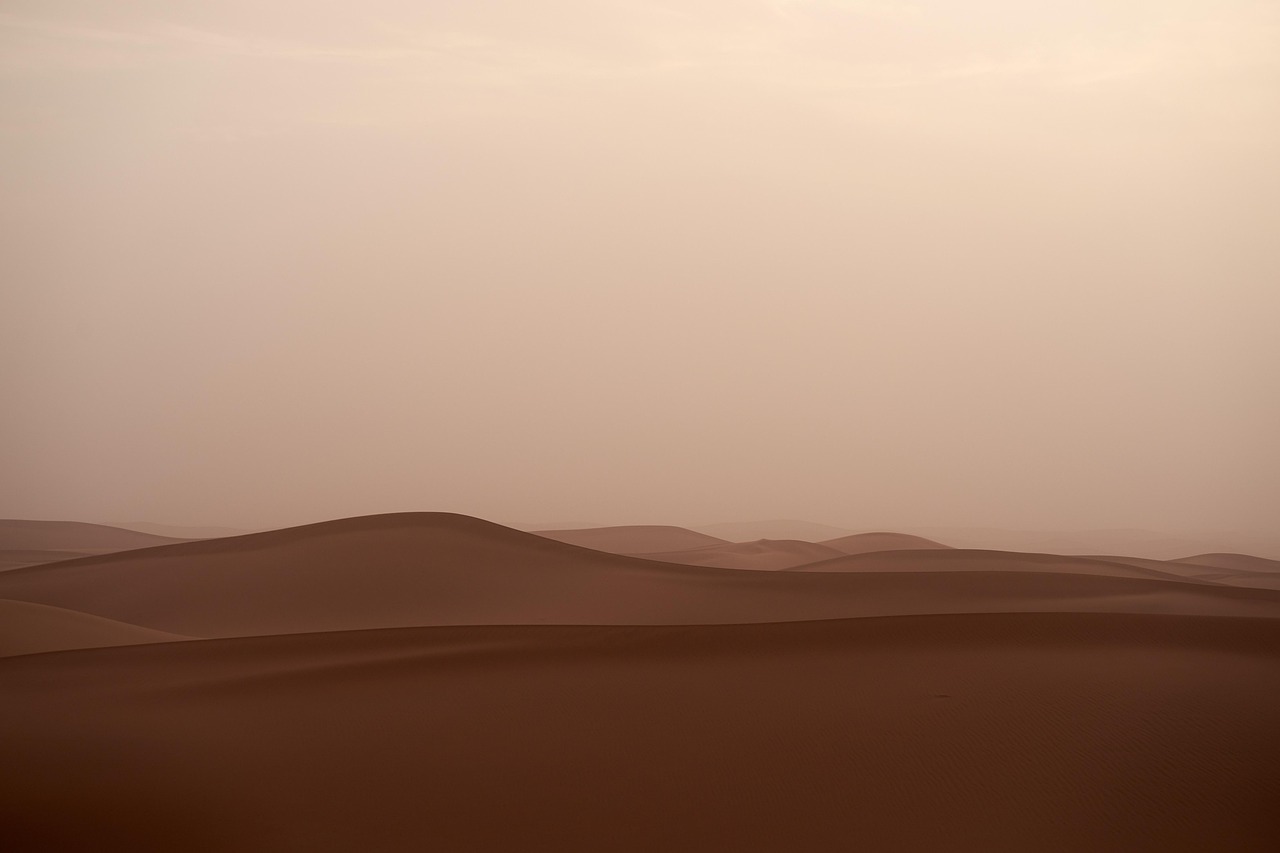
A Chance Encounter in the Canyon (Image Credits: Pixabay)
Gale Crater, Mars – Researchers examining images from NASA’s Curiosity rover stumbled upon preserved ripples in bedrock that point to a ferocious sandstorm roughly 3.5 billion years ago. These delicate structures, captured during the rover’s traverse through Jawbone Canyon, mark the first concrete evidence of such an extreme wind event on the Red Planet. The discovery highlights a time when Mars boasted a denser atmosphere capable of unleashing powerful gales that dwarf today’s dust storms.[1]
A Chance Encounter in the Canyon
Planetary geologist Steven Banham from Imperial College London led the team that spotted the unusual markings. On December 13, 2024 – sol 4391 of the mission – Curiosity’s cameras recorded a black-and-white panorama in Jawbone Canyon. The images revealed crinkly patterns on detached bedrock blocks amid sedimentary slabs.[1]
At first, the researchers puzzled over the features. Closer analysis confirmed them as wind-formed ripples, a serendipitous find during routine operations. The right experts happened to review the data at the perfect moment. This unexpected revelation transformed a standard rover drive into a window on Mars’ turbulent past.[1]
Deciphering Supercritical Ripple Strata
The ripples represent supercritical climbing wind ripple strata, a formation previously unseen on Mars and exceedingly rare on Earth. These millimeter-thick laminations formed as sand grains surged under relentless winds, climbing over each other in thin layers. Each set records brief gusts lasting minutes alongside prolonged blows extending hours.[1]
The thin stack of these layers suggests a singular, intense event rather than prolonged deposition. Key traits include:
- Millimeter-scale thickness in crinkly patterns
- Preservation in eroded bedrock blocks
- Evidence of sustained sand transport
- Formation under high-flow conditions
- Rarity, capturing hyper-local wind dynamics
Such structures demand specific conditions, underscoring their value as storm archives.[1]
The Anatomy of an Ancient Tempest
This sandstorm struck around 3.6 billion years ago, during Mars’ transition to aridity. Winds then propelled vast sand volumes into Gale Crater, sculpting the ripples in a matter of hours. Banham described it vividly: “The thing that absolutely amazes me is you just think that on a Tuesday afternoon, sometime, maybe 3.6 billion or so years ago, there was a sandstorm that rolled into Gale Crater… Then maybe the next day, the wind returns to normal.”[1]
Mars’ atmosphere at the time proved substantially thicker – capable of fostering winds far stronger than those today. Modern storms stir dust in a thin veil 200 times less dense than Earth’s. The peer-reviewed study appeared in Geology on March 27, 2026.[1]
Bridging Worlds: Earth, Modern Mars, and the Past
On Earth, similar ripples prove elusive, overshadowed by dunes that chronicle broader cycles. Martian analogs required modeling supercritical flows, where sand moves faster than ripples propagate. This event outstrips contemporary planet-wide dust storms in raw power, thanks to ancient atmospheric density.[1]
Banham noted the breakthrough: “Everybody knows that the wind blew on Mars… But this is the first definitive evidence that we’ve found of such a sandstorm.” The find aligns with Gale Crater’s record of ancient rivers and lakes, painting a dynamic climate picture.[1]
Reshaping Views of Mars’ Climate Saga
The ripples confirm transient weather amid long-term drying. They represent the briefest wind signals yet from ancient Mars, contrasting seasonal deposits elsewhere. Scientists anticipate further clues, like raindrop imprints, to flesh out wetter epochs.[1]
Banham emphasized the atmospheric shift: “These deposits in themselves indicate that the atmosphere was denser at the time than it is now.” This bolsters theories of an Earth-like past, with profound habitability implications. For details, see the original report on EarthSky.[1]
Key Takeaways
- First physical proof of an ancient Martian sandstorm, dated to 3.5 billion years ago.
- Ripples demand a thicker atmosphere, revealing Mars’ dynamic climate shift.
- Curiosity’s Jawbone Canyon images capture minutes-to-hours wind fury.
This Gale Crater gem reminds us how fleeting events etch eternal records. As Curiosity presses on, what other secrets might emerge from Mars’ sands? Share your thoughts in the comments.