

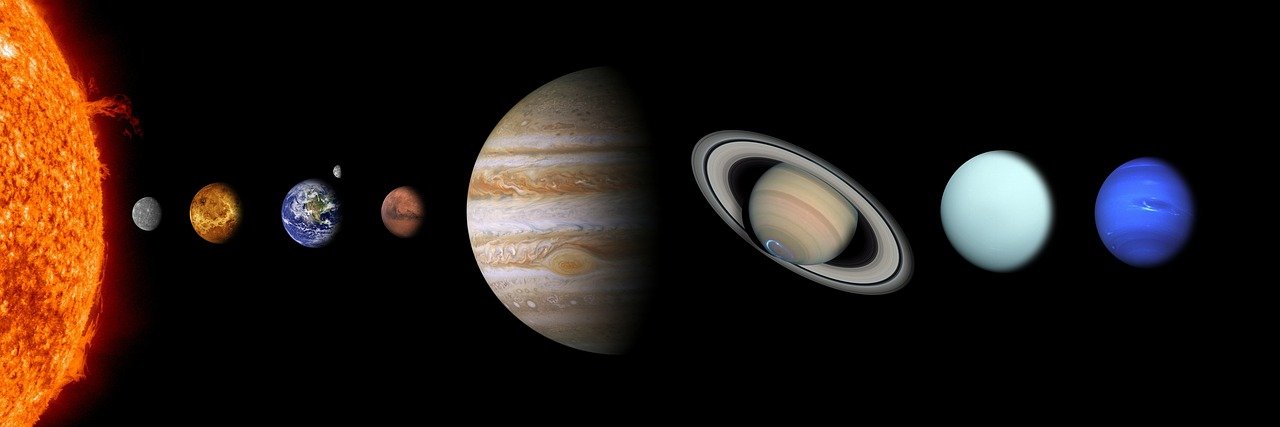
Io’s Transit Wraps Up Early Evening (Image Credits: Pixabay)
Stargazers across North America turn their gazes westward this Thursday evening, April 16, 2026, as Jupiter hosts a series of captivating moon transits. The gas giant, prominent in the evening sky, first sees Io conclude its passage before Ganymede takes center stage overnight. These events provide telescope users with dynamic views of Jupiter’s largest moons silhouetted against the planet’s banded disk.[1]
Io’s Transit Wraps Up Early Evening
Jupiter hangs in the western sky after sunset, which occurs around 7:40 p.m. local time at mid-northern latitudes. Io, one of the planet’s four major Galilean moons, finishes its transit across the eastern side shortly after 8:10 p.m. EDT. Observers with small telescopes catch the moon slipping off the western limb as darkness deepens.[1]
Io’s shadow lingers a bit longer on Jupiter’s disk, departing just before 9:30 p.m. EDT, particularly visible above the Midwest as skies fully darken. This shadow appears as a dark spot traversing the planet’s clouds. The sequence sets the stage for the main event, drawing attention to Ganymede nearing Jupiter’s eastern edge.[1]
Ganymede Enters the Spotlight Overnight
Ganymede, Jupiter’s biggest moon, begins its transit shortly before midnight Central Daylight Time. The crossing starts at 12:53 a.m. EDT on April 17, though it unfolds late on the 16th for western observers. The moon requires more than three hours to traverse the planet’s face, offering extended viewing for those who stay up late.[1]
The transit concludes around 1:10 a.m. PDT on April 17, but only Pacific Coast viewers witness the finale, as Jupiter sets earlier elsewhere in the contiguous U.S. No shadow from Ganymede proves visible during this event for most locations. Patience pays off for eastern skywatchers catching the early phases amid favorable dark skies.[1]
Timeline of Tonight’s Jupiter Events
Clear conditions enhance these observations, with a thin crescent Moon setting early and not interfering. Sunrise follows at about 6:20 a.m. local time, moonrise at 5:38 a.m., and moonset by 7:07 p.m., keeping the night moonless for optimal contrast. Jupiter’s position low in the west demands steady mounts for telescopes to track its motion.[1]
- Shortly after 8:10 p.m. EDT: Io exits Jupiter’s western limb.
- Before 9:30 p.m. EDT: Io’s shadow leaves the disk, best over Midwest.
- Shortly before midnight CDT: Ganymede reaches Jupiter’s eastern limb.
- 12:53 a.m. EDT (April 17): Ganymede transit underway.
- More than 3 hours: Full duration of Ganymede’s crossing.
- Around 1:10 a.m. PDT (April 17): Ganymede transit ends (Pacific viewers only).
This schedule varies slightly by longitude, so local astronomy apps confirm precise times.[1]
Positioning of Jupiter’s Other Moons
While Ganymede and Io steal the show, Europa and Callisto add context to the scene. Europa, the next innermost Galilean moon, appears east of Jupiter, just beyond typical telescope fields. Callisto, the outermost, sits farther east, requiring wider views to spot alongside the planet.[1]
These positions frame Jupiter’s dynamic system, reminding observers of its 79 known moons, though only the four largest shine brightly. Binoculars suffice for Jupiter itself, but transits demand at least a 4-inch telescope for detail. Steady air and dark sites away from city lights sharpen the view.[1]
Observation Essentials
| Time Zone | Key Event Start | Visibility Notes |
|---|---|---|
| EDT | 12:53 a.m. Apr 17 | Early transit phases |
| CDT | Shortly before midnight Apr 16 | Full early view |
| PDT | Late evening Apr 16 | Transit start to end |
Preparation includes aligning telescopes early, as Jupiter descends steadily. Apps like Stellarium or SkySafari predict exact paths. For more on weekly skies, check resources from Astronomy.com.[1]
Key Takeaways
- Ganymede’s transit spans over three hours, peaking overnight.
- Io’s exit and shadow provide a prelude around 8-9 p.m. EDT.
- Pacific observers see the complete Ganymede event.
Jupiter’s moon transits like Ganymede’s remind us of the solar system’s intricate ballets, visible with modest equipment on clear nights. These moments connect backyard astronomers to Galileo’s discoveries four centuries ago. What sky events catch your eye this week? Share in the comments below.