

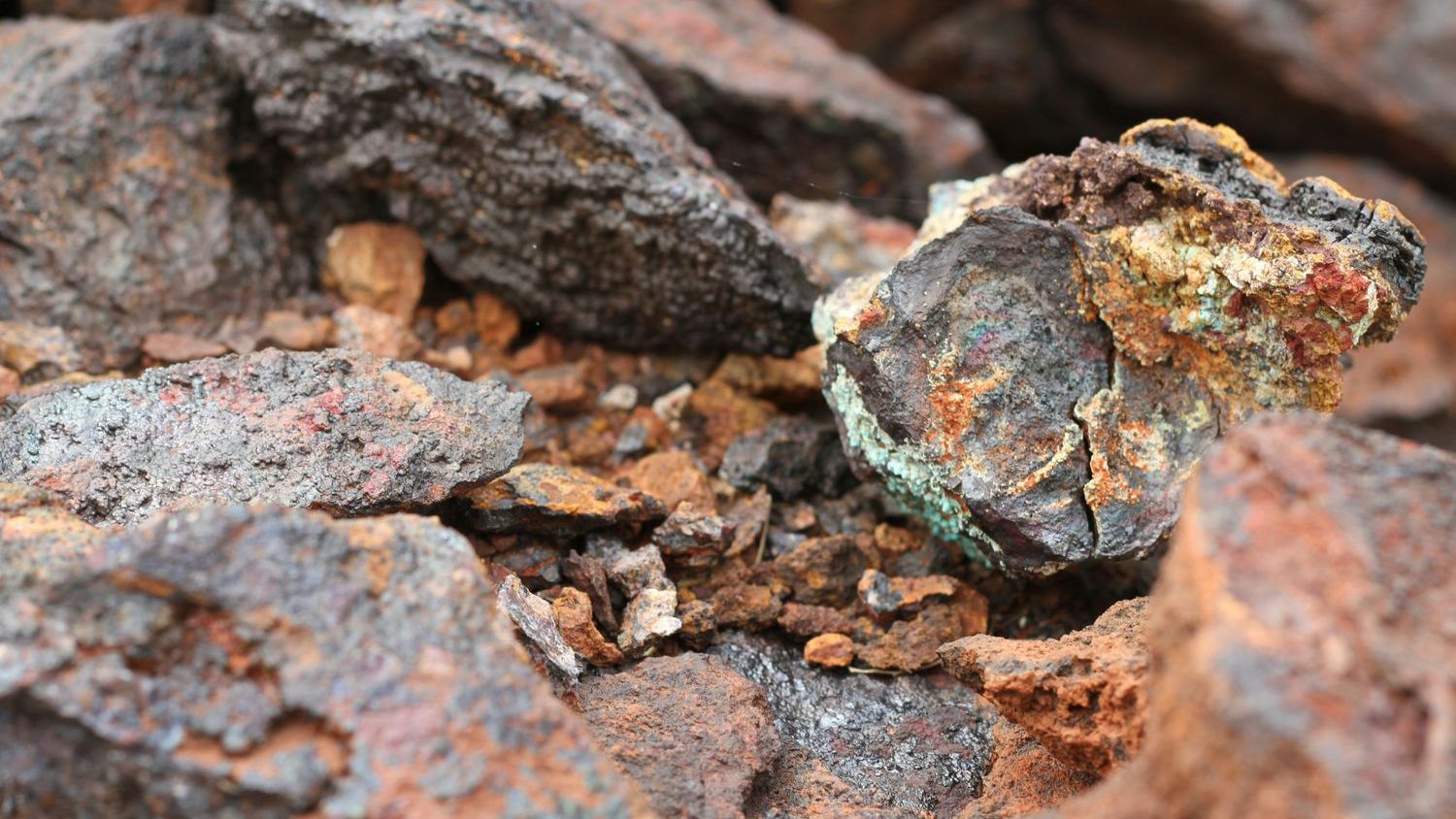
Mysterious green rocks in Pyrenees cave hint that prehistoric people were working copper there for 4,000 years – Image for illustrative purposes only (Image credits: Unsplash)
Pyrenees, Spain – Archaeologists have uncovered evidence that prehistoric communities repeatedly visited a high-altitude cave in the eastern Pyrenees to process copper-rich minerals, challenging long-held views on ancient mountain use. Dozens of bright green rock fragments, likely malachite, filled hearths across multiple layers in Cave 338, situated at 2,235 meters above sea level in Spain’s Girona province.[1][2] The site reveals planned expeditions spanning more than four millennia, from around 5,000 B.C. into the Bronze Age.
A High-Altitude Surprise
Excavations at the cave’s entrance, covering six square meters, exposed four distinct occupation layers. The oldest layer held only charcoal fragments dated to about 6,000 years old, marking initial human presence. Deeper layers yielded richer finds, including nearly 200 green mineral chunks not native to the cave, alongside animal bones, ceramics, and human remains.[3]
Researchers identified 23 combustion structures, or hearths, where the green fragments appeared crushed and heat-altered. These features overlapped yet remained distinct, pointing to repeated visits separated by significant time gaps. Prof. Carlos Tornero, lead author from the Catalan Institute of Human Paleoecology and Social Evolution, noted the site’s intensity: “For the first time in the Pyrenees, high-mountain prehistoric occupations of significant intensity have been documented, characterized by repeated activities and the direct exploitation of mineral resources within the cave.”[1]
Processing the Green Mineral
The green rocks, preliminarily identified as malachite – a copper carbonate ore – underwent deliberate treatment. Heating malachite releases carbon dioxide, converting it to copper oxide, which charcoal then reduces to metal. Fragments showed thermal alteration absent in surrounding materials, confirming intentional use of fire.[2]
“Many of these fragments are thermally altered, while other materials in the cave are not, which clearly suggests that fire played an important role in their processing and that there was a deliberate intention behind it,” explained co-author Dr. Julia Montes-Landa of the University of Granada. “In other words, they weren’t burned by accident.”[3] Ongoing chemical analysis will confirm the mineral’s composition and source, but the evidence positions Cave 338 as one of Europe’s earliest high-altitude sites for such work.
Timeline and Repeated Use
Radiocarbon dating placed the earliest activity between 5,000 and 4,300 B.C., aligning with the late Neolithic and aligning roughly 7,000 years ago from today. The most intense phase ran from 3,600 to 2,400 B.C., during the Copper Age’s peak, with later use around 1,100 to 900 B.C. This created a sequence spanning over 4,000 years, with hiatuses between phases.[1]
- Layer NA4 (oldest): 5,000–4,300 B.C., initial charcoal.
- Layer NA3: 3,464–2,532 B.C., peak hearths and minerals.
- Layer NA2: 1,109–890 B.C., continued activity.
- Layer NA1: Historical, sparse use.
Faunal remains, mainly sheep and goat, alongside imported ceramics, indicate well-supplied trips rather than permanent settlement. Personal items like a shell pendant and bear-tooth ornament suggest cultural ties across regions.
Human Traces and Future Questions
Among the finds, a child’s finger bone and baby tooth from the intensive layer hint at possible burials deeper inside. These remains, from at least one individual around 11 years old, lack clear trauma evidence. The jewelry, linked to second-millennium B.C. contexts, reflects shared traditions, with the bear tooth potentially holding symbolic value tied to the local wilds.[2]
The discovery reframes the Pyrenees as integral to prehistoric economies, not mere transit zones. Tornero emphasized: “This site demonstrates that the Pyrenees were not a marginal territory for prehistoric communities, but a space fully integrated into their mobility strategies and territorial exploitation.”[1] Teams plan resumed digs this summer to probe further layers and verify the malachite source, promising deeper insights into ancient resource networks.
These findings, detailed in Frontiers in Environmental Archaeology, underscore how generations passed down knowledge of this remote site, sustaining vital copper pursuits amid rugged peaks.