

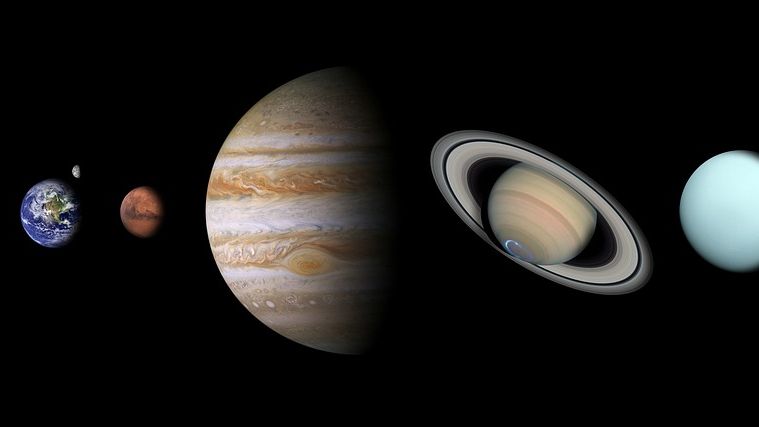
How Juno Can Still Beam Back Breathtaking Images of Jupiter – Image for illustrative purposes only (Image credits: Pixabay)
Juno has circled Jupiter for nearly a decade, gathering data on the planet and its moons while facing constant exposure to intense radiation. The spacecraft’s primary color camera, JunoCam, began showing clear signs of damage after dozens of close passes. Engineers responded with a targeted repair that restored its performance from hundreds of millions of miles away.
Radiation Takes a Toll
Jupiter’s powerful radiation belts surround the planet and extend well beyond the protective shielding on the spacecraft. Over successive orbits, this environment degraded JunoCam’s sensors, producing noisy and corrupted data in later passes. Mission planners had originally expected the camera to last through roughly 32 orbits, yet the spacecraft continued operating well beyond that mark.
The damage appeared gradually at first but accelerated, threatening to end JunoCam’s contribution to the mission. Without intervention, the instrument risked becoming unusable for further close-range observations of Jupiter and its satellites.
The Remote Repair
In late 2023, the team executed a precise maneuver to heat the camera to approximately 77 degrees Fahrenheit. This process, known as annealing, allowed the sensor material to reorganize at the atomic level and reduce radiation-induced defects. The adjustment occurred entirely through commands sent from Earth, demonstrating a practical method for in-flight hardware recovery.
Subsequent orbits confirmed the improvement. Data quality returned to levels that supported continued scientific imaging, extending the camera’s useful life without any physical contact or replacement parts.
Continued Observations
With the camera restored, Juno maintained its schedule of close encounters. The spacecraft has since passed within a few thousand miles of smaller moons such as Thebe while also studying atmospheric features and volcanic activity on Io. These passes provide fresh measurements that complement data from other onboard instruments.
The success of the annealing technique offers a model for future deep-space missions operating in high-radiation zones. Similar approaches could help preserve sensitive electronics on probes destined for environments like those around Saturn or even interstellar space.
Next Steps in Exploration
Juno’s extended mission continues, though engineers recognize that radiation will eventually limit further operations. In the meantime, the European Space Agency’s JUICE spacecraft, launched in 2023, is en route and scheduled to arrive at Jupiter in 2031. Its instruments are designed for higher-resolution studies of the icy moons, building on the foundation Juno has established.
The episode underscores how creative engineering can stretch the lifespan of valuable hardware in the harshest conditions of the solar system.