

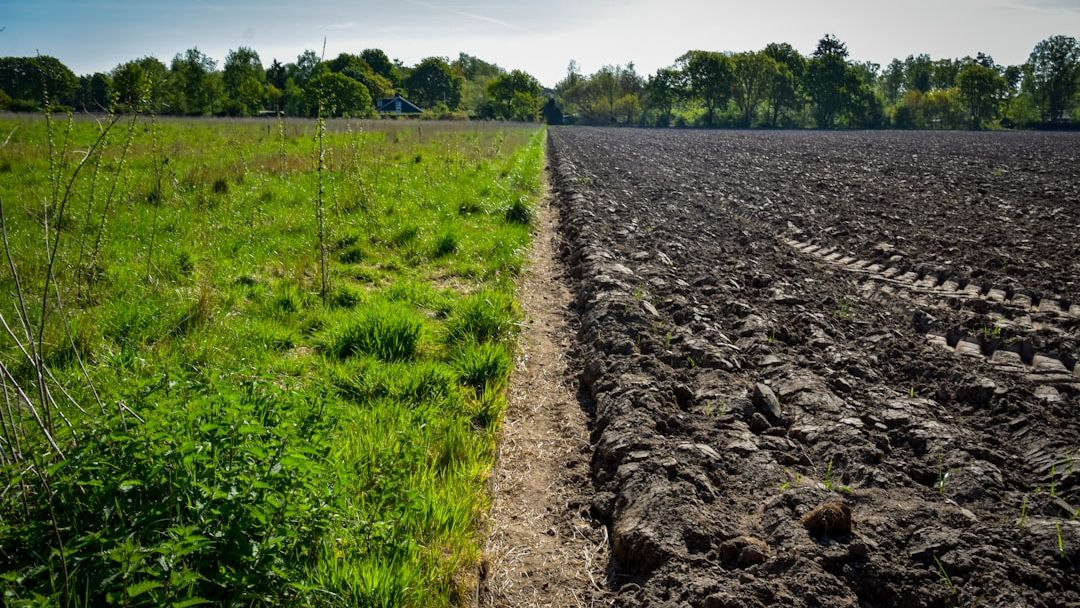
Managed Agriculture Hinders Predictability of Critical Zone Features – Image for illustrative purposes only (Image credits: Unsplash)
A new study has identified sudden changes in the variability of soil chemistry, stream flows, and land-atmosphere exchanges, linking them directly to intensive agricultural practices. Researchers demonstrated that mechanized planting and harvesting disrupt the predictability of these features within Earth’s critical zone. The findings highlight challenges in forecasting environmental responses amid ongoing human impacts.
Defining the Critical Zone
The critical zone encompasses the Earth’s near-surface layer, stretching from bedrock to the tops of vegetation canopies. This dynamic region includes soil profiles, root zones, river corridors, and floodplain areas where water, air, soil, and life intersect. Processes here regulate water quality, nutrient cycling, and carbon storage, all essential for ecosystems and human needs.
Conservation efforts depend on grasping how this zone responds to pressures like land use changes. Intensive agriculture, with its heavy machinery and scheduled interventions, alters these natural rhythms. The research underscores the need to monitor such influences closely to sustain the zone’s functions.
A Data-Driven Investigation
Scientists employed advanced analytical techniques to uncover patterns in critical zone behavior. They applied clustering algorithms to time-series data, grouping similar dynamics into distinct regimes. Dimensionality reduction methods then simplified complex datasets, pinpointing dominant sources of variation.
This framework allowed detection of both human-induced and natural states. By relating these regimes to indicators of management intensity, the team traced causal links. The approach proved versatile across varied landscapes, offering a scalable tool for future assessments.
Evidence of Abrupt Transitions
Key features showed sharp increases in variability following the onset of intensive farming. Stream chemistry fluctuated more erratically, soil properties shifted unpredictably, and exchanges between land and atmosphere grew volatile. These changes aligned with periods of mechanized activities, such as tilling and crop cycles.
Natural regimes, by contrast, exhibited steadier patterns. The study documented transitions where managed systems diverged markedly from baseline states. Such shifts complicate models used for environmental forecasting.
- Stream and soil chemistry: Heightened variability post-management.
- Land-atmosphere interactions: Increased flux during farming operations.
- Hydrologic responses: Altered timing and magnitude in managed areas.
Implications for Prediction and Management
The identified regimes carry significant weight for predicting critical zone evolution under climate pressures. Human-altered dynamics reduce the reliability of standard models, demanding incorporation of management variables. This could refine strategies for agriculture and conservation alike.
Land managers now have evidence to weigh intensive practices against ecological stability. Policymakers might prioritize hybrid approaches that blend productivity with zone resilience. The research, published in AGU Advances, provides a foundation for targeted interventions.
Alberto Montanari, editor-in-chief of the journal, noted the study’s innovative contributions to understanding transitions and drivers. As environmental changes accelerate, tools like this data-driven framework become vital for proactive stewardship. The work signals a path toward more resilient landscapes, where farming and nature coexist more harmoniously.