

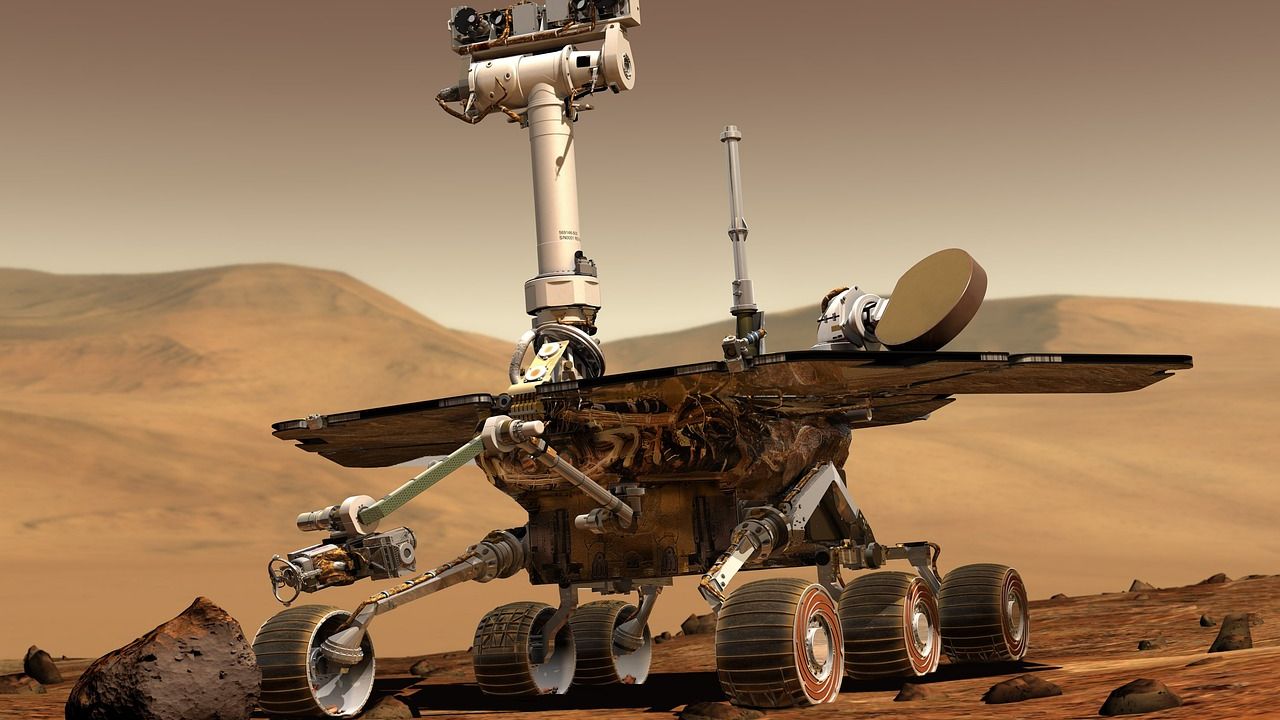
The Mars rovers carry no clocks set to Earth time, so the engineers driving them shifted their entire lives to a 24-hour-39-minute Martian day, and within weeks JPL staff were sleeping during California afternoons, eating breakfast at midnight, and quietly developing a kind of jet lag no human had experienced before. – Image for illustrative purposes only (Image credits: Pixabay)
At NASA’s Jet Propulsion Laboratory in Pasadena, teams guiding the Curiosity and Perseverance rovers have long accepted an unusual reality. The vehicles operate on a Martian sol that lasts 24 hours and 39 minutes, forcing the humans who command them to realign their own clocks and routines. This adjustment creates a workplace rhythm unlike any other in science, where daily life drifts steadily out of sync with the surrounding world.
Why Rover Operations Demand Martian Time
The rovers rely on solar power and must complete their tasks during daylight hours on Mars. Commands from Earth cannot arrive in real time because radio signals take between four and 24 minutes to travel the average 140 million miles separating the planets. Mission planners therefore prepare detailed scripts in advance and send them as single uplinks timed to Martian sunrise.
Thermal systems, cameras, and drive plans all follow the Martian sun rather than Pacific Time. Any mismatch would leave the vehicles without sufficient light to recharge or navigate safely. This operational necessity means the entire ground team must adopt the longer day from the moment a rover lands.
The Steady 39-Minute Drift and Its Daily Toll
Each morning the team’s schedule shifts 39 minutes later than the previous day. Within two weeks, breakfast occurs near midnight and work begins in the middle of the afternoon. By the fifth week, engineers often drive home at dawn while neighbors head out for the day.
During the early phase of the Curiosity mission, flight director David Oh and his family moved their children onto the same schedule. They ate meals at unconventional hours and covered bedroom windows with aluminum foil to block California sunlight. The family even found the local bowling alley open and welcoming at 4 a.m.
Staff reported sleep loss, trouble concentrating, and a growing sense of separation from friends and relatives who remained on Earth time. The body’s natural circadian rhythm, tuned over millions of years to a 24-hour cycle, receives conflicting light cues from the Pasadena sky, leaving many in a persistent state of fatigue.
Tools and Strategies Developed to Cope
JPL collaborated with sleep researchers to create practical supports for the team. Blue-enriched lighting in operations rooms helped suppress melatonin during the crew’s subjective daytime. Blackout curtains and sleep masks allowed rest during California afternoons, while carefully timed caffeine intake maintained alertness for critical uplink windows.
Some engineers wore specially modified watches whose mechanisms ran 2.7 percent slower to match the Martian day. Others kept two watches, one for each planet, as a constant reminder of which schedule governed their current shift. Dentist visits and school conferences were booked weeks ahead for the rare moments when Martian noon aligned with Earth daylight.
Autonomy Reduces the Need for Constant Human Presence
The initial 90-sol commissioning period requires the most intensive planning because every drive, drill, and instrument check happens for the first time. After that phase, teams shift to a more sustainable Earth-based rhythm while still preparing activities a day or two ahead.
Recent upgrades to Perseverance have further eased the burden. A new onboard system called Mars Global Localization matches panoramic images against stored orbital maps, fixing the rover’s position to within roughly 10 inches. This capability cuts the time the vehicle spends waiting for human confirmation, allowing planners to sleep through more Earth nights.
Long-Term Effects and the Quiet Return to Earth Time
Repeated circadian disruption carries measurable costs. Studies link fragmented sleep patterns to higher risks of metabolic issues, mood changes, and, according to research published in late 2025, increased chances of later cognitive decline. Mission support teams monitor staff closely, and most return to normal schedules within weeks once the intensive phase ends.
Even so, some engineers describe a lingering sense that a standard Earth day now feels slightly too short. For a brief period after switching back, the extra 39 minutes of a Martian sol can seem like the more natural length of time. The experience leaves a small but lasting imprint on those who have lived, if only temporarily, by the clock of another world.