

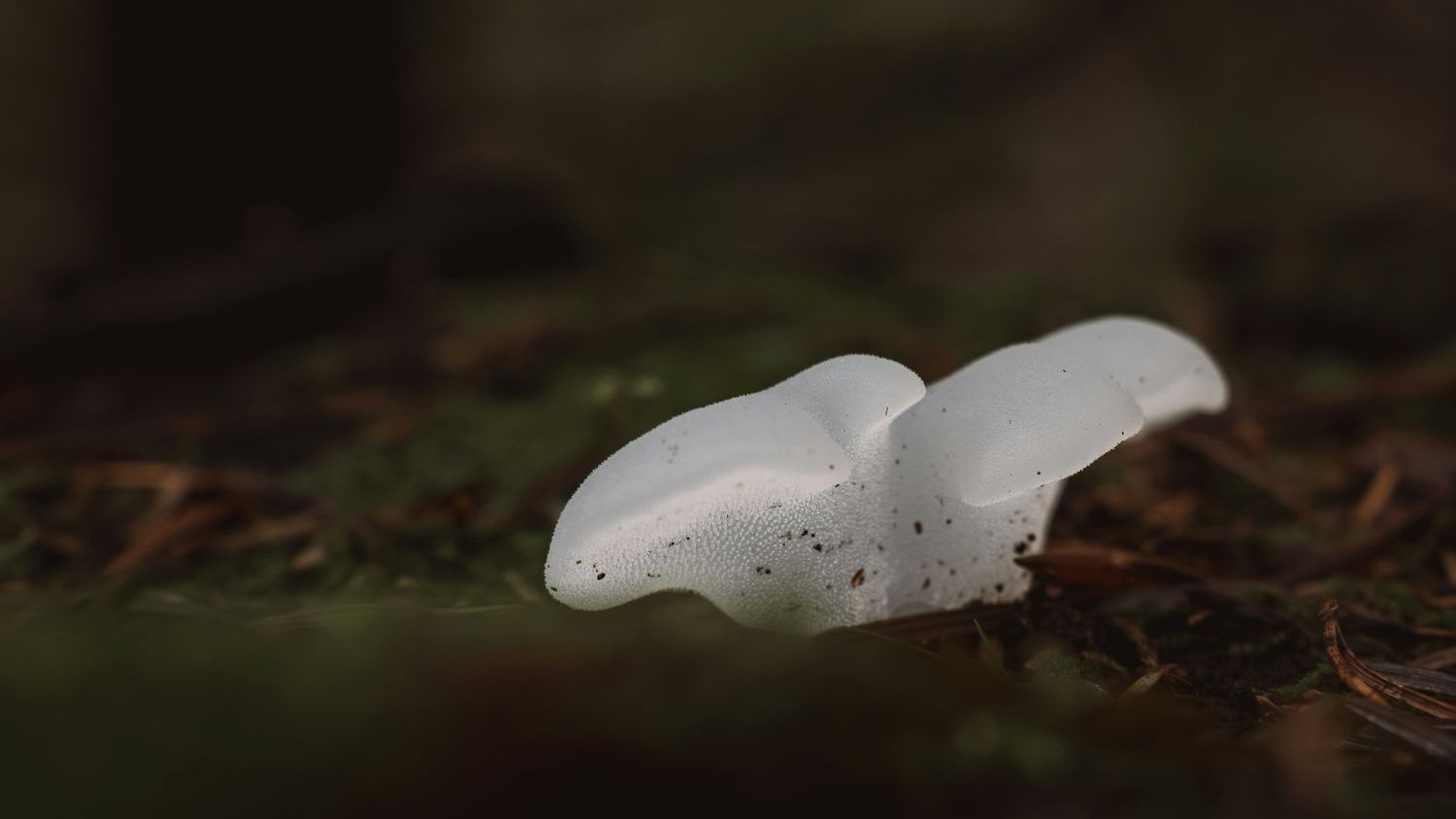
Glowing fungi expose final enzyme that could make bioluminescent tools more efficient – Image for illustrative purposes only (Image credits: Unsplash)
Deep in forests and on decaying wood, certain fungi produce a soft, steady light without any external power source. This natural bioluminescence arises from a chain of chemical reactions that researchers have studied for decades. Medical scientists already borrow parts of this system to make hidden biological processes visible inside living tissues. A recent study now completes the picture by identifying the final missing enzyme in the pathway.
Nature’s Built-In Light Source
Bioluminescence occurs when specialized enzymes turn chemical energy into visible light. In fungi, this process follows a distinct sequence known as the fungal bioluminescence pathway. The light appears as a gentle green glow that can persist for hours under the right conditions. Researchers have long known most of the steps involved, yet one critical piece remained unidentified until now.
The pathway begins with a precursor molecule that undergoes several transformations. Each step requires a specific enzyme to move the reaction forward. Without the complete set, scientists could not fully replicate or optimize the system in laboratory settings. The newly identified enzyme closes this gap and allows the entire sequence to function more reliably.
Current Uses in Medical Research
Researchers have already adapted fungal enzymes to track disease progression in animal models. These tools help visualize tumor growth and monitor inflammatory responses without invasive procedures. The light emitted serves as a clear signal that can be captured by standard imaging equipment. Because the system draws on a natural process, it tends to produce less background interference than some synthetic alternatives.
Early applications focused on basic proof-of-concept experiments. Scientists inserted the known fungal genes into cells or small organisms to test whether light production could mark specific events. Results showed promise for non-toxic, real-time observation of biological changes. The missing enzyme, however, limited how efficiently and brightly the system could perform.
The Final Piece of the Puzzle
Publication of the findings in The FEBS Journal marks the completion of the fungal bioluminescence pathway. With every enzyme now accounted for, the full chemical route from starting material to light emission is understood. This knowledge removes a long-standing barrier that had prevented full reconstruction of the system outside the fungus itself.
The discovery does not immediately deliver a finished product. Instead, it supplies the last required component for further engineering. Teams can now experiment with adjusting reaction rates or combining the pathway with other imaging methods. Such refinements may eventually yield brighter or more stable signals suitable for deeper tissue observation.
Looking Ahead to Practical Applications
Improved bioluminescent tools could support more precise monitoring of disease states over time. Researchers anticipate that complete control over the pathway will allow finer tuning for different experimental needs. The work also opens possibilities for creating new reporter systems that combine fungal enzymes with existing fluorescent proteins.
Challenges remain in translating laboratory results into clinical settings. Questions about long-term stability, delivery methods, and safety in humans will require additional study. Still, the identification of the final enzyme provides a clearer roadmap for addressing these issues systematically.
What this means now
- The fungal bioluminescence pathway is fully mapped for the first time.
- Medical imaging tools that rely on light signals can be refined with greater precision.
- Further research will determine how quickly these advances reach practical use.