

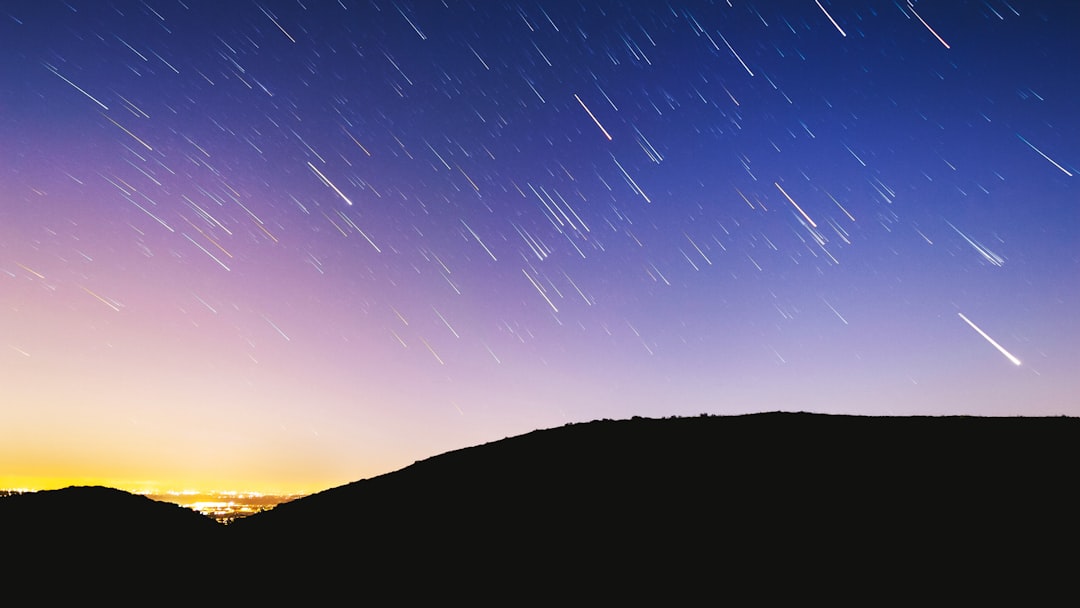
One of Skywatching’s Oldest Spectacles (Image Credits: Unsplash)
The Lyrid meteor shower returns each spring, captivating skywatchers with its reliable display of fiery streaks across the night sky. This year’s peak arrives during the late evening of April 21 and the predawn hours of April 22, offering optimal conditions under mostly moonless skies. Observers in the Northern Hemisphere stand the best chance for clear views, though southern viewers may catch glimpses under ideal circumstances.
One of Skywatching’s Oldest Spectacles
Records of the Lyrids stretch back nearly 2,700 years, marking it as one of the longest-observed meteor showers in human history. Ancient Chinese astronomers first documented these events, noting their consistent appearance each April. The shower owes its existence to Earth crossing the dusty trail left by Comet C/1861 G1 (Thatcher), a periodic visitor to the inner solar system.
Particles from the comet incinerate upon entering Earth’s atmosphere, producing the bright flashes known as shooting stars. The National Aeronautics and Space Administration explains the phenomenon vividly: “When comets come around the sun, the dust they emit gradually spreads into a dusty trail around their orbits. Every year the Earth passes through these debris trails, which allows the bits to collide with our atmosphere where they disintegrate to create fiery and colorful streaks in the sky.” This annual ritual transforms cosmic dust into a dazzling light show visible to the naked eye.
Prime Timing for Peak Activity
Expect the shower’s strongest performance from late Tuesday night through Wednesday morning, with rates averaging 10 to 20 meteors per hour under dark skies. Rare surges, or “outbursts,” have historically pushed counts as high as 100 per hour, adding unpredictability to the event. The shower remains active from April 16 to 25, but midweek delivers the highest concentration.
Meteors radiate from the constellation Lyra, near the brilliant star Vega. Viewers should direct their gaze slightly offset from this point to catch longer trails. The American Meteor Society confirms prime visibility at dawn for northern observers, with eastern horizons lighting up the show starting around 10 p.m. on April 21.
Proven Strategies for Clear Sights
No telescopes or binoculars are necessary; the human eye suffices for this accessible display. Stargazing apps prove invaluable for pinpointing Vega and the radiant. Resources like those recommended on Space.com simplify navigation for beginners and experts alike.
Relocate to remote spots far from urban glow to enhance contrast. This year’s waning moon poses minimal disruption, preserving dark conditions. Patience pays off – allow 20 minutes for eyes to adapt fully, and commit to at least an hour of observation to weather quiet spells.
Practical preparations elevate comfort during extended sessions:
- Choose wide-open fields or rural roads away from traffic.
- Dress in layers to combat chilly overnight drops.
- Pack thermoses of hot beverages for warmth.
- Lie back on blankets or reclining chairs to scan broad sky sections.
- Observe solo or in small groups to minimize light pollution from devices.
Why Lyrids Captivate Year After Year
The shower’s moderate but steady pace suits casual viewers seeking wonder without overwhelming intensity. Unlike flashier events, Lyrids reward persistence with swift, bright meteors that occasionally boast persistent trains. Their connection to an ancient comet adds layers of scientific intrigue, linking modern sights to prehistoric skies.
Forecasts from experts like NASA’s skywatching updates underscore favorable weather prospects across many regions. Such alignment of clear nights and low lunar interference heightens anticipation. Enthusiasts worldwide prepare to trace these celestial breadcrumbs, reminding us of our place in the vast solar neighborhood.
In summary, the Lyrids offer a straightforward portal to the cosmos this week. Seize the predawn window for your best shot at dozens of shooting stars.
Key Takeaways
- Peak viewing: Late April 21 evening through April 22 predawn.
- Average 10-20 meteors/hour; rare bursts up to 100.
- Best from dark sites; no gear needed, eyes adapt in 20 minutes.
What are your plans for meteor watching? Share your experiences in the comments below.