

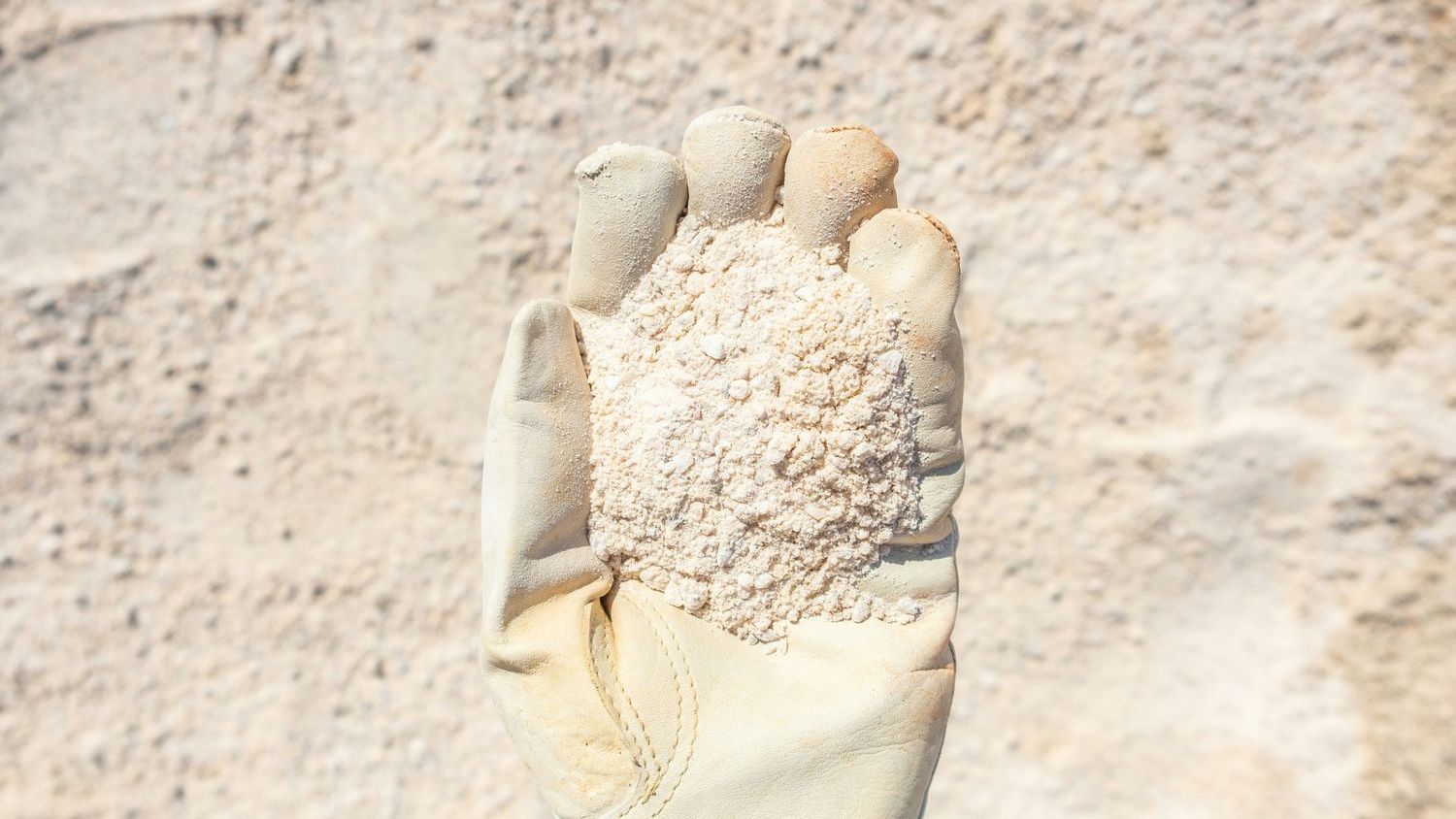
Why the dust on the moon is sharper than broken glass and how that single fact is forcing NASA to redesign every piece of hardware it plans to send there – Image for illustrative purposes only (Image credits: Unsplash)
Decades after the final Apollo mission, a single observation from the lunar surface continues to influence every major decision about returning humans to the Moon. In late 1972, astronaut Harrison Schmitt experienced immediate physical reactions upon reentering the lunar module, reactions later traced to fine particles that had infiltrated his suit. Those particles, now recognized as sharper and more persistent than any terrestrial equivalent, have elevated dust control from a minor concern to a core requirement for the Artemis program. With planned stays extending from days into months, engineers must address an environmental factor that affects nearly every system intended for long-term lunar operations.
Why the Issue Has Gained Urgency
The Artemis initiative aims to establish a sustained presence on the Moon, a goal that transforms dust from a short-term nuisance into a persistent operational constraint. Unlike the brief excursions of the Apollo era, future missions will involve repeated surface activities, habitat construction, and equipment that must function reliably over extended periods. This shift has prompted NASA to classify lunar regolith mitigation as a cross-cutting capability that applies across vehicles, habitats, power systems, and scientific instruments. Without effective solutions, the same material that once caused minor irritation could now compromise mission timelines and crew safety.
Engineers have documented how the absence of weathering processes on the Moon leaves every grain with sharp, fractured edges. Micrometeorite impacts over billions of years have produced a powder in which a significant fraction of particles measure less than 20 micrometers across. These grains remain suspended longer in the weak lunar gravity and carry an electrostatic charge that allows them to adhere to surfaces ranging from solar arrays to pressure seals.
Evidence from the Apollo Record
Apollo crews encountered the material directly and recorded its effects across multiple systems. On the final mission, the dust abraded boot layers, restricted joint movement in suits, and compromised sample container seals. All twelve moonwalkers reported symptoms inside their spacecraft after surface activity, including irritation to eyes and respiratory passages. Later laboratory studies using lunar dust simulants confirmed potential for cellular damage in lung tissue, elevating the issue from operational inconvenience to a recognized health consideration.
These experiences revealed that conventional Earth-based materials and designs offered little protection. Fiberglass fabrics chosen for fire resistance proved vulnerable to abrasion, while mechanical components ground down under repeated exposure. The data collected then still guides current testing protocols, underscoring that the problem was never fully solved but merely deferred until longer missions made it unavoidable.
Current Mitigation Strategies Under Development
NASA has adopted a portfolio approach rather than relying on any single technology. A 2021 agency standard now requires all Artemis hardware to undergo testing against defined dust environments before flight approval. One established method uses embedded electrodes to generate electric fields that repel charged particles from surfaces, a concept refined over two decades and recently demonstrated on a commercial lunar lander mission.
Additional efforts include robotic units that apply focused electron beams to loosen particle bonds on flat components such as solar panels. Suborbital flights test how the material behaves under partial gravity, while specialized distributors apply controlled contamination to evaluate seals and fabrics. These parallel programs reflect the recognition that dust interacts with thermal, optical, mechanical, and electrical systems simultaneously.
Design Changes for the Next Generation of Suits
The spacesuit planned for Artemis III incorporates dust resistance as a primary requirement from the outset. A rear-entry configuration reduces contact between contaminated lower sections and the interior during doffing. Mobility joints have been engineered for greater tolerance to particulates, and outer layers are being developed as disposable elements that can be removed before returning to a pressurized environment.
Visor coatings draw on commercial experience with high-particulate environments to maintain optical clarity. These modifications address limitations observed during Apollo while supporting the wider range of movements needed for extended surface work. The result is hardware shaped by the understanding that dust tolerance must be built in rather than added later.
What matters now is that every element of lunar infrastructure, from rover bearings to habitat hatches, must demonstrate resistance to the same abrasive environment that once caused only temporary discomfort.
The experience of the final Apollo crew provided an early indication of challenges that will define the coming era of lunar exploration. Rather than treating dust as an isolated hazard, NASA now views it as a fundamental design parameter comparable to vacuum or radiation. This perspective ensures that future missions incorporate protective measures from the initial concept stage, reducing the likelihood that a single environmental factor could limit operational success.