

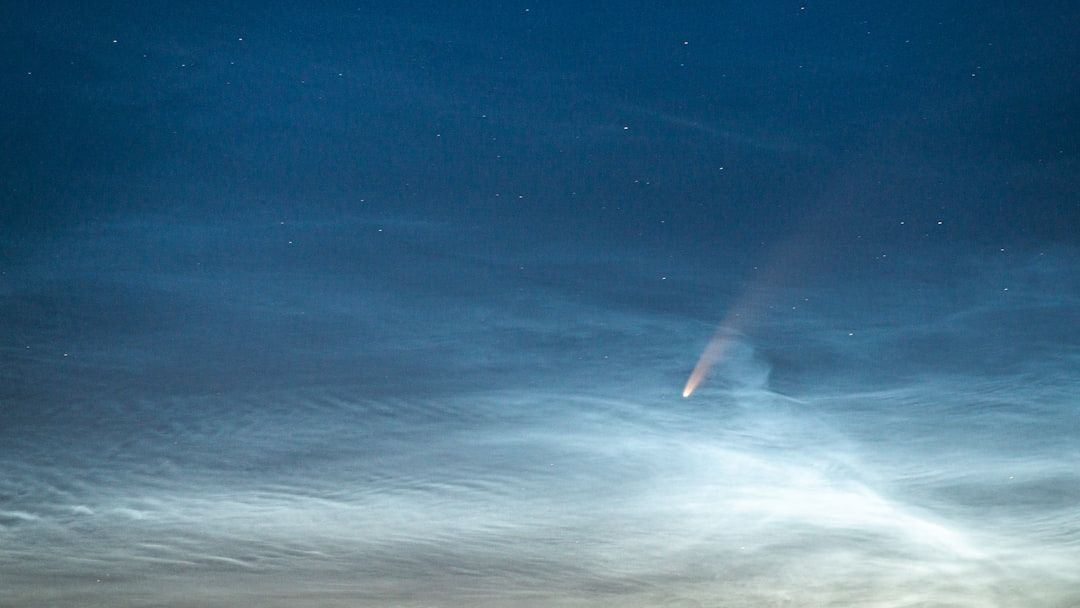
Will the moon ruin the Eta Aquarid meteor shower this week? Here’s what to know – Image for illustrative purposes only (Image credits: Unsplash)
Stargazers rising in the pre-dawn chill this week confront a celestial showdown between the swift Eta Aquarid meteors and a glaring waning gibbous moon. The shower reaches its height overnight from May 5 to 6, promising streaks from Halley’s Comet debris, yet moonlight could obscure fainter trails.[1][2] Observers who time their watch carefully stand the best chance of catching the show despite the interference.
The Moon’s Disruptive Glow
A waning gibbous moon, illuminated to about 84 percent on peak nights, rises around midnight and floods the sky with light until sunrise.[2] This brightness washes out dimmer meteors, potentially slashing hourly rates below 10 in compromised conditions. The lunar phase aligns poorly with the shower’s timing, a common hurdle for annual displays.
Such interference proves particularly frustrating for northern viewers, where meteor numbers already hover lower. Southern Hemisphere skywatchers, favored by higher rates, face the same glare but benefit from the radiant climbing nearer overhead.[3] Full moonlight on May 1 sets the stage for waning but still potent illumination through the peak.
Pinpointing the Peak Activity
The Eta Aquarids remain active from April 19 through May 28, building toward a crescendo around May 5-6.[1][4] Prime viewing unfolds in the hours before dawn, when the radiant in Aquarius rises in the east. Predicted maximum activity hits near 3:51 UTC on May 5, though good sightings extend to neighboring mornings like May 4 and 6.
Under ideal dark skies without moonlight, zenithal hourly rates reach 50 to 60, translating to 10-30 meteors per hour north of the equator and up to 50 farther south.[2][5] These swift visitors, clocked at 66 kilometers per second, often leave glowing trains in their wake.
Proven Tactics to Beat the Light
Success hinges on smart positioning and preparation. Seek the darkest site possible, far from city glow, and time your session for 2 a.m. local onward as rates climb toward dawn.[1] Position yourself to shield the moon behind hills, trees, or buildings while scanning the open eastern sky.
Comfort enhances endurance during these early hours. Recline in a chair, bundle against the cool night, and sip something warm to stay alert. Let your eyes dark-adapt for 30 minutes – no phones or white lights to ruin the adjustment.
- Face east-northeast toward Aquarius’ water jar asterism, but watch the full dome as meteors streak everywhere.
- Skip binoculars or scopes; naked eyes capture the widest field.
- Use red flashlights if needed for maps.
- Track trains back to the radiant near eta Aquarii for confirmation.
- Patience pays off – bursts can surprise even in moonlight.
These steps, drawn from expert guidance, help northern observers snag glimpses despite lower baselines.[4]
Tracing Roots to Halley’s Comet
Earth plows through dusty remnants of Halley’s Comet twice yearly, spawning the Eta Aquarids outbound in May and Orionids inbound in October. The comet, with its 76-year orbit, last dazzled in 1986 and returns in 2061.[1][4] Named for Edmond Halley, who forecasted its path from 17th-century sightings, the parent body sheds icy grains that ignite as shooting stars.
Aquarius hosts the radiant, low on northern horizons but favorable southward. The shower’s reputation for persistent trains and speed draws dedicated followers, even in suboptimal years.
– Parent: 1P/Halley
– Speed: 65 km/sec
– Radiant: RA 22h32m, Dec -1°
– Best latitudes: Southern tropics
Perseverance Rewards the Watch
Though the moon dims prospects, history shows resilient viewers often report rewarding captures. Pre-dawn commitment on May 5 or 6 could yield memorable streaks, connecting modern eyes to ancient comet trails. As the shower fades post-peak, it leaves stargazers anticipating clearer skies next year – or Halley’s own spectacle decades hence.