

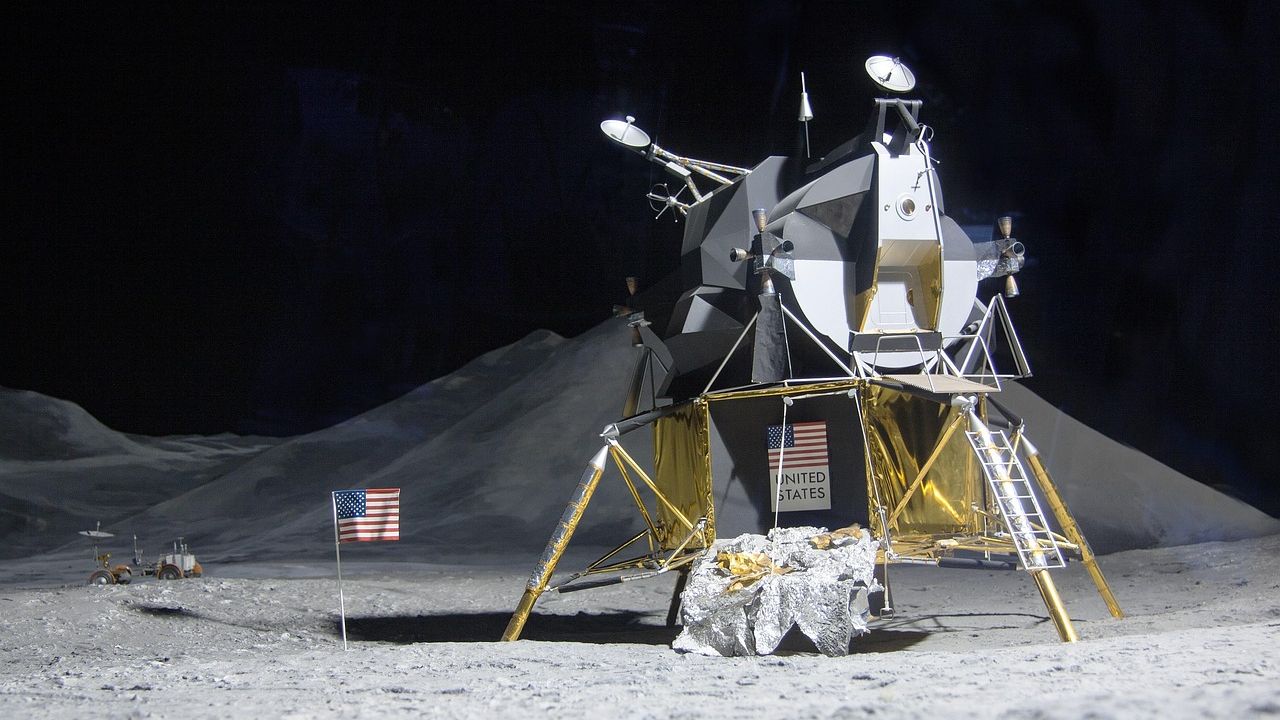
Here's what has to happen if NASA wants to land on the Moon every month – Image for illustrative purposes only (Image credits: Pixabay)
Scientists and engineers preparing for a permanent human outpost on the Moon stand to benefit from a dramatic uptick in robotic lander missions. NASA now envisions delivering payloads to the lunar surface every month to scout sites, test survival technologies, and lay groundwork for sustained operations. This surge, targeting as many as 21 landings between 2026 and 2028, hinges on transforming a fledgling commercial sector plagued by delays and failures into a reliable delivery fleet.[1][2]
A Higher Cadence for Lunar Exploration
The Commercial Lunar Payload Services (CLPS) program forms the backbone of this effort. NASA contracts with private companies to transport science instruments and technology demonstrations to the Moon, fostering a commercial ecosystem for frequent access. Unlike the Human Landing System for crewed Artemis missions – handled by SpaceX and Blue Origin – these robotic landers focus on cargo and uncrewed operations.[3]
Recent announcements signal acceleration. NASA plans nine landings in 2027 and ten in 2028, building toward a monthly rhythm essential for Moon Base preparations. Joel Kearns, NASA’s deputy associate administrator for exploration, emphasized the urgency: “We have to start ramping now into this higher cadence, with a target of monthly landings, to bring some of the things to the surface very, very soon for Moon Base.” These missions will deliver over 4,000 kilograms of payloads, enabling experiments in resource utilization, mining technologies, and endurance through the two-week lunar night.[2]
Overcoming a Rocky Start
Progress has come unevenly. Three of the last four U.S. lunar landing attempts encountered major issues, underscoring vulnerabilities in the nascent industry. Early CLPS missions reflect this: Astrobotic’s Peregrine lander failed to reach the surface in 2024, while Intuitive Machines’ Odysseus survived a tipped landing that same year. Such setbacks highlight the high risks NASA accepts to spur innovation.[4]
Yet successes provide momentum. Intuitive Machines’ IM-1 mission delivered six NASA payloads to Malapert A crater, gathering valuable data on the lunar environment. To sustain higher flight rates, NASA must overhaul procurement, shifting from bespoke designs to standardized “build-to-print” landers that streamline production.[2]
Strengthening Supply Chains and Oversight
Supply chain bottlenecks pose the biggest hurdles. Components for landers often arrive late, slowing development timelines that already stretch 18 to 24 months per mission. Companies like Firefly Aerospace and Blue Origin are expanding facilities – Firefly added clean rooms for up to eight landers simultaneously, while Blue Origin’s Lunar Plant 1 spans 190,000 square feet for mass production.[2]
NASA aims to boost the CLPS contract ceiling from $2.6 billion to $4.2 billion, signaling commitment to more task orders. Enhanced oversight of the industrial base will ensure reliability. Industry leaders see opportunity: Firefly’s Farah Zuberi noted, “We’ve heard the call… Having that signal is really important.” Blue Origin’s Eddie Seyffert added that build-to-print landers could enable dozens of flights.[2]
| Company | Upcoming Missions | Key Destinations |
|---|---|---|
| Intuitive Machines | IM-5 (2030), PRIME-1, CP-11, CT-4 | South Pole, Reiner Gamma |
| Firefly Aerospace | TO19D, CS-3/4, CP-21, CS-6 | Mare Crisium, Far Side, South Pole |
| Astrobotic | TO20A | Mons Mouton (South Pole) |
| Blue Origin | CT-3 (VIPER) | South Pole |
This table highlights select near-term deliveries, with more in planning to hit the 2027-2028 surge.[4]
Toward a Sustainable Lunar Presence
Routine landings will scout optimal base sites, particularly at the water-rich south pole, and validate technologies for in-situ resource use – like extracting oxygen from regolith. Payloads will also demonstrate power systems resilient to lunar night extremes, critical for human outposts.
For the thousands of researchers relying on these deliveries, reliable access means faster answers to questions about the Moon’s geology and environment. As NASA readies CLPS 2.0, the focus remains on partnerships that turn ambitious targets into routine reality. Success here could redefine lunar exploration, paving the way for crews to thrive far beyond fleeting visits – and ultimately, eyes on Mars.[5]