

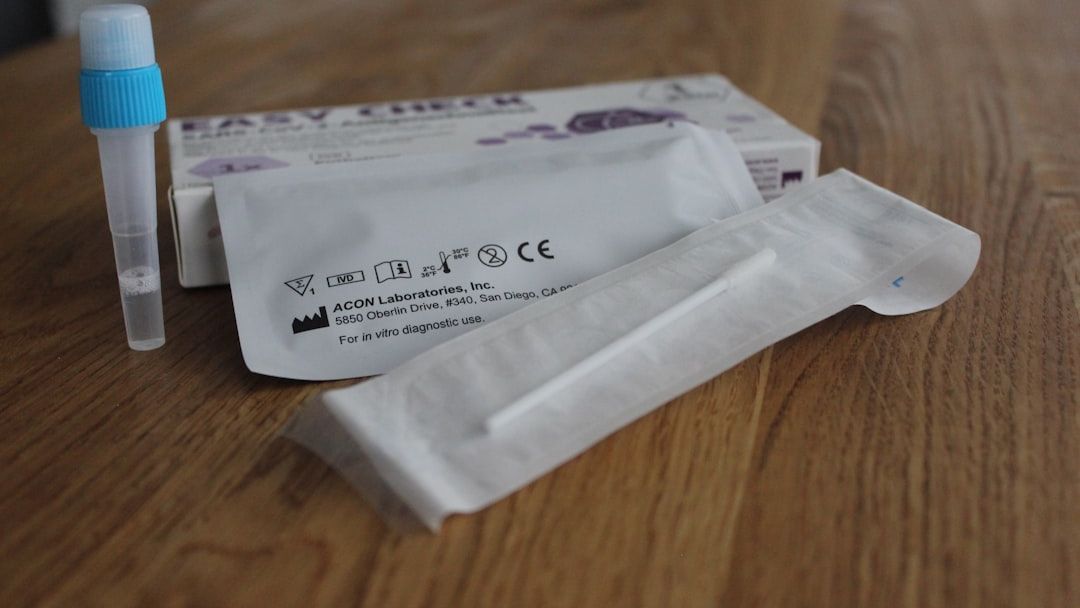
A low-cost rotavirus test could save childrens’ lives in Nigeria – Image for illustrative purposes only (Image credits: Unsplash)
Nigeria – A leading cause of severe diarrhea in children under five, rotavirus claims tens of thousands of young lives each year in the country.[1][2] Nigerian virologist Margaret Oluwatoyin Japhet addressed this crisis by developing a low-cost, equipment-free diagnostic test that delivers results at a child’s bedside. Her innovation promises to bridge gaps in routine testing where expensive lab methods have long fallen short.
Rotavirus Remains a Major Child Killer
Rotavirus infections strike hardest in developing countries, accounting for about 60 percent of diarrheal episodes among infants and young children.[3] In Nigeria, the virus contributed to an estimated 47,000 deaths among children under five before recent vaccination efforts began.[4] Even with the rotavirus vaccine introduced into the national schedule in 2022, aimed at preventing around 50,000 deaths annually, accurate and timely diagnosis stays essential for managing cases and curbing outbreaks.[1]
Studies in areas like Ile-Ife highlight the virus’s prevalence alongside bacterial causes in childhood diarrhea.[5] Without prompt identification, dehydration sets in quickly, overwhelming under-resourced health facilities. Traditional diagnostics often prove inaccessible due to their demands on infrastructure and expertise.
From Research to Innovation
Margaret Oluwatoyin Japhet, an associate professor of virology at Obafemi Awolowo University in Ile-Ife, led the creation of this nanoparticle-based immunoassay.[6] Her work built on years of studying rotavirus strains and molecular epidemiology in Nigeria, where she heads the Virology and Molecular Biology Research Group.[6] Funded by a fellowship from the European and Developing Countries Clinical Trials Partnership (EDCTP), the project targeted real-world needs in low-income settings.
Japhet’s team published their development and evaluation in 2025, positioning the test as a viable alternative to established methods.[7] As a fellow of EDCTP and the New York Academy of Sciences, she drew on international training, including molecular studies at Germany’s Robert Koch Institute, to refine her approach.[3]
Simple Design Meets Urgent Needs
The test employs nanotechnology with nanobeads, monoclonal antibodies, and a cotton swab to detect rotavirus antigens in stool samples.[3] Users apply the sample directly, bypassing labs, refrigerators, or skilled technicians. This bedside-ready format delivers rapid results, much like a pregnancy test but tailored for viral pathogens.
- Equipment-free operation suits remote clinics.
- Low cost addresses financial barriers in public health.
- Sensitivity and specificity rival pricier options like ELISA and PCR.
ELISA kits and PCR machines often cost hundreds of thousands of naira and require stable power and trained staff – obstacles in rural Nigeria.[8] Japhet’s solution circumvents these, enabling frontline workers to act faster.
Steps Toward Real-World Impact
Early evaluations confirmed the test’s promise for routine use, with potential for commercialization to scale production.[9] Japhet emphasized its value: “My EDCTP Fellowship allowed me to develop a rapid, sensitive and easy to perform equipment free rotavirus diagnostic kit using nanotechnology. Commercialisation and implementation of this test have the potential to enhance prompt and rapid diagnosis of rotavirus, leading to improved management of diarrhoea in children.”[9]
Beyond immediate diagnosis, the technology could spawn kits for other childhood viruses, fostering local manufacturing and jobs. Health leaders now eye integration into Nigeria’s vaccination and surveillance systems, where rotavirus surveillance continues amid shifting strains.[2]
A Model for Global Health Equity
Japhet’s achievement underscores African-led solutions to persistent health challenges. Her career, marked by grants and ambassadorships, inspires more women in virology and immunology.[3] As Nigeria strengthens its child survival strategies, tools like this nanoparticle test stand ready to reduce diarrhea’s toll. The next phase hinges on partnerships to deploy it widely, turning research into lives saved.