

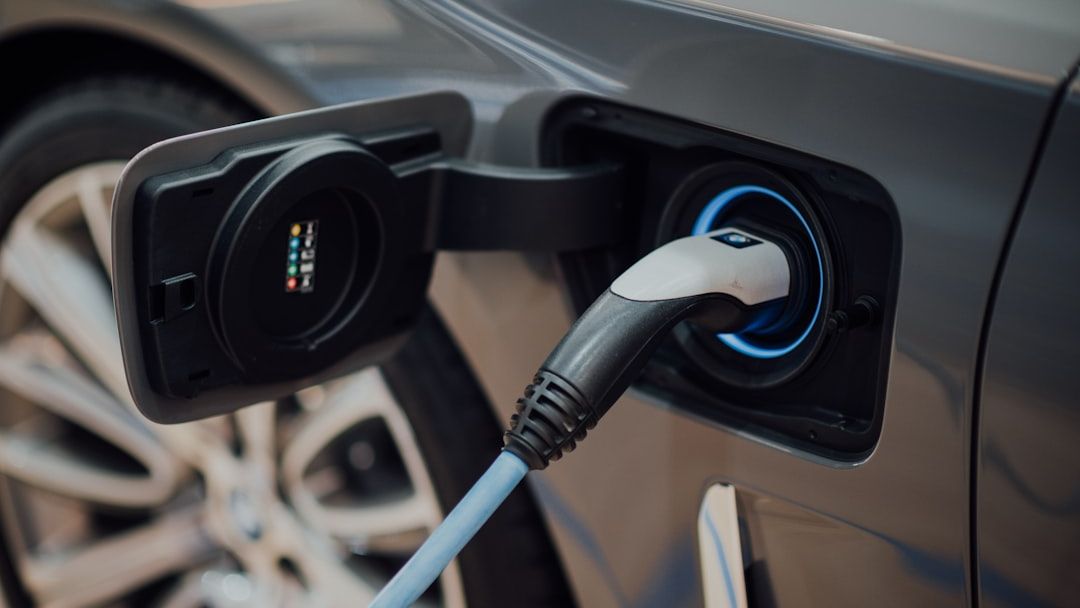
The Trump Administration Tried to Stop the National EV Charging Program. It Has Kept Rolling Along Anyway. – Image for illustrative purposes only (Image credits: Unsplash)
The National Electric Vehicle Infrastructure program, a key piece of federal efforts to expand charging stations across highways, has weathered political headwinds and legal disputes to show signs of momentum. Launched with $5 billion in funding from the 2021 Infrastructure Investment and Jobs Act, the initiative faced an abrupt halt early in the Trump administration’s second term. Court rulings have since restored access to the funds, allowing states to press forward with deployments.
Roots in Bipartisan Legislation
Congress approved the National Electric Vehicle Infrastructure Formula Program, known as NEVI, to deploy reliable chargers every 50 miles along major corridors. The effort formed part of broader ambitions to reach 500,000 public charging ports nationwide by 2030.[1][2]
States received allocations based on their portions of federal highway aid, spread across fiscal years 2022 through 2026. The Federal Highway Administration oversees distribution, covering up to 80 percent of costs for installation, operation, maintenance, and data sharing. Chargers must sit on designated alternative fuel corridors and support open access for drivers.
Progress lagged from the start. The Biden administration took time to finalize rules, leaving little money disbursed by late 2024. Only $44 million went out that year, reflecting cautious early steps amid planning requirements.[1]
Federal Freeze Sparks Lawsuits
The Trump administration suspended the program in February 2025, following an executive order targeting clean energy initiatives. Officials at the Department of Transportation and Federal Highway Administration rescinded state plans and held back funds already allocated.[1][3]
Several states, including Washington as lead plaintiff, along with the District of Columbia and environmental groups, challenged the move in federal court. They argued the action violated congressional appropriations. In June 2025, U.S. District Judge Tana Lin issued a preliminary injunction, freeing about $1 billion for 14 suing states.
The legal fight culminated in a January 23, 2026, final judgment from the Western District of Washington. The court ruled the freeze unlawful and permanently barred further interference, restoring the full $5 billion pool. This decision cleared paths for projects stalled during the nine-month standoff.[1][3]
Key Milestones:
- 2021: $5 billion authorized in infrastructure law.
- Feb. 2025: Funding frozen by Trump administration.
- June 2025: Preliminary court injunction lifts partial freeze.
- Jan. 2026: Final ruling restores all funds.
Spending Ramps Up in Key States
Expenditures doubled to $94 million in 2025, supporting hundreds of new ports and contracts for thousands more. A Sierra Club analysis highlighted this uptick, though it stressed the need for faster action overall.[1]
Pennsylvania and Ohio topped funding receipts at $16.2 million and the next highest amount, respectively, thanks to early planning and applications. Larger states like California trailed with under $1 million disbursed. These funds pair with private investments from companies like EVgo and Pilot, as seen at Ohio’s first NEVI site along Interstate 70.
| State | Federal Funding Spent (2025) |
|---|---|
| Pennsylvania | $16.2 million |
| Ohio | Leading tier |
| California | $920,000 |
At year’s end, $2.7 billion remained available to states, with $1.3 billion obligated through contracts. Over 95 percent of total funds awaited deployment, limited by prior delays and litigation.[1]
Toward a Nationwide Buildout
The U.S. now counts over 170,000 Level 2 ports and nearly 70,000 DC fast chargers, more than double 2021 figures. Private and state efforts drive most growth, with NEVI playing a supporting role so far. High gas prices, hovering near $4.30 per gallon in spots, bolster demand even without federal rebates.
Josh Stebbins of the Sierra Club called for greater urgency: “Far more urgency, accountability, and action are needed to deliver the truly nationwide EV charging system Congress promised the American people in 2021.”[1]
With final fiscal year funds due in 2026, states face pressure to obligate remaining allocations. The program’s survival underscores congressional intent over executive shifts, positioning it to fill gaps in long-haul travel infrastructure.