

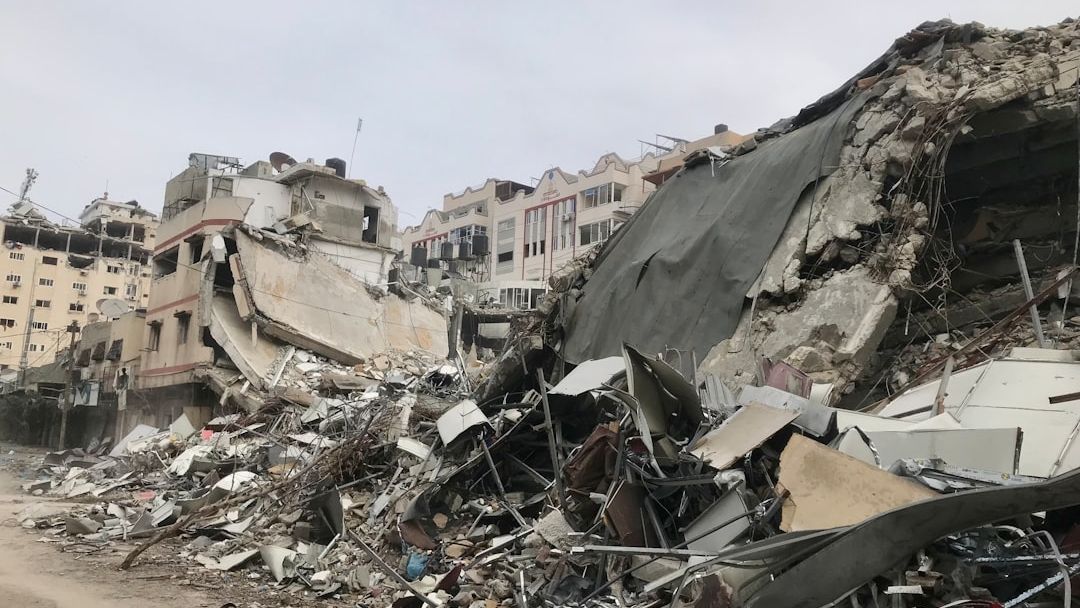
The 19 July 2025 multiple landslide event in Sancheong, South Korea – Image for illustrative purposes only (Image credits: Unsplash)
Sancheong County, South Korea – A two-day period of exceptionally heavy rain in July 2025 set off more than 550 landslides across steep hillsides, claiming at least ten lives and leaving widespread damage to homes and roads. The scale of the event has now been documented in detail by researchers who combined field observations with advanced modeling. Their findings highlight how both the sheer volume of rain and the length of time it fell combined to destabilize slopes that had previously seemed stable.
The Rainfall That Overwhelmed the Landscape
Between 19 and 21 July 2025, gauges recorded between 498 and 619 millimetres of rain across the core affected zone. The downpour lasted roughly 55 hours, delivering water at rates that exceeded the ground’s ability to absorb it. In many places the rain fell steadily rather than in short bursts, allowing moisture to penetrate deep into the soil and regolith that covers the region’s steeper slopes. Local authorities noted that the storm arrived after several days of already elevated moisture levels, leaving little room for additional water. The combination proved decisive. Slopes that had withstood earlier rains gave way once the prolonged loading reached critical thresholds.
Mapping More Than 550 Individual Failures
Using satellite imagery and ground surveys, the research team identified 568 separate landslides. Most were shallow, translational slides in which a thin layer of soil or weathered rock slid downslope along a relatively flat failure surface. Many of these slides quickly channelled into debris flows that travelled farther than the initial failures. The landslides struck both forested and agricultural land, damaging roads, bridges and scattered houses. Restoration work is now estimated at around US$800 million. While the human toll remained limited compared with some past disasters, the concentration of failures in a relatively small area marked the event as unusual even by regional standards.
Key Lessons from the Detailed Analysis
The new study emphasises that intensity alone did not explain the outbreak. Instead, the researchers found that the long duration of the rainfall allowed water to build up at depth, reducing the strength of the soil along potential failure planes. Their physically based models reproduced the observed pattern only when both factors were included. This distinction matters for forecasting. Short, intense storms may trigger isolated slides, but extended periods of moderate-to-heavy rain can mobilise entire hillsides at once. The Sancheong case provides a clear example of how these two rainfall characteristics interact under real-world conditions.
What stands out from the findings
- 568 mapped landslides triggered by 498–619 mm of rain over 55 hours
- At least 10 fatalities and roughly US$800 million in estimated repair costs
- Most failures were shallow translational slides that evolved into debris flows
- Both rainfall intensity and duration proved necessary to explain the widespread failures
Implications for a Changing Climate
Events of this type are becoming more frequent as rainfall patterns shift. The Sancheong study adds to a growing body of evidence that longer-duration storms can push marginally stable slopes past their limits. Continued monitoring and improved early-warning systems will be essential if communities are to reduce future losses. The research also underscores the value of rapid, high-resolution mapping after major storms. By documenting exactly where and why slopes failed, scientists can refine the models used to identify at-risk areas before the next extreme rainfall arrives.