

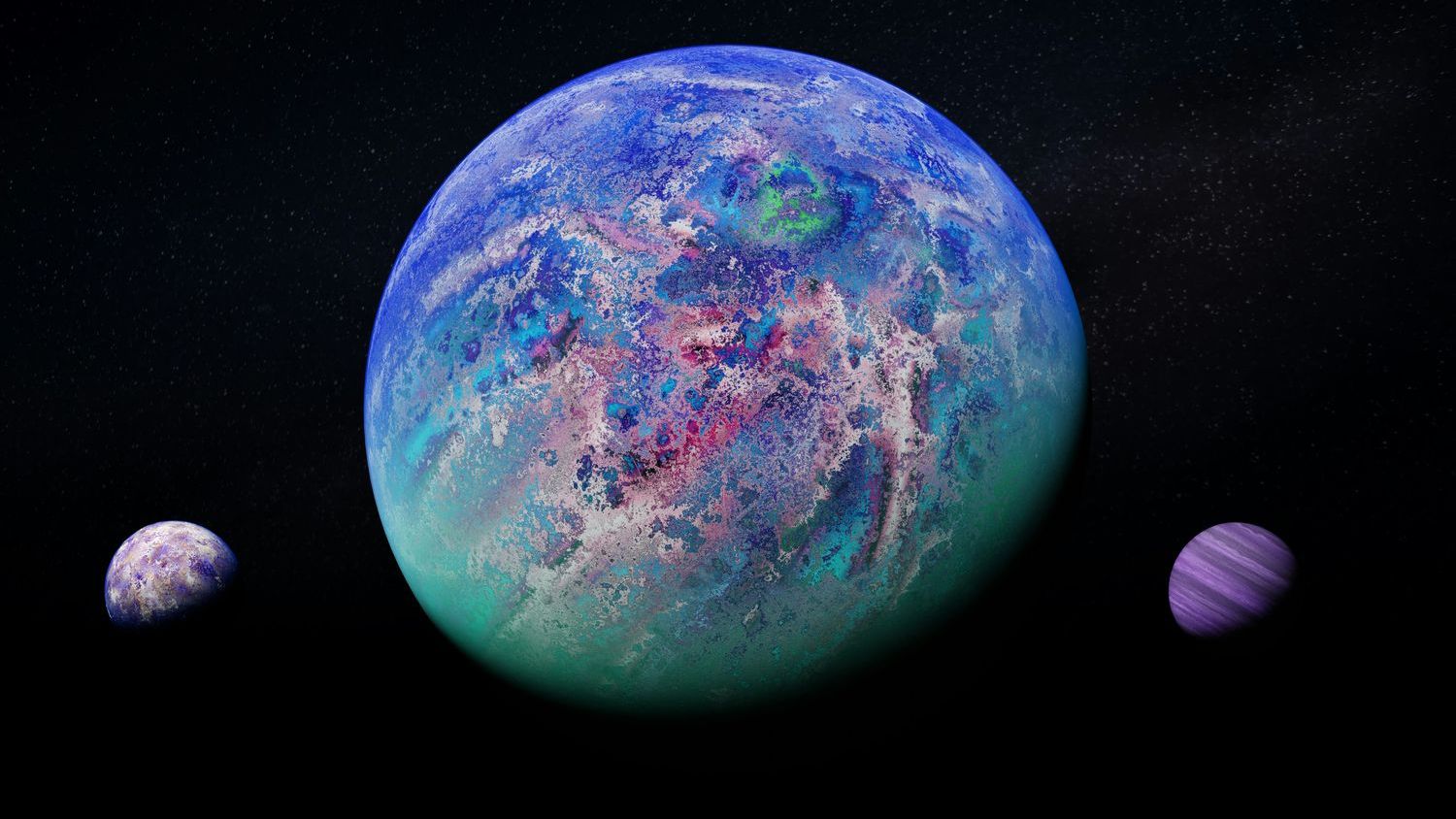
New model finds the lower size limit for habitable exoplanets – Image for illustrative purposes only (Image credits: Unsplash)
The ongoing search for worlds beyond our solar system has produced thousands of confirmed exoplanets, yet only a fraction appear capable of sustaining the conditions life requires. Among the many factors that shape habitability, a planet’s radius stands out because it directly affects whether an atmosphere can persist over long periods. A recent study from researchers at the University of California Riverside now supplies a concrete lower bound on that radius, showing that planets modestly smaller than Earth fall short of the threshold needed to keep a protective gaseous envelope.
Why Atmosphere Retention Matters for Habitability
Without a stable atmosphere, liquid water cannot remain on a planet’s surface for extended timescales, and the protective shield against stellar radiation disappears. The new model therefore focuses on the physical processes that allow a world to hold onto its gases against the pull of stellar winds and internal thermal escape. Larger planets generate stronger gravitational fields that counteract these losses, while smaller ones lose their atmospheres more rapidly.
The study underscores that size is not merely one variable among many but a foundational constraint. Planets that cannot retain an atmosphere are effectively ruled out as candidates for life, regardless of their orbital distance or host-star type. This realization narrows the pool of targets that future telescopes must examine in detail.
How the New Model Calculates the Size Threshold
The researchers built a framework that combines atmospheric escape rates with planetary mass and radius. They found that planets with radii only slightly below Earth’s lose their atmospheres too quickly for complex chemistry or biology to take hold. The calculations incorporate both thermal and non-thermal escape mechanisms, yielding a practical lower limit that future observations can test.
Because the work is currently available as a preprint, the precise numerical value remains subject to refinement once peer review is complete. Still, the central conclusion holds: worlds noticeably smaller than Earth are unlikely to maintain the atmospheric conditions required for life as we understand it. The model also highlights how stellar activity and planetary composition interact with size to determine long-term atmospheric stability.
Implications for the Search for Earth 2.0
By establishing a firm lower size limit, the study helps astronomers allocate scarce telescope time more efficiently. Missions such as the James Webb Space Telescope and upcoming ground-based observatories can now prioritize planets whose radii exceed the newly identified threshold. This focused approach increases the chances of detecting atmospheric signatures that might indicate habitable conditions.
The findings also refine theoretical expectations for the frequency of Earth-like worlds. If the minimum viable size is close to Earth’s own radius, then the number of potentially habitable exoplanets may be smaller than some optimistic estimates have suggested. At the same time, the result leaves open the possibility that slightly larger planets could offer even more favorable conditions for retaining thick atmospheres.
What Remains Unknown and Next Steps
While the model provides a clear size floor, it does not yet account for every possible atmospheric composition or every type of host star. Planets orbiting cooler stars, for example, may experience different escape rates that could shift the practical limit. Additional data from atmospheric observations will be needed to validate or adjust the predictions.
Future work will likely combine the size criterion with other habitability indicators such as orbital distance and stellar radiation levels. Together these constraints will produce a more precise target list for the next generation of exoplanet surveys.
Key points from the study
- Planets must exceed a radius only slightly below Earth’s to retain an atmosphere long enough for life to develop.
- Atmospheric escape becomes too rapid below this size threshold, eliminating surface liquid water and radiation protection.
- The result narrows the search for Earth 2.0 by excluding smaller candidates from priority observation lists.
- Further observations and refined models will test and potentially adjust the exact boundary.
The identification of a minimum planet size for habitability marks a practical step forward in the broader effort to locate life elsewhere. As observational capabilities improve, this size limit will serve as one of several filters that help scientists focus on the most promising worlds. The search for Earth 2.0 continues, now guided by a clearer understanding of the physical boundaries that separate viable candidates from those that cannot sustain an atmosphere.