

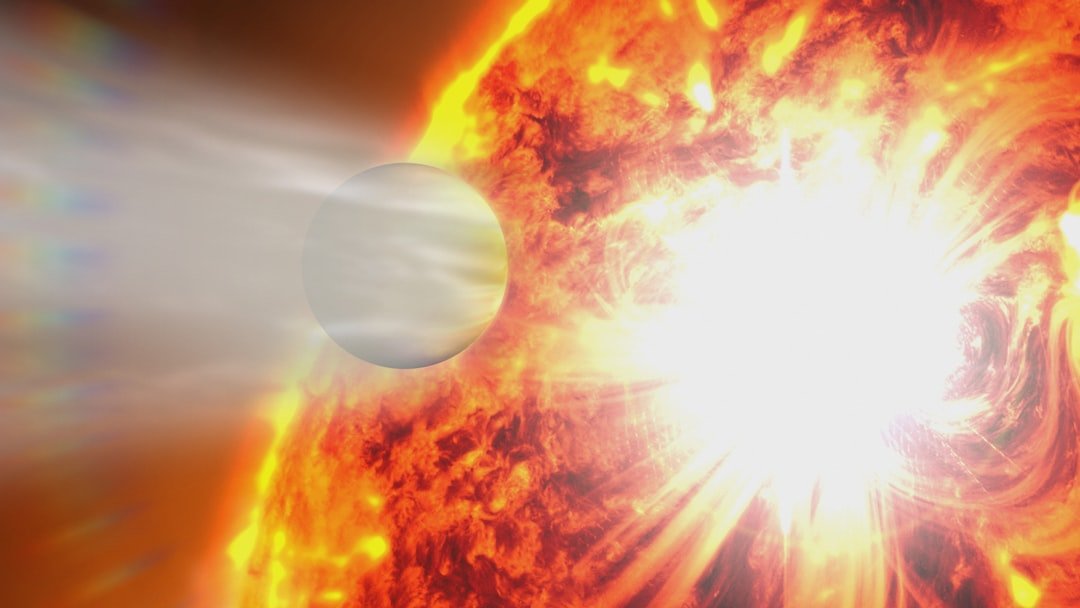
The Cascade from Solar Activity to Social Strain (Image Credits: Unsplash)
Extreme space weather events pose risks that extend far beyond damaged satellites and flickering power grids. A recent report details how such disruptions could unleash a cascade of human reactions, including panic buying and public unrest.[1] Scientists emphasize that limited public awareness amplifies these vulnerabilities, turning technological hiccups into broader societal challenges.
The Cascade from Solar Activity to Social Strain
Solar flares, coronal mass ejections, and solar energetic particles define extreme space weather. These phenomena disrupt satellite operations, power grids, and even pose health risks to aircrew and astronauts. Yet the report underscores a critical gap: human behavior often determines the true scale of impact.[1]
Lower-level events occur frequently, prompting satellite operators to adjust orbits amid atmospheric expansion. Larger storms, though rarer, carry potential for widespread blackouts. The interplay between infrastructure failures and public response creates unpredictable escalation.
Misinformation Fuels Fear in the Digital Age
A 2014 survey in the U.K. revealed stark ignorance: 46 percent of adults had never heard of space weather, while 29 percent knew almost nothing about it.[1] This knowledge void leaves populations ripe for misinformation, especially through social media echo chambers. Sensational narratives can drown out scientific explanations, heightening anxiety during a crisis.
The report warns that vague warnings of outages might spark unfounded fears. People could interpret auroras or news alerts as harbingers of doom, spreading conspiracy theories rapidly online. Such dynamics mirror how uncertainty breeds distrust in official communications.
Panic Buying and Protests: Real-World Parallels
Panic buying emerged vividly during the COVID-19 pandemic, with shortages of toilet paper and other essentials despite no direct supply issues. A similar rush for food, fuel, and water could follow solar storm alerts, overwhelming stores independently of any physical damage.[1]
Prolonged outages might exacerbate tensions over resource allocation. Governments prioritizing certain areas for power restoration could ignite perceptions of unfairness. The report identifies this as a potential trigger for protests, where frustration boils into public disorder.
- Panic stockpiling leads to artificial shortages and long queues.
- Unequal recovery efforts breed resentment across communities.
- Misinformation accelerates blame toward authorities or vague “cosmic threats.”
- Social media amplifies isolated incidents into widespread panic.
- Essential services strain under sudden demand surges.
Extreme Beliefs and Historical Warnings
Millenarian responses represent the fringes of reaction. Groups might view a massive solar event as apocalyptic, blurring lines between cults and mainstream discourse in today’s connected world. The report cites rare but telling precedents.
In 1997, the Heaven’s Gate cult ended in mass suicide amid the visibility of Comet Hale-Bopp. Similarly, 1994 saw tragedies involving the Order of the Solar Temple in Switzerland. While outliers, these cases illustrate how celestial phenomena can inspire radical interpretations.[1]
Paths to Greater Resilience
Addressing these risks demands dual focus: hardening infrastructure against geomagnetic assaults and educating the public on space weather basics. The report from the Natural Environment Research Council stresses integrated planning.[1]
Simple awareness campaigns could counter misinformation’s spread. Communities informed about solar cycles and auroras respond more rationally to alerts. Proactive measures today prevent behavioral amplifiers from turning manageable events into crises.
Extreme space weather reminds us that technology alone does not define vulnerability – human elements do. Strengthening both grids and knowledge offers the best defense against invisible solar threats. What steps should society take next? Share your thoughts in the comments.
- Public ignorance heightens risks of misinformation and panic during solar storms.
- Panic buying and protests can worsen outages without additional damage.
- Education and resilient infrastructure form the core of preparedness.