

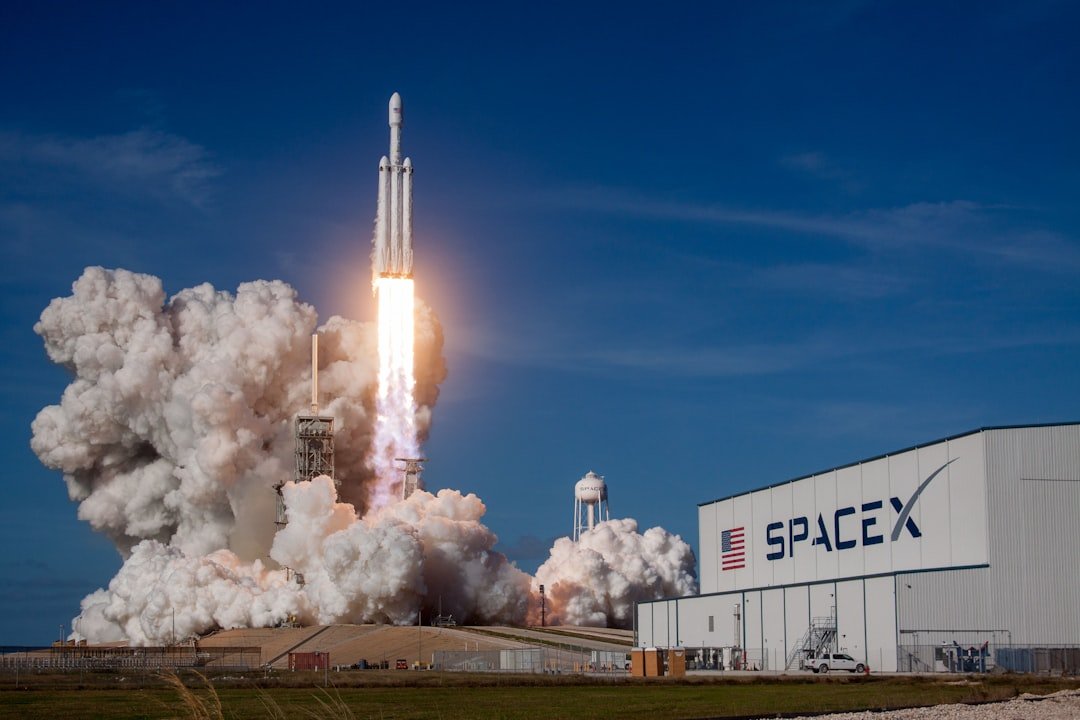
Florida Launch Breaks 2026 Satellite Milestone (Image Credits: Unsplash)
SpaceX executed two Falcon 9 missions just 19 hours apart on April 14, 2026, deploying fresh batches of Starlink satellites from opposite U.S. coasts.[1] The rapid sequence highlighted the company’s high launch cadence early in the year. These operations added dozens more satellites to the low-Earth orbit network, supporting global broadband expansion.
Florida Launch Breaks 2026 Satellite Milestone
The opening salvo came before dawn from Cape Canaveral Space Force Station’s Space Launch Complex 40. A Falcon 9 rocket lifted off at 5:33 a.m. EDT, carrying 29 Starlink satellites into orbit.[2][3] This mission marked the 1,000th Starlink satellite SpaceX deployed in 2026 alone, underscoring the pace of constellation growth.[4]
Booster B1080 powered the ascent on its 26th flight, a testament to Falcon 9 reusability. Roughly eight minutes after liftoff, the first stage separated and touched down on the droneship Just Read the Instructions in the Atlantic Ocean. Satellite deployment followed about an hour later, with the stack captured in imagery before release. This success represented SpaceX’s 27th orbital launch from Florida that year.
California Mission Caps the Day with Precision
Nearly 19 hours later, another Falcon 9 roared skyward from Vandenberg Space Force Base’s Space Launch Complex 4 East. Liftoff occurred at 9:29 p.m. PT for the Starlink 17-27 mission, sending 25 satellites toward low-Earth orbit.[5] The timing aligned with after-sunset conditions, optimizing visibility for ground observers.
Veteran booster B1082 handled the task on its 21st flight, having supported 18 prior Starlink missions among others. Post-separation, it executed a flawless return to the droneship Of Course I Still Love You stationed in the Pacific. Deployment proceeded smoothly, further bulking up the network. These back-to-back efforts brought SpaceX’s 2026 launch tally to 46.
Reusability Drives Efficiency in Both Operations
Both boosters demonstrated the reliability of SpaceX’s recovery system. B1080’s landing on Just Read the Instructions extended its record across 19 Starlink flights.[1] Similarly, B1082’s Pacific splashdown raised its profile after missions like USSF-62 and OneWeb Launch 20.[5]
Such precision recoveries minimize costs and accelerate turnaround times. The droneships, positioned strategically offshore, enabled routine reuse. This approach has powered 629 Falcon 9 missions since 2010, with Starlink dominating recent manifests.[1]
| Mission | Launch Site | Local Time | Satellites | Booster (Flights) |
|---|---|---|---|---|
| Starlink 10-24 | CCSFS, Florida | 5:33 a.m. EDT | 29 | B1080 (26th) |
| Starlink 17-27 | VSFB, California | 9:29 p.m. PT | 25 | B1082 (21st) |
Starlink Network Gains Momentum
These launches injected 54 new satellites into the fold, pushing the active Starlink count beyond 10,200 according to satellite tracker Jonathan McDowell.[1] Each batch joins the megaconstellation in low-Earth orbit, where they will raise to operational altitude over coming days. SpaceX continues to prioritize Starlink amid a busy 2026 schedule.
The missions reflect steady progress toward ubiquitous internet coverage. Routine deployments like these sustain service for millions worldwide. Florida and California pads remain hubs for such high-frequency activity.
Key Takeaways
- 54 Starlink satellites deployed across two coasts in under a day.
- Both boosters landed successfully on droneships, extending reuse records.
- Florida mission hit the 1,000th Starlink satellite milestone for 2026.
SpaceX’s twin triumphs signal unrelenting momentum in satellite internet deployment, blending launch reliability with constellation scale. As the network densifies, global connectivity edges closer to reality. What do you think about SpaceX’s launch cadence? Tell us in the comments.