


Walk into the Oracle Room of the Hal Saflieni Hypogeum in Malta and something strange happens. The air seems to vibrate, the walls hum, and visitors consistently report a deep shift in how they feel. This isn’t folklore. Instruments have measured it. Researchers have recorded it. Scientists have tested what it does to the human brain. What they found connects a 5,000-year-old subterranean temple to one of the most elusive states of human consciousness: the lucid dream.
The story isn’t simple, and the evidence isn’t complete. What exists, though, is a genuinely compelling body of research pointing toward something ancient builders may have understood far earlier than anyone suspected. Sound, at the right frequency, in the right space, appears to shift the brain in ways that blur the boundary between waking and dreaming.
The Birth of Archaeoacoustics: Hearing the Past
By the late twentieth century, scholars began to recognize that sound is an integral component of human experience and that ancient constructions may have been deliberately designed to manipulate auditory perception. This realization gave rise to archaeoacoustics, a multidisciplinary field combining archaeology, acoustical science, anthropology, and cognitive studies to explore soundscapes in ancient contexts.
The discipline seeks to understand how sound interacted with built environments and how such interactions affected human behavior and cultural practices. Early investigations focused on sites like British stone circles and Mediterranean caves, where echoes and resonances are readily perceptible. Over time, research expanded to include temples, plazas, theaters, and subterranean chambers worldwide.
Paul Devereux is the author of the first-ever book on archaeoacoustics, “Stone Age Soundtracks,” published in 2001. He is a co-founder and managing editor of the academic publication Time and Mind, the Journal of Archaeology, Consciousness and Culture, and a Research Fellow with the International Consciousness Research Laboratories group at Princeton University. His work helped make this field taken seriously by mainstream academia.
The Hal Saflieni Hypogeum: A Temple Built on Sound
The Hypogeum of Hal Saflieni in Malta represents one of the earliest and most compelling examples of architecture with unique acoustic properties. This subterranean Neolithic temple, dating to approximately 4000 to 2500 BCE, features a network of chambers carved into limestone bedrock, used for burial and ritual purposes.
Acoustic analysis has revealed specific resonance frequencies within the so-called Oracle Room, notably around 70 Hz and 114 Hz, which emphasize low bass tones. Such resonance appears to be the result of carefully shaped geometry rather than chance, suggesting that sound played a role in ritual experiences within the complex.
When a deep male voice or a drum emits a tone at approximately 110 Hz in that stone room, the sound is greatly amplified and sustained, reportedly producing a standing wave that can be felt by the body, described as a “bone-chilling” effect by one observer. Standing within the Hypogeum is often likened to residing inside a colossal bell. At particular frequencies, one not only hears the sound but also senses it reverberating within their bones and tissues.
The 110 Hz Frequency: A Recurring Pattern Across Civilizations
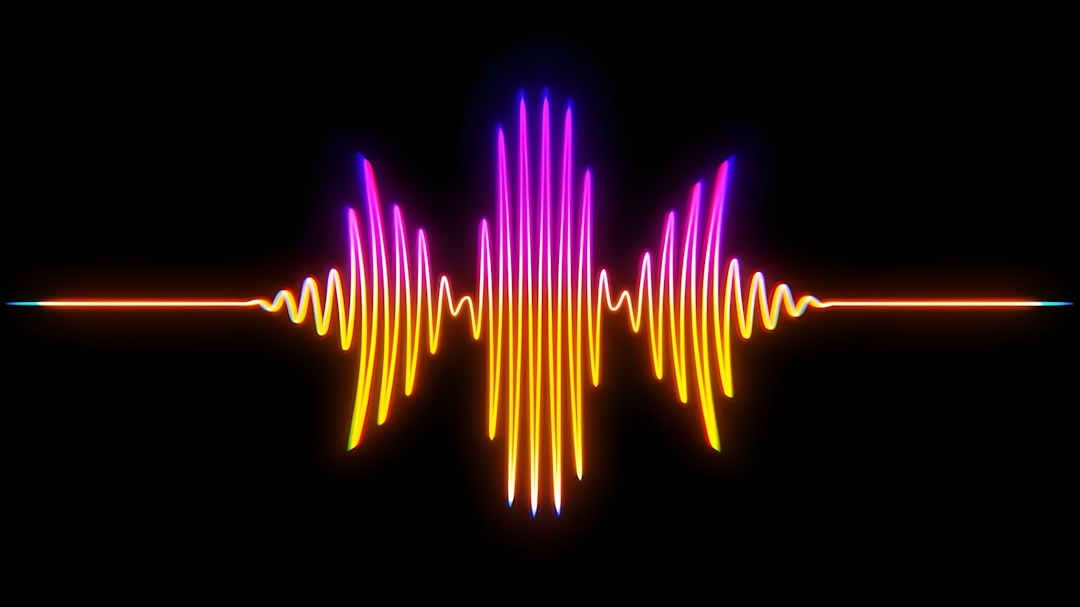
Numerous investigations into the acoustics of prehistoric megalithic structures have identified resonance of such spaces at the frequency range of 95 to 120 Hz, specifically 110 to 112 Hz. This is not isolated to one culture or one continent. The convergence is striking.
An archaeoacoustic study was recently conducted within the prehistoric cave system of El Castillo in northern Spain. Simulated audio tones of varying frequencies were emitted from the location where shamans conducted rituals. Subsequent analysis identified a frequency-dependent amplification approaching the range of 100 Hz, with the greatest effect observed for 108 and 110 Hz, results markedly consistent with previous research at other sacred sites.
Further research directed by Prof. Robert Jahn tested acoustic behaviour in megalithic sites in the UK, showing that they sustained a strong resonance at a sound frequency between 95 and 120 hertz. Paul Devereux also discovered that burial mounds in Ireland called Cairns, even though they are made of different materials and are different sizes, all resonate at one particular frequency of 111 Hz.
What 110 Hz Does to the Human Brain
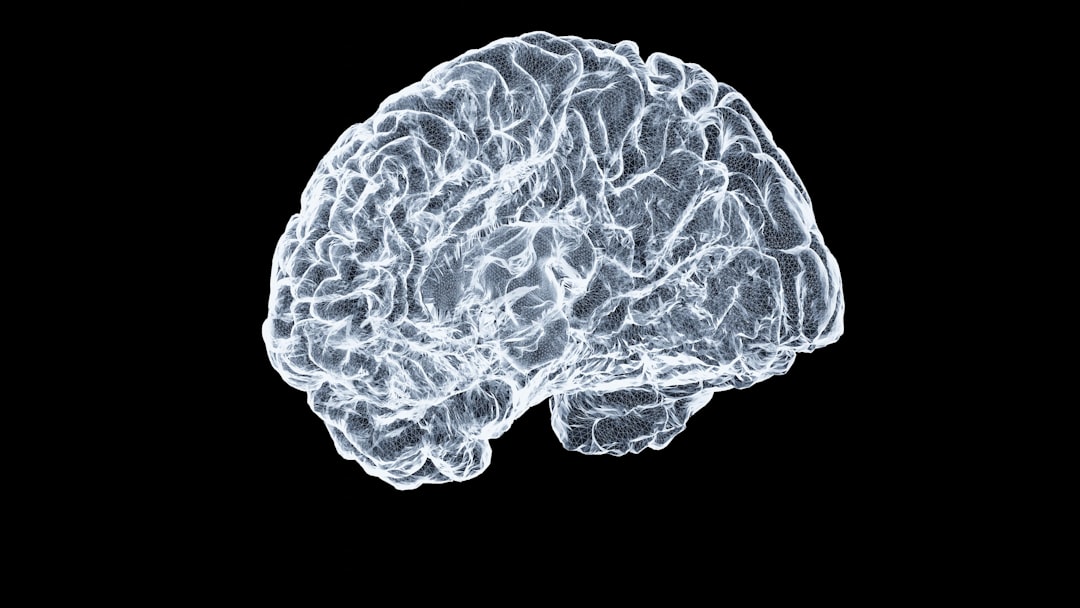
Dr. Ian Cook of UCLA and colleagues published findings in 2008 from an experiment in which regional brain activity in healthy volunteers was monitored by EEG through exposure to different resonance frequencies. Their findings indicated that at 110 Hz the patterns of activity over the prefrontal cortex abruptly shifted, resulting in a relative deactivation of the language center and a temporary shifting from left to right-sided dominance related to emotional processing.
MRI scan findings suggest that at exactly 111 Hz, the brain switches off the prefrontal cortex, deactivating the language centre, and temporarily switches from left to right-sided dominance, which is responsible for intuition, creativity, and holistic processing, inducing a state of meditation or a trance.
Modern neurological studies confirm that these ancient frequency ranges specifically alter brain state activity, reducing left temporal activity and shifting prefrontal cortex dominance, effects identical to advanced meditation states. The connection to dream-state consciousness runs deep through the same neural pathways.
University of Trieste Research: Individual Activation Frequencies
In a publication from the conference on Archaeoacoustics, Dr. Paolo Debertolis reported on tests conducted at the Clinical Neurophysiology Unit at the University of Trieste in Italy, finding that each volunteer had their own individual frequency of activation, always between 90 and 120 Hz.
Those volunteers with a frontal lobe prevalence during testing received ideas and thoughts similar to what happens during meditation, whilst those with an occipital lobe prevalence visualized images. Under the right circumstances, ancient populations were able to obtain different states of consciousness without the use of drugs or other chemical substances.
Dr. Paolo Debertolis, who led the University of Trieste tests, reported that each volunteer had a personal frequency in the 90 to 120 Hz range at which they experienced altered states. Some described meditative insights or vivid visualizations, as if sound alone facilitated a shift in consciousness. This is precisely what modern lucid dreaming researchers call a hypnagogic transition state.
The Great Pyramid’s King’s Chamber: Acoustic Engineering at Scale

In 1996, acoustics researcher John Stuart Reid carried out a series of sound experiments inside the King’s Chamber of the Great Pyramid of Giza. Using precision audio equipment, he discovered that the chamber responds most strongly to sound waves near 125 Hz, a resonance later refined by analysis to around 121 Hz. Further tests on the granite sarcophagus within the chamber revealed a similar resonant peak, close to 117 Hz.
This near match suggests that both the chamber and the sarcophagus may once have been acoustically tuned to the same frequency, an alignment that could have been altered when the sarcophagus suffered structural damage to one corner.
Since the primary frequency of a newborn baby’s heartbeat is also centered near 125 Hz, Reid speculated that ancient Egyptian architects might have intentionally created this acoustic resonance to evoke themes of renewal and rebirth, perhaps as part of ceremonial rituals honoring the transformation of the pharaoh. Whether deliberate or not, the chamber’s properties lie squarely in the range researchers now associate with altered consciousness.
Ancient Dream Temples and Incubation Rituals

During the Hellenistic era, dream incubation temples staffed by priest-physicians became the single most popular spiritual healing institution in the Mediterranean world. These restful sanctuaries were designed to produce dreams that provided healing wisdom and, according to ancient accounts, even instant cures.
Clients slept on special ritual dreaming beds known as klines. More like a couch, the kline often included a stone neck or head rest, facilitating clients to elevate their heads and sleep on their backs. These sleeping styles are known today to encourage lighter sleep, more awakenings, and longer experiences in REM sleep. Given the universality of sleep biology, it seems as if Asclepian temples directly encouraged vivid dreams as well as realistic hypnagogic hallucinations.
Between 1990 and 2000, Paul Devereux ran an ambitious ancient sites dream research programme, a modern and updated research version of ancient “temple sleep” practices. The convergence between ancient ritual design and modern sleep science is hard to dismiss.
Lucid Dreaming Neuroscience: What the Brain Is Actually Doing

Lucid dreaming is a state of conscious awareness of the ongoing oneiric state, predominantly linked to REM sleep. Progress in understanding its neurobiological basis has been hindered by small sample sizes, diverse EEG setups, and artifacts like saccadic eye movements.
Sensor-level differences between lucid and nonlucid REM sleep are minimal, though mixed-frequency analysis reveals broad low alpha to gamma power reductions during lucid dreaming compared with wakefulness. Source-level analyses showed significant beta power reductions in right central and parietal areas, including the temporoparietal junction, during lucid dreaming.
Lucid dreaming also presents metacognitive abilities that are found during meditation, which explains why lucid dreaming and meditation are related according to Gerhardt and Baird’s 2024 research. This is the same cognitive territory that 110 Hz resonance appears to access. The overlap is precise enough to be worth taking seriously.
Binaural Beats and the Modern Bridge to Ancient Sound

Binaural beats create an auditory illusion when two slightly different frequencies are delivered to each ear. The brain then interprets a third tone, which is the difference between the two frequencies. For instance, if a 200 Hz sound is played in one ear and 210 Hz in the other, the brain perceives a 10 Hz beat. This phenomenon effectively guides brainwaves into specific states suitable for relaxation, focus, or even lucid dreaming.
To harness the power of dream control, researchers focus on theta waves ranging from 4 to 8 Hz, which are associated with deep relaxation, creativity, and early sleep stages, and are understood to prime the brain for entering lucid dream states.
According to prior work, hearing acoustic suggestions is effective because it triggers a cognitive process to perform reality testing. Lucid dreaming is known for its many mental and physical health benefits, though most lucid dream induction techniques require significant time and effort to master, creating a barrier for people seeking these experiences. Ancient temples may have effectively removed that barrier by placing people inside immersive, full-body acoustic fields.
What the Science Says, and What Remains Unresolved

Despite five decades of EEG research, studies still paint an inconclusive picture of lucid dreaming neurophysiology. Earlier findings such as increased occipital alpha, parietal beta, or frontal gamma underlying lucid dreaming could not be substantiated after adequate removal of non-neural artifacts. Honest researchers acknowledge these limitations.
The findings on the 110 Hz “megalith frequency” remain inconclusive, although it did enable marginal brainwave frequency relaxation in controlled studies. Unlike speculative interpretations that lack empirical grounding, archaeoacoustic investigations do employ acoustic measurements, modelling, and experimental reconstructions to establish whether and how structures influenced sound intentionally or as a byproduct of architectural design.
Epidemiological surveys suggest lucid dreaming is relatively common, with over half of people reporting at least one lucid dream in their lifetime, while roughly one in five experience them with some regularity. The real question, still open, is whether ancient builders discovered a reliable acoustic shortcut to that state, one that modern researchers are only beginning to formally measure.
The evidence scattered across Malta, Ireland, Egypt, and Spain tells a consistent story, even if it doesn’t yet tell a complete one. Ancient people built spaces that vibrate at frequencies the human brain responds to in measurable, reproducible ways. Whether that was purely intuitive knowledge, accumulated trial and error, or something more systematic, the data suggests their results were real. Sound, it turns out, may be one of the oldest keys to the dreaming mind.