


The Mechanics of Latency: What a 3-Second Delay Actually Means

Most people think of trading as a human act: watch the charts, make a call, click a button. In the world of algorithmic arbitrage, that mental model is already obsolete. In high-stakes trading environments, speed is everything, and milliseconds can mean the difference between profit and loss.
Latency arbitrage bots take advantage of latency differences between exchanges. Since prices may lag slightly between different platforms, these bots place trades based on delayed price information to lock in a profit.
The rise of prediction markets has introduced what some analysts call “latency arbitrage,” which relies on short windows too narrow for humans to manually target. As one industry expert told Cointelegraph, if there’s even a few-second delay between an event happening and the market updating, bots scan for that and place bets on the correct outcome. For that narrow window, the math is essentially guaranteed.
The Numbers That Shocked the Market Research Community

The paper “Unravelling the Probabilistic Forest” (August 2025) estimates that arbitrage traders extracted roughly $40 million from Polymarket between April 2024 and April 2025 by exploiting structural pricing inefficiencies. The advantage came from execution speed rather than predictive accuracy.
AI agents now represent over 30% of wallet activity on Polymarket, and more than 37% of those agents report positive profit and loss. Compare that to human traders, where only 7% to 13% consistently turn a profit. That gap is not cosmetic.
A simple review of Polymarket’s public leaderboard found that 14 of the 20 most profitable wallets are bots. The leaderboard doesn’t lie, and the pattern is consistent across months of data.
How the Bot Strategy Actually Works in Practice
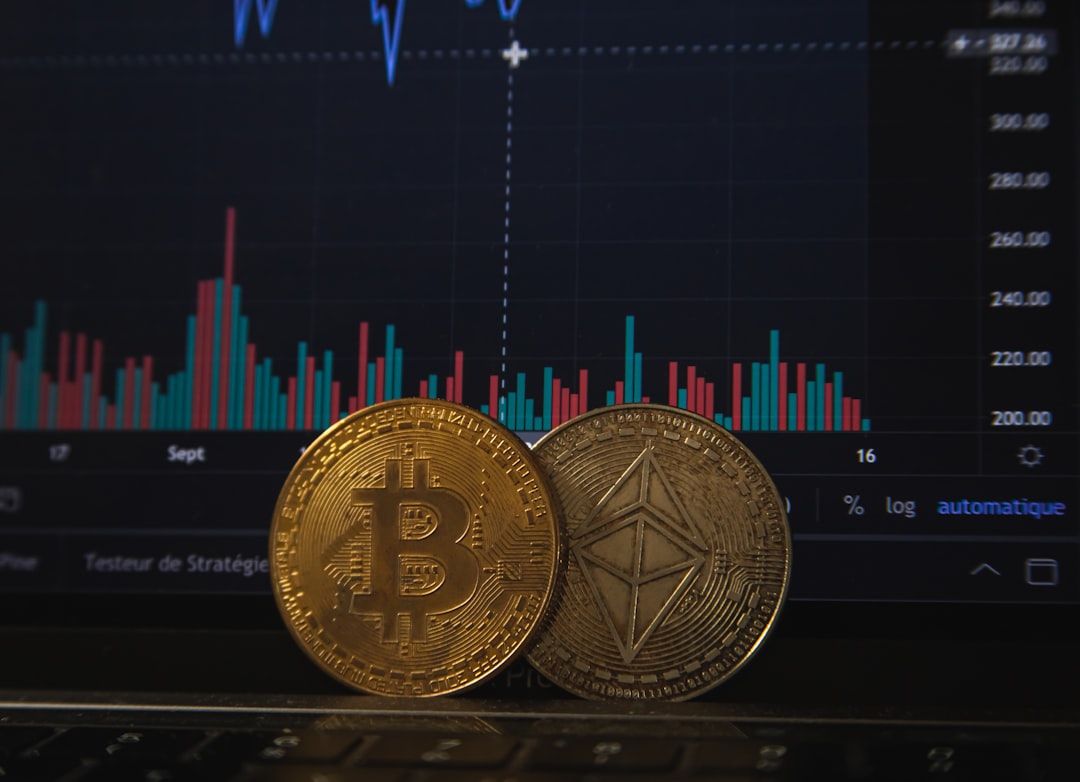
A fully automated trading bot executed 8,894 trades on short-term crypto prediction contracts and reportedly generated nearly $150,000 without human intervention. The strategy exploited brief moments when the combined price of “Yes” and “No” contracts on five-minute bitcoin and ether markets dipped below $1. In theory, those two outcomes should always add up to $1. If they don’t, say they trade at a combined $0.97, a trader can buy both sides and lock in a three-cent profit when the market settles.
That works out to roughly $16.80 in profit per trade, thin enough to be invisible on any single execution, but meaningful at scale. Machines don’t need dramatic returns on individual trades. They need repeatability, and they can execute thousands of rounds in a single day.
One of the most striking examples is a bot that reportedly turned $313 into $414,000 in a single month. This bot traded exclusively in BTC, ETH, and SOL 15-minute up/down markets, placing bets of $4,000 to $5,000 each time with a 98% win rate. Its secret was not predicting market direction. Rather, it exploited a tiny window where Polymarket prices lagged confirmed spot momentum on exchanges like Binance and Coinbase.
The Speed War: How Fast Are These Systems Really?
Automated bots operate at millisecond speeds, scanning order books and placing trades in fractions of a second. Human traders, by contrast, typically require several seconds to even recognize a pricing misalignment, let alone execute a trade. In micro-arbitrage environments like Polymarket’s 15-minute binaries, this difference is decisive.
Analysis of six months of Polymarket orderbook data from Q3 2025 to Q1 2026 shows that the average arbitrage opportunity duration dropped to 2.7 seconds, down from 12.3 seconds in 2024, and 73% of arbitrage profits were captured by sub-100ms execution bots. The window is shrinking. The bots are getting faster.
Advanced bots route their orders through dedicated RPC nodes and WebSocket connections directly to Polymarket’s Central Limit Order Book (CLOB), reducing execution latency to under 100 milliseconds. That kind of infrastructure used to cost millions to build. Today, it costs considerably less.
The Rise of Retail: Who Is Actually Doing This?

The gap between institutional and retail traders has narrowed significantly. Cheaper cloud infrastructure, open-source machine learning libraries, and real-time market data APIs mean that anyone with a decent strategy and some technical curiosity can now deploy an AI trading bot for forex that would have been unthinkable for retail accounts a decade ago.
What distinguishes today’s trading environment from prior crypto cycles is the growing accessibility of AI tools. Traders no longer need to hand-code every rule or manually refine parameters. Machine learning systems can be tasked with testing variations of strategies, optimizing thresholds, and adjusting to changing volatility regimes.
AI agents are increasingly active in prediction markets, helping retail traders compete with automated strategies by trading 24/7 and following disciplined, data-driven approaches. The toolkit that once required a quant team is now accessible through a cloud subscription.
The Market Behind the Market: A Growing Industry

The global AI trading platform market size was estimated at USD 11.23 billion in 2024 and is projected to reach USD 33.45 billion by 2030, growing at a CAGR of 20.0% from 2025 to 2030. That trajectory is not driven by speculation. It reflects genuine adoption across trader categories.
Prediction markets processed over $44 billion in trading volume in 2025. That figure alone tells you this is no longer a niche corner of finance. It has become a functioning ecosystem, one where the infrastructure layer is increasingly automated.
In terms of market type, the retail investors segment is estimated to contribute the highest market share of 38.5% in the algorithmic trading market in 2026, owing to the increased accessibility of algorithmic trading platforms. The shift from institutional-only tools to mass-market adoption is no longer theoretical.
The Platforms Closing the Gap for Ordinary Traders
One of the most visible experiments in this direction is Polystrat, an AI agent launched on Polymarket in February 2026. The agent trades on behalf of users who self-custody and own it, executing strategies continuously around the clock. The idea is direct: while a human sleeps, works, or simply isn’t watching, the agent continues operating.
The early Polystrat results showed traction, executing more than 4,200 trades on Polymarket within a month and achieving returns as high as 376% on individual trades. Those numbers reflect early-stage conditions, and performance data can vary significantly. Still, the direction of travel is clear.
As AI literacy among retail traders rises, agents could broaden access to strategies that were previously limited to institutions. However, this does not eliminate competition, and large institutions are already using AI, though not always publicly. Existing large language model architectures are well suited to interpreting structured financial data, which could lower the technical barrier for building trading systems that would have previously required specialized quantitative expertise.
The Risks That Don’t Make the Viral Posts

Over 100,000 accounts lost at least $1,000 on Polymarket since the start of 2025, according to a Bloomberg News analysis. That is almost twice the number that made at least that much. The social media narrative around bot riches tends to travel further than the stories about losses.
Only 0.51% of Polymarket users earned more than $1,000, highlighting the competitive nature of the platform. The profit is real, but it is also concentrated. The edge belongs to the fastest and best-resourced bots, not to everyone who deploys one.
Once an inefficiency becomes widely known, competition intensifies. More bots chase the same edge. Spreads tighten. Latency becomes decisive. Eventually, the opportunity shrinks or disappears. The window for easy gains tends to close precisely because so many people rush through it at once.
The Platform Response: Dynamic Fees and Rule Changes

Polymarket introduced a dynamic taker-fee model for its 15-minute crypto markets. This change aimed to neutralize latency-based arbitrage strategies that had emerged under the platform’s previous zero-fee structure. Platforms don’t stay passive while billions in arbitrage profits are extracted from their users.
The taker fee is highest when odds are closest to 50%, precisely where latency-driven strategies were most active. At that level, fees can reach approximately 3.15% on a 50-cent contract, exceeding the typical arbitrage margin and making the strategy unprofitable at scale.
What begins as a venue for expressing views on an election or a price move can evolve into a battleground for latency and microstructure advantages. In crypto, such evolution tends to be rapid. Inefficiencies are discovered, exploited, and competed away. This is simply how markets work when technology accelerates the cycle.
What This Means for the “New Middle Class” of Traders

Most automated trading in prediction markets relies on structural arbitrage rather than superior predictions. Bots exploit simple pricing inconsistencies: buying YES and NO contracts when their combined price drops below $1, capturing price differences between platforms such as Polymarket and Kalshi, or identifying logical mismatches between related contracts. Because these strategies depend on speed rather than insight, automated systems can execute them far more effectively than human traders.
Research from the University of Toronto found that since 2022, around 69% of traders on Polymarket lost money, while the top 1% captured three-quarters of the profits. The concentration of gains is real, and it’s worth taking seriously before deploying capital.
In 2026, more retail investors are using AI-powered trading systems to automate execution, monitor markets, and manage trading workflows across multiple asset classes. The tools are genuinely more accessible than they’ve ever been. Whether that translates into wealth for a new class of traders, or simply into faster losses for a larger group of participants, depends heavily on how those tools are used, and how honestly people assess the competition they’re entering.
The “new middle class” framing carries some truth. A real cohort of technically capable retail traders is earning consistent income from strategies that once belonged only to Wall Street. The data confirms that. What the data also confirms, though, is that this club is small, the edges are shrinking, and the platforms are fighting back. The opportunity is genuine. So is the difficulty of sustaining it.