

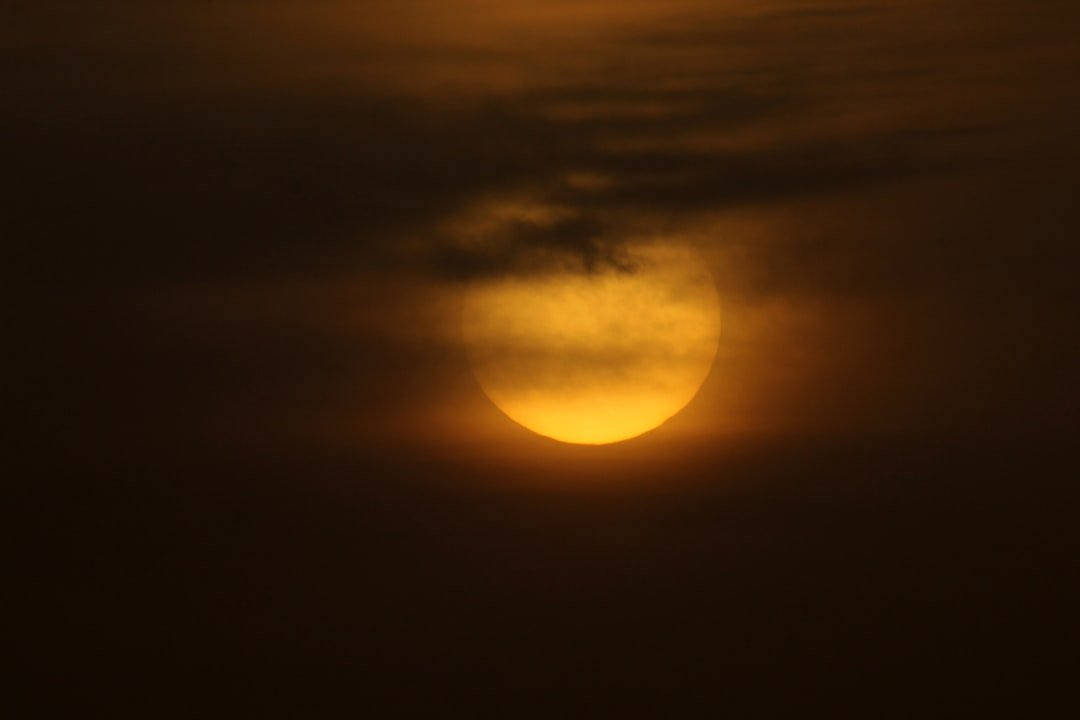
Solar Wind Eases After Recent Surge (Image Credits: Unsplash)
Solar activity took a decisive turn toward calm on April 13, 2026, with speeds of the sun’s constant stream of charged particles dropping steadily at Earth. This decline marked the end of a high-speed flow from a recent coronal hole, leading to subdued conditions across the solar system. Forecasters now watch two emerging coronal holes that could inject fresh energy into the mix within days.[1]
Solar Wind Eases After Recent Surge
Speeds of solar wind reaching Earth’s magnetic field fell markedly over the 24 hours ending at 11 UTC on April 13. The drop stemmed from the fading effects of a high-speed stream linked to a coronal hole. Particles from the sun’s corona, where plasma heats enough to escape gravity, form this ongoing flow.[1]
The interplanetary magnetic field stayed weak throughout. Its Bz component shifted mildly between northward and southward orientations, yet lacked strength for notable geomagnetic effects. Conditions pointed toward a return to typical background levels within a day or two.
Flare Output Hits Rock Bottom
Solar flare production plunged to minimal levels, registering only background B-class events. Over the prior 24 hours, observers tallied 12 such flares, all below C-class intensity. The disk-wide quiet reflected active regions winding down as they rotated.[1]
Region AR4417 led with five flares, including the session’s peak at B7.2 on April 12 at 14:48 UTC. AR4416 followed with three events, while four came from unnamed areas. As AR4417 nears the sun’s western edge, its influence on Earth diminishes.
- AR4417: 5 B-class flares, beta classification, rotating off the visible disk
- AR4416: 3 flares, showing growth and potential for future activity
- Background regions: 4 minor events
- Total: 12 B-class, no C-class or higher
Earth’s Magnetic Field Remains Stable
Geomagnetic conditions held mostly quiet, with Kp indices between 1 and 2. One brief unsettled period hit Kp 3 from 12:00 to 15:00 UTC on April 12. Auroras confined themselves to high-latitude zones like northern Alaska, Iceland, and Scandinavia.[1]
Three coronal mass ejections appeared in imagery, but none aimed toward Earth. The planet’s protective magnetic shield faced no major assaults from solar blasts.
Coronal Holes Set Stage for Renewed Action
A large coronal hole now crosses the sun’s Earth-facing center. Astronomers expect its high-speed solar wind to arrive by April 15, potentially sparking active geomagnetic levels. High-latitude auroras could intensify under this influence.[1]
Another mid-latitude hole in the sun’s southern hemisphere passed the central meridian late on April 11. Its stream should reach Earth late April 14 or early the next day. These features, cooler and less dense than surrounding corona, accelerate solar wind outflows.
Earth-facing sunspots numbered three active regions. AR4417, the recent flare leader, approaches departure. AR4416 expands and warrants monitoring for possible Earth-directed events.
Short-Term Forecasts Signal Caution and Opportunity
Flare chances stay low through April 15, favoring C-class events. Analysts peg a 10 percent odds for an isolated M-class flare, mainly from AR4416. X-class prospects sit at 1 percent amid simple magnetic setups.[1]
Geomagnetic outlooks vary by day:
| Date | Expected Kp | Aurora Potential |
|---|---|---|
| April 13 | 1–3 (quiet to unsettled) | High latitudes only |
| April 14 | 1–3 (quiet to unsettled) | Limited, possible brief upticks |
| April 15 | 3–4 (unsettled to active), chance of G1 storm | Mid-latitudes if Kp reaches 5 |
Cities like Seattle, Minneapolis, or Edinburgh might glimpse auroras if conditions escalate.
Key Takeaways
- Solar wind declines to background levels, quieting the sun temporarily.
- B-class flares dominate; AR4416 emerges as the region to watch.
- Coronal hole streams forecast geomagnetic activity by April 15, boosting aurora odds.
This solar breather offers a moment to reflect on the sun’s dynamic cycles. Sky enthusiasts should gear up for potential displays soon. What auroras have you spotted lately? Share your observations in the comments.[1]