

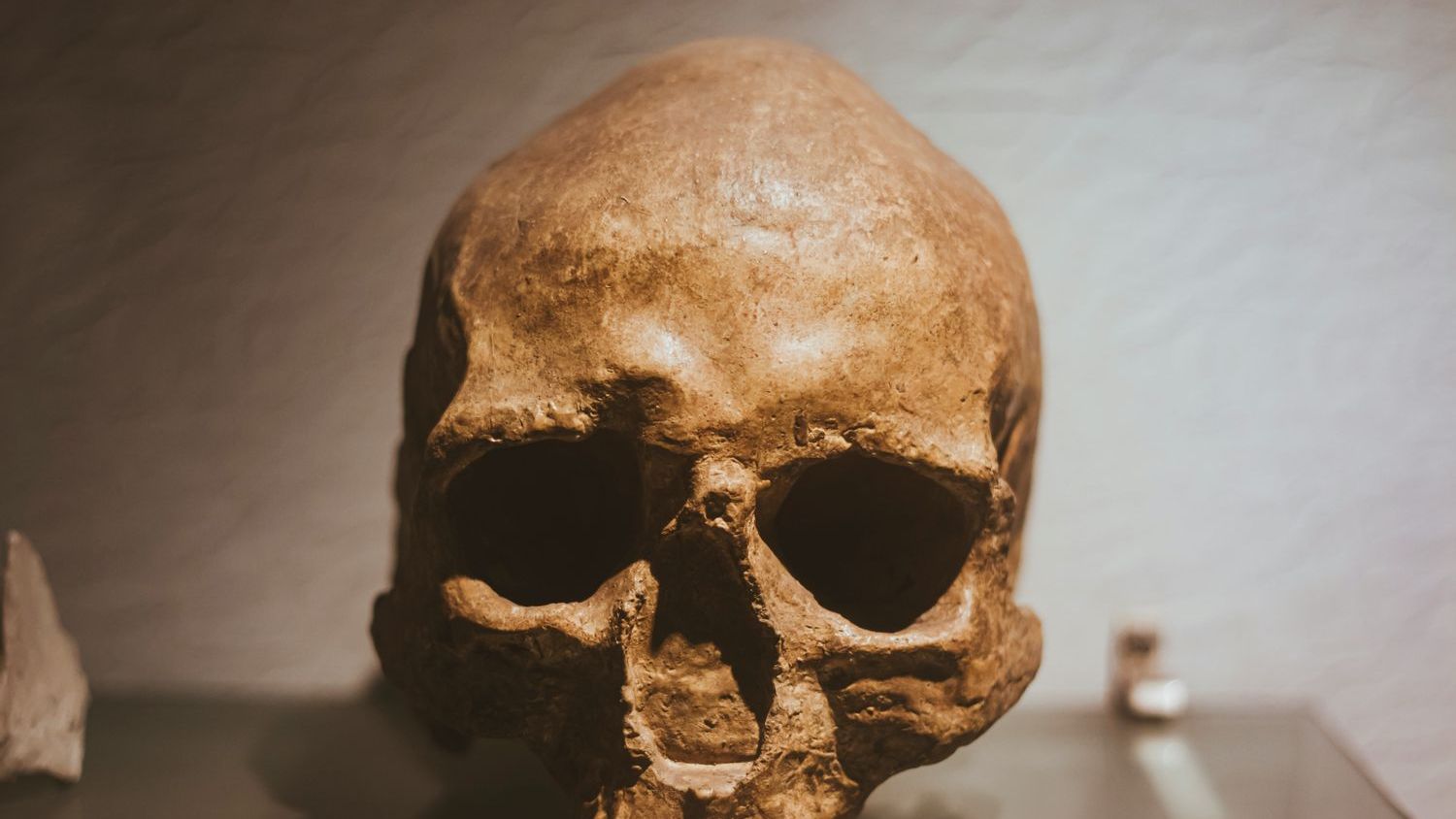
Ancient Teeth Hint at Homo Erectus-Denisovan Interbreeding – Image for illustrative purposes only (Image credits: Unsplash)
China – Researchers have extracted proteins from six teeth dating back roughly 400,000 years and identified genetic markers that point to interbreeding between Homo erectus and Denisovans. The teeth, recovered from several sites across the country and belonging to five males and one female, represent some of the earliest molecular evidence for such contact. This finding adds another layer to the already intricate record of human evolution in Asia.
Proteins Preserve Rare Genetic Signals
The analysis focused on enamel proteins, which survive longer than DNA in many fossil contexts. Scientists isolated two specific mutations in the AMBN protein across all six specimens. One mutation appears unique to East Asian populations of Homo erectus and has not been recorded in any other hominin group examined so far. The second mutation matches a variant previously identified in Denisovans and in trace amounts among some present-day humans. These protein signatures survived because enamel forms a protective shell around the tooth. Acid etching techniques allowed the team to recover enough material for comparison without destroying the fossils. The consistency of the mutations across multiple individuals strengthens the case that the traits were widespread in that ancient population rather than isolated anomalies.
Interbreeding Events Reshape the Timeline
The shared variant suggests that Homo erectus groups in East Asia contributed genetic material to Denisovans through direct mating. Denisovans, who occupied parts of Asia until around 50,000 years ago, already carried segments of DNA from an unknown earlier group. The new data identify Homo erectus as the most likely source of that contribution. Such exchanges would have occurred well before modern humans reached the region. The 400,000-year mark places the interaction deep in the Pleistocene, long predating the later Denisovan-modern human contacts that left traces in populations across Southeast Asia and Oceania. Researchers note that the direction of gene flow appears to run from Homo erectus into the Denisovan lineage.
Consequences for Understanding Human Ancestry
Modern humans who carry small percentages of Denisovan DNA may also inherit fragments originally from Homo erectus. This chain of transmission means that a portion of the genetic legacy once attributed solely to Denisovans actually traces further back. The discovery helps explain why certain archaic segments appear in living people without requiring additional unknown hominin groups. Paleoanthropologists and geneticists now have a clearer framework for modeling population movements across ancient Asia. The evidence supports a more interconnected network of hominin groups than previously reconstructed from fossils or genomes alone. It also underscores how protein analysis can fill gaps where traditional DNA extraction fails due to age or climate.
Next Steps in Evolutionary Research
Further protein studies on additional fossils could test whether similar patterns appear in other regions where Homo erectus lived. Expanded comparisons with Denisovan genomes from different sites may reveal the geographic scope of these ancient encounters. Continued refinement of extraction methods promises to yield more such molecular clues from even older remains. The work illustrates how incremental advances in laboratory techniques continue to revise long-standing narratives about human origins. Each new data point refines the map of who met whom and when across deep time.