

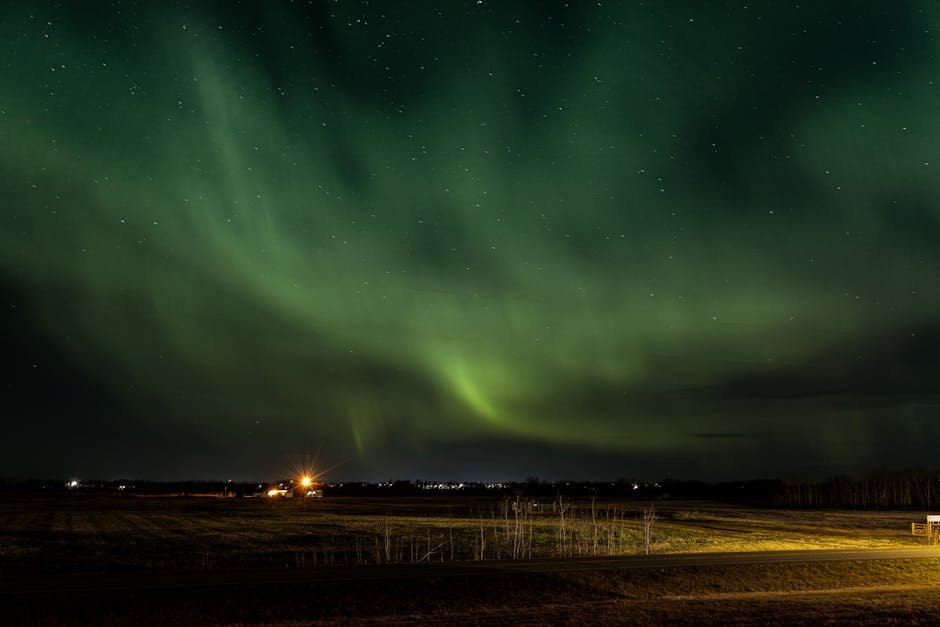
A Solar Fury That Could Eclipse Modern Defenses (Image Credits: Pexels)
United Kingdom – A massive solar storm rivaling the historic 1859 Carrington Event could unleash chaos on modern infrastructure, and government assessments now pin the UK economic toll in the tens of billions of pounds. The National Risk Register classifies severe space weather as a catastrophic threat, on par with pandemics and major cyberattacks.[1][2] Officials stress that preparation costs pale in comparison, urging swift policy shifts to safeguard power grids and satellites.
A Solar Fury That Could Eclipse Modern Defenses
The Carrington Event scorched telegraph lines across continents in 1859, sparking fires and auroras as far south as the Caribbean. Today, a similar geomagnetic storm would strike at the heart of digital society. Induced currents would surge through power lines, pipelines, and undersea cables, tripping safeguards and frying transformers.[2]
Recovery timelines stretch grimly: urban power restoration might take hours, but remote transformer replacements could drag on for months or even one to two years due to manufacturing delays. Satellites face radiation barrages that degrade electronics and solar panels, while GPS signals falter, hobbling precision farming and aviation.[1] The government’s reasonable worst-case scenario envisions a 1-2 week onslaught of coronal mass ejections and flares, with second-order effects like fatalities from prolonged blackouts.
The Staggering Price Tag Revealed
UK analyses forecast direct damages in the tens of billions of pounds, with the electricity sector alone underpinning £90 billion in annual GDP. A 2022 Met Office estimate pegged the hit at £9 billion, but broader cascading losses through finance, telecoms, water, and transport amplify the figure.[3][2] Globally, Lloyd’s of London projects $0.6 trillion to $2.6 trillion in first-year damages if the UK and US suffer simultaneously.
The National Risk Register assigns a catastrophic impact score of 5, matching top threats. Likelihood sits at 5-25% over the next five years, per 2025 evaluations.[4] These numbers underscore a policy mismatch: annual resilience investments remain modest against such exposure.
| Sector | Primary Impact | Disruption Duration |
|---|---|---|
| Power Grids | Regional blackouts from transformer failures | Days to months |
| Satellites/GPS | Electronics damage, signal loss | Days; some permanent |
| Aviation | Navigation failures, radiation risks | Weeks for schedules |
Vulnerable Infrastructure in the Crosshairs
Power networks top the list of casualties. A handful of lost high-voltage transformers could cascade nationwide, as seen in past events like Sweden’s 2003 blackout. Undersea cables and pipelines risk corrosion from geomagnetically induced currents.
Satellites endure solar radiation storms that bombard orbits, disrupting the orbital catalog and heightening collision risks for weeks. High-frequency radio blackouts silence long-range comms, while aviation grapples with degraded GPS and elevated radiation at altitude. Emergency services and vulnerable populations face acute challenges without resilient backups.
- Finance: Trading halts from PNT loss.
- Transport: Rail signaling and port ops grind down.
- Water: Treatment plants offline amid power woes.
- Telecoms: Satellite-dependent services vanish.
- Healthcare: Backup power strains during outages.
Progress and Persistent Gaps in Preparedness
The government bolstered forecasting via the Met Office’s Space Weather Operations Centre, earning international acclaim. It allocated £6.7 million in 2025-26 and pledged £300 million to the European Space Agency’s Vigil mission.[3] Grid operators installed some protections, and response plans underwent initial testing.
Yet the National Audit Office flagged shortfalls in March 2026. Roles lack clarity, local responders see minimal involvement, and no full-scale simulations include businesses. A communications strategy exists on paper, but pre-scripted public messages await development. The Department for Science, Innovation and Technology now leads coordination, yet desired outcomes and risk appetites remain undefined.[4]
Experts call for hardening critical transformers at key nodes – a hundreds-of-millions-pound fix dwarfed by potential losses. Accelerating eLoran as GPS backup, stockpiling transformers, and boosting monitoring top the list. Read the full National Risk Register 2025 and NAO report for deeper insights.
Key Takeaways
- Severe space weather ranks catastrophic, with UK costs in tens of billions.
- 5-25% chance in five years demands urgent hardening of grids and backups.
- Preparation expenses are minimal compared to outage cascades.
As solar maximum peaks, the UK’s quantified risks demand bolder action to shield society from cosmic unpredictability. Targeted investments today could avert tomorrow’s crises. What steps should policymakers prioritize? Share your views in the comments.