

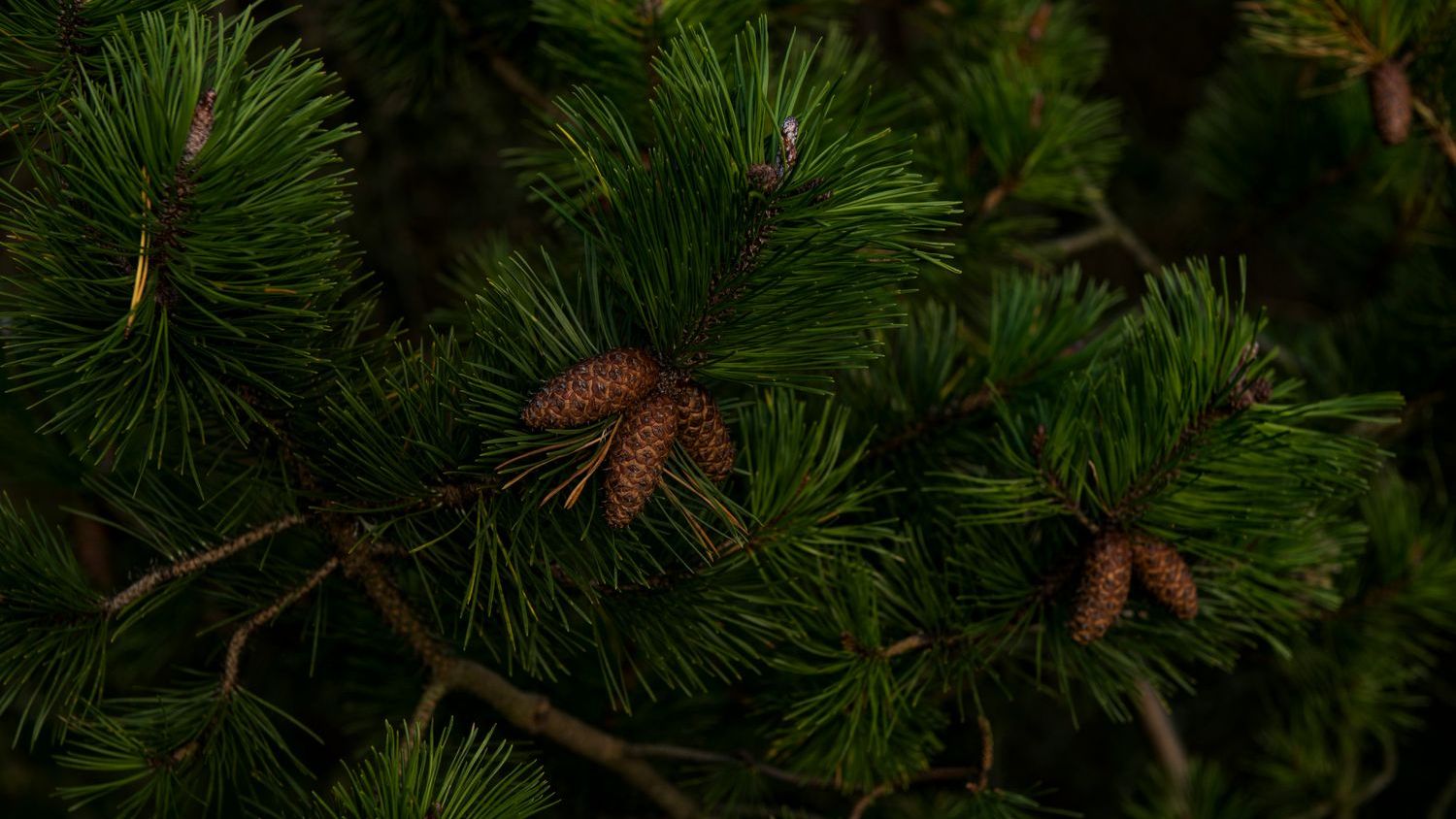
The single oldest non-clonal living thing on Earth is a bristlecone pine called Methuselah, growing on a windswept slope in California’s White Mountains at 9,800 feet – it germinated around 2833 BCE, which means it was already a thousand years old when the Egyptians were finishing the Pyramids, and the U.S. Forest Service refuses to disclose its exact location for fear of what tourists would do to it – Image for illustrative purposes only (Image credits: Unsplash)
White Mountains, California – High on a windswept slope in the White Mountains, a single bristlecone pine named Methuselah has been growing for roughly 4,800 years. The tree germinated around 2833 BCE and remains the oldest confirmed non-clonal living organism on Earth. Its age places it well before the completion of the Great Pyramid at Giza and before the rise of many early human civilizations.
Biological Traits That Enable Extreme Longevity
Methuselah belongs to the Great Basin bristlecone pine species, which thrives in dolomite soils at elevations between 9,500 and 11,000 feet. These conditions feature intense cold, scarce water, strong ultraviolet exposure, and brief growing seasons. The harsh setting forces the trees to add less than a millimeter of trunk diameter in many years.
Slow growth produces wood that is unusually dense and rich in resin. This material resists the fungi, insects, and decay that destroy trees in milder climates. Over centuries, individual trees often lose sections of their root systems, leaving only a narrow strip of living bark and a few branches on an otherwise dead-looking trunk. That surviving strip has sustained Methuselah through thousands of annual growth rings.
The Incident That Shaped Current Protection Policy
Decades earlier, another ancient bristlecone pine called Prometheus grew in what is now Great Basin National Park in Nevada. In 1964 a graduate student studying climate patterns received permission to cut the tree down after coring equipment failed. Ring counts later showed the tree had lived more than 4,862 years. The loss prompted the US Forest Service to adopt stricter safeguards for remaining ancient specimens.
That experience directly influenced the approach taken with Methuselah. Officials recognized that even careful scientific work could destroy irreplaceable individuals. The policy of nondisclosure emerged as a direct response to the earlier mistake.
Secrecy Measures and Recent Challenges
The Forest Service has withheld Methuselah’s precise coordinates for more than seventy years. A 4.5-mile trail passes through the grove, yet no signs identify the tree among its weathered neighbors. Visitors often walk past without realizing they are near the record holder.
In 2021 photographs from an earlier National Geographic feature allowed online identification of the exact tree. Despite the leak, rangers at the Schulman Grove Visitor Center still decline to point it out. The continued silence raises the barrier for casual visitors while the most determined seekers can locate the tree through public sources.
The Quiet Record of Continuous Life
Methuselah has added one dense ring each year while human societies rose and fell far below its slope. It was already a thousand years old when the pyramids neared completion and more than three thousand years old when the Roman Empire ended. The tree’s activity consists simply of slow, uninterrupted growth rather than any response to distant events.
Today the 2026 ring is forming within the narrow living strip. As long as the surrounding conditions hold and visitors leave the bark undisturbed, the process can continue. The Forest Service’s long-standing restraint has so far preserved that continuity against pressures that have eliminated other ancient trees.