
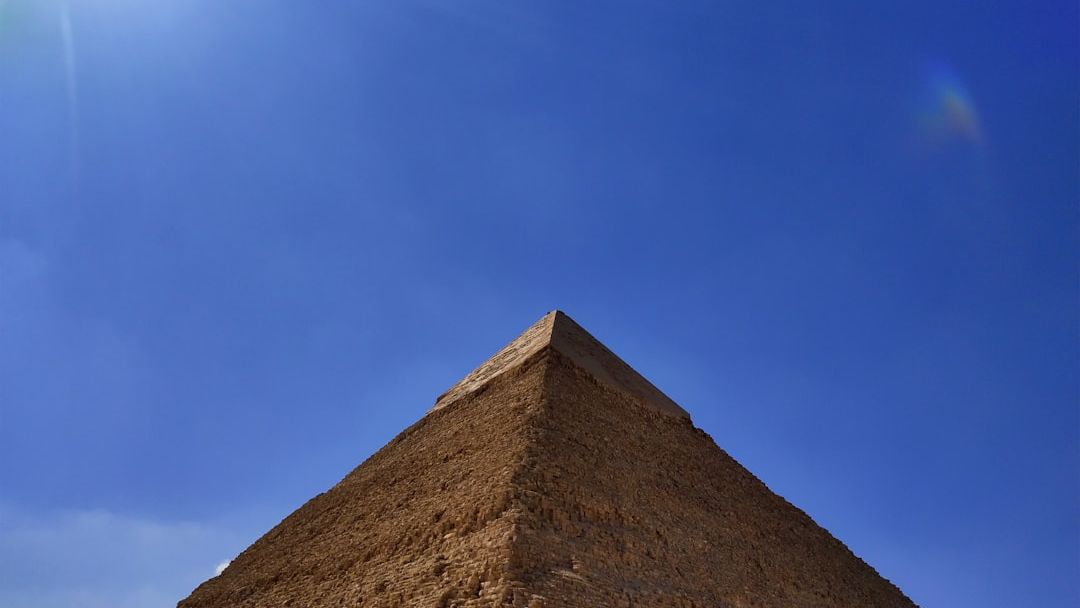

There is something unsettling about precision in the ancient world. Not the rough-hewn precision of trial and error, but the kind that makes modern engineers pause. The Great Pyramid of Giza, built roughly four and a half millennia ago, sits at the center of a debate that has quietly intensified in recent years: was its geometry, and the geometry of the surrounding complex, encoded with knowledge of the solar system that we have only recently been able to verify?
The Saturn hypothesis, in particular, has attracted a wave of serious academic attention between 2024 and 2026. Several independent researchers have been examining whether the layout and dimensions of the Giza pyramids carry measurable, documentable correlations with the known ring system of Saturn. What follows is an honest look at what the numbers actually say, where they hold up, and where they remain contested.
The Pyramid Complex That Has Never Fully Been Explained
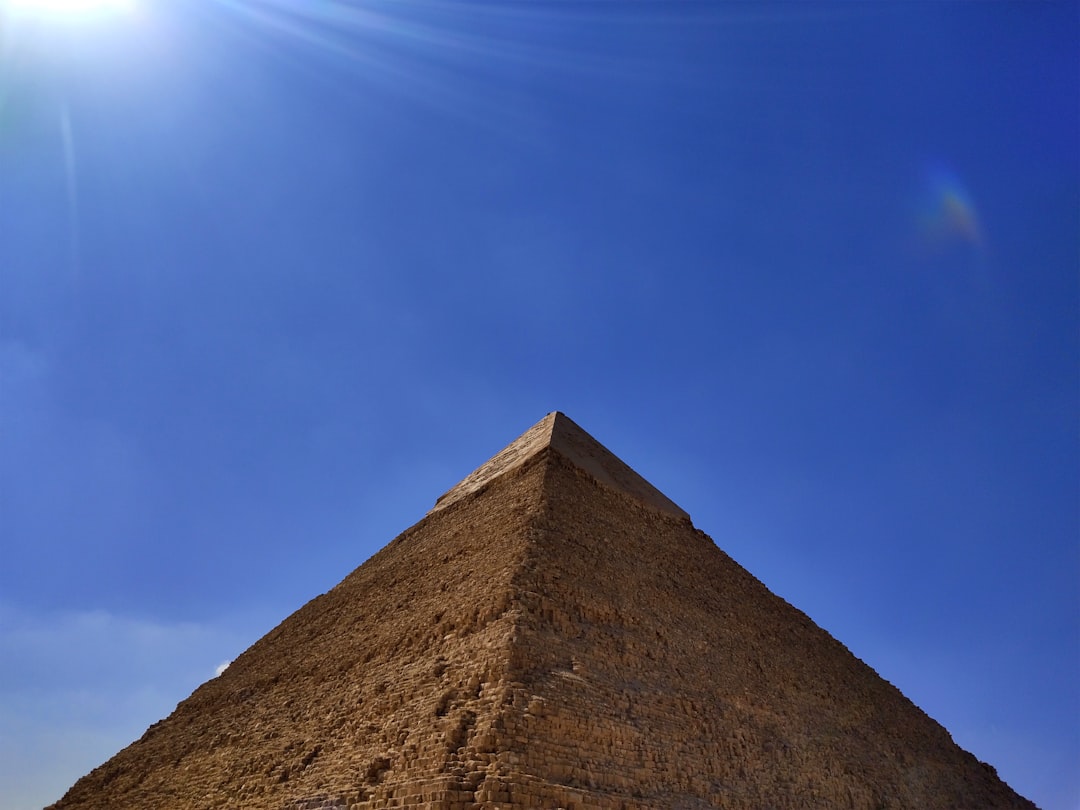
The Great Pyramid of Giza achieves geometric precision that challenges explanation: alignment to cardinal directions within 3.4 arcminutes, base leveling to within centimeters across 5.3 hectares, and four faces converging at the apex with minimal deviation. Those are not the tolerances of guesswork. The maximum difference in the side measurements, at roughly 230 meters each, is just 4.4 centimeters, and the space between blocks is just one-fiftieth of an inch. For a Bronze Age civilization, this level of accuracy is genuinely hard to account for using only the tools mainstream archaeology typically credits them with.
The 2.3 million blocks each weigh between 2.5 and 80 tons, and to complete the structure, the builders needed to place an average-size block roughly every two to three minutes across a ten-hour workday. That’s the logistical reality behind the mystique. The numbers are verifiable. The explanations for how they achieved it are, still, genuinely incomplete.
Saturn’s Ring System: What We Actually Know
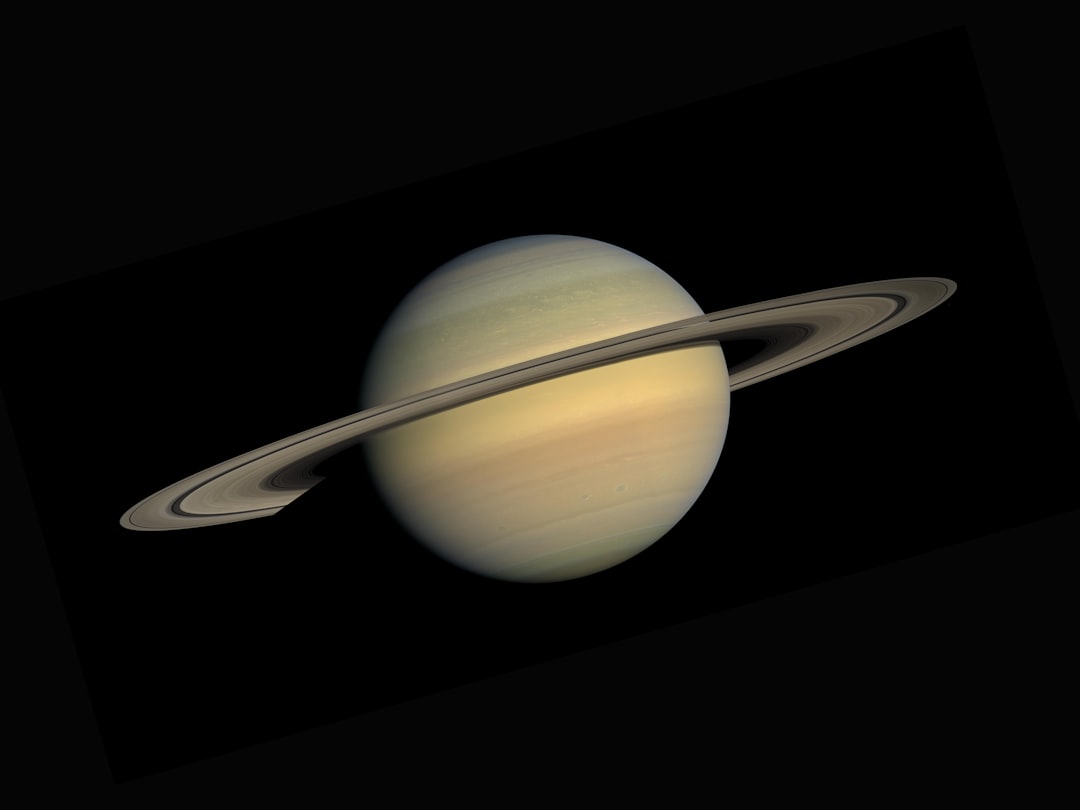
Saturn’s ring system extends up to 175,000 miles from the planet, yet the vertical height is typically about 30 feet in the main rings. That combination of enormous radial breadth and razor-thin vertical depth makes Saturn’s rings one of the most geometrically striking structures in the known solar system. The main rings are, working outward from the planet, C, B, and A, with the Cassini Division, the largest gap, separating Rings B and A.
The rings are relatively close to each other, with the exception of a gap measuring roughly 4,700 kilometers in width called the Cassini Division that separates Rings A and B. Particles within the division orbit Saturn almost exactly twice for every time that the moon Mimas orbits, leading to a build-up of gravitational nudges from the moon. The ring structure is governed by precise mathematical ratios, a fact that becomes important when researchers begin overlaying Giza’s own proportional system.
The Khafre-Saturn Correlation: A 2026 Research Paper

A paper published in March 2026 presents the Giza Big Dipper correlation hypothesis, which proposes that there were six main pyramids at Giza, with these six pyramids corresponding to the first six planets, with Khafre specifically corresponding to Saturn. This is not a fringe blog post. The paper, authored by Ian Douglas and registered under a Creative Commons license with a formal DOI, builds on several prior studies. The paper shows how originally proposed dimensions from Italian researchers Maragioglio and Rinaldi should instead be taken as the base of a “virtual” pyramid, and that three such virtual pyramids then slot in perfectly to the Pyramids and Planets correlation, giving the diameters of Saturn’s main rings and the Cassini Gap.
The claim is specific enough to be testable. That specificity is what separates it from vaguer cosmic alignment theories. Whether it survives peer scrutiny remains an open question, but it has attracted measurable academic attention as of early 2026.
The Sacred Ratios Embedded in the Stone

Central to the mathematical investigation of Giza is the 10:9 ratio, representing the dynamic interplay between the circle and the square, and the 14:11 ratio, which is examined as a reflection of the relationship between the square’s perimeter and the inscribed circle’s circumference, subtly encoding the value of pi in these monumental constructions. These are not abstract observations. They are measurable properties of the physical structure. These ratios were not merely mathematical tools but were deeply integrated into the spiritual worldview and metrological systems of the builders, symbolizing the continuous process of doubling and halving that underlies creation and dissolution.
The presence of pi at Giza is among the best-documented mathematical features of the complex. John Taylor, who first proposed this idea, discovered that if you divide the perimeter of the Pyramid by its height, you obtain a close approximation of 2π. Saturn’s ring ratios also express themselves in terms of circular geometry. The overlap between those two domains of measurement is part of what fuels the Saturn hypothesis.
The Golden Ratio and the Kepler Triangle: Hard Numbers

Looking at the dimensions of the Great Pyramid of Giza, one can find a height-to-base ratio of 146.6 to 230.4, equal to 0.6360, and the dimensions of the Great Pyramid vary by only 0.025 percent from a perfect golden triangle pyramid. A margin of error that small does not arise from coincidence in a structure of this scale. The Great Pyramid’s dimensions reveal an intimate relationship with the golden ratio, and when examining the pyramid’s slope angle of approximately 51.8 degrees, the ratio of the pyramid’s height to half its base length equals the golden ratio.
The study finds that the Great Pyramid’s dimensions yield algebraic relationships involving pi and phi, expressed in terms of hypotenuse and base ratios, and each constant approximates the pyramid’s geometry with high precision, indicating advanced mathematical knowledge among ancient Egyptians. Saturn’s A and B rings themselves express harmonic numerical relationships, which is part of why researchers have found the Giza-Saturn overlap numerically plausible rather than purely speculative.
Astronomical Precision That Still Has No Consensus Explanation
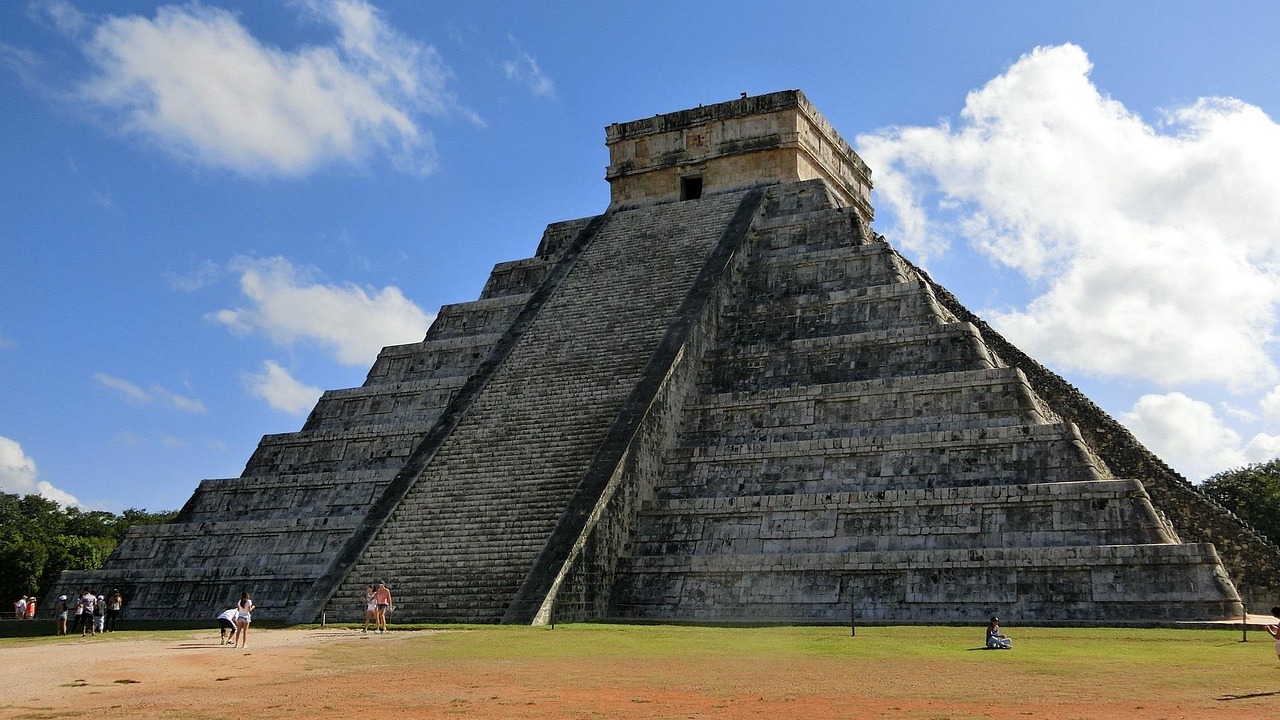
The Egyptians aligned pyramids of the Fourth Dynasty, including the Great Pyramid of Khufu and its neighbor Khafre, to the cardinal points with remarkable accuracy, and scholars who have studied the issue have generally concluded that the Egyptians must have used the nighttime stars to achieve such accuracy. The mechanism is understood in broad strokes. The scale of precision is what remains difficult to fully account for. Researchers have proposed a “sacred coordinate system” comprising three integrated elements: astronomical observation of circumpolar stars that established horizontal alignment through the Pedj Shes ceremony, a central Djed pole that maintained vertical control, and the seked slope algorithm, verified by string lines, which controlled face angles.
Each edge of the Great Pyramid faces either exactly north, south, east, or west, up to a fraction of a degree, and the northern edge is only one-fifteenth of a degree off from true north. That level of astronomical sophistication, applied to a structure built before modern instrumentation, is the reason planetary correlation hypotheses continue to attract serious researchers.
The Rhind Papyrus and the Evidence for Advanced Mathematics

Evidence supporting the use of pi by ancient Egyptians includes the Rhind Mathematical Papyrus, which approximates pi with a deviation of only about 0.6 percent from the real value. The papyrus is a physical, datable document. It proves beyond reasonable doubt that Egyptian builders worked within a sophisticated mathematical framework. This principle is substantiated by records like the Rhind Mathematical Papyrus, highlighting the Egyptians’ sophisticated application of geometric principles.
An academic paper attempts to show the astronomical design principles encoded in the geometrical forms of the largest five pyramids of the Fourth Egyptian Dynasty, based on using the pyramids’ design-modules mentioned in the Rhind Mathematical Papyrus, and shows the astronomical algorithms for quantifying the slopes of pyramids with reference to specific ranges of Earth’s axial tilt within a spherical coordinate system. The papyrus, in other words, is not a curiosity. It is evidence of a working astronomical mathematics program in ancient Egypt.
The Cassini Division and the Giza Gap

In 1675, Giovanni Domenico Cassini determined that Saturn’s ring was composed of multiple smaller rings with gaps between them, and the largest of these gaps was named the Cassini Division, a roughly 4,800-kilometer-wide region between the A Ring and B Ring. Researchers examining the Saturn-Giza hypothesis have focused specifically on this gap because its proportional relationship to the surrounding ring structure can be expressed as a clean numerical ratio. The proposal is that three “virtual pyramids” suggested by enclosure features at Giza slot in perfectly to the Pyramids and Planets correlation, giving the diameters of Saturn’s main rings and the Cassini Gap.
Whether those virtual pyramid dimensions are genuinely derived from the physical site or are being selectively fitted to the data is the central methodological debate. The researchers point to the Italian surveyors Maragioglio and Rinaldi’s physical measurements as the independent source for the dimensions, which at least removes the accusation of pure numerology.
Where Mainstream Archaeology Draws the Line
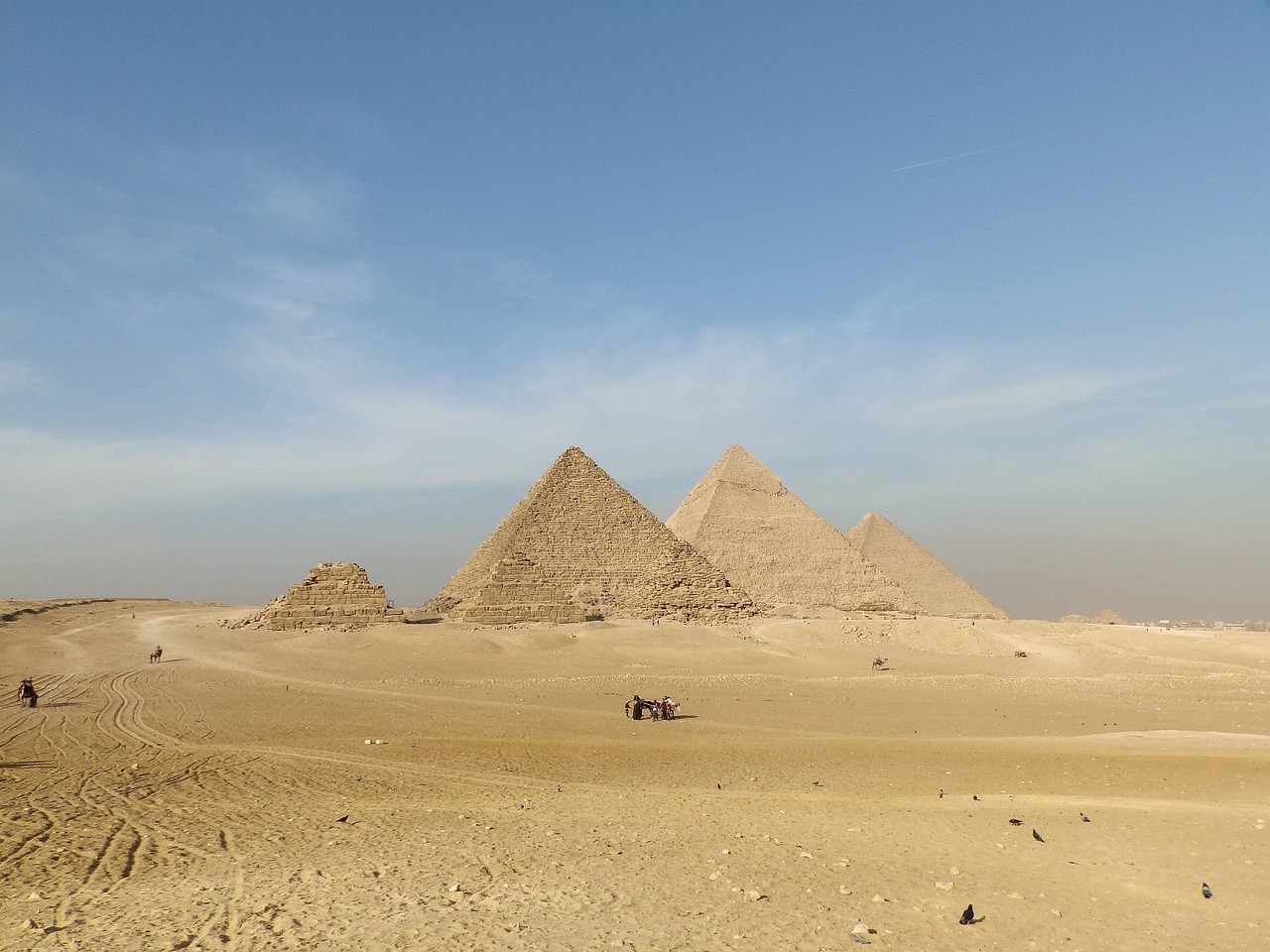
Egyptology and archaeological science maintain that available evidence indicates the Giza pyramids were constructed during the Fourth Dynasty period of the third millennium BC, and arguments made by alternative researchers concerning the significance of proposed cosmic correlations have been described as a form of pseudoarchaeology. That is the mainstream position, and it is worth stating clearly. The lack of direct evidence leaves many of these implications speculative and rooted more in modern interpretation rather than historical fact.
The debate is not simply between believers and skeptics, though. Several of the researchers advancing the Saturn hypothesis have backgrounds in engineering, mathematics, and astronomy, and are careful to base their claims on measured dimensions rather than mystical readings. Although we may never know whether these interesting results were intentionally applied or just sheer coincidence, the mathematical elements within the Great Pyramid of Giza contribute to its alluring and mysterious nature. That measured uncertainty, coming from academic sources, is about as honest as the field gets.
What the Numbers Allow and What They Cannot Prove
Two main theories have been proposed for the pyramid’s proportions: one stating that pi was used to set the base-height proportion, the other that this proportion was determined using the golden ratio phi, and the interesting point is that both theories fit the Great Pyramid proportions with two or three decimal places of precision, sufficient for construction purposes. That coexistence of multiple explanations is actually a clue about how rich the mathematical landscape of Giza truly is. The conclusion that all pi-phi relationships exist only within right square pyramids, such as the Great Pyramid, underscores the unique geometric properties of squares that facilitate these mathematical connections, highlighting the distinctiveness of square-based pyramids in aligning with transcendental and irrational numbers.
The Saturn ring correlation fits within this same landscape. It does not require the ancient Egyptians to have had telescopes, though one researcher has raised that possibility. It requires only that whoever designed Giza used the same underlying mathematical constants that also govern orbital mechanics. Whether that is a coincidence, a result of shared mathematical principles embedded in nature, or evidence of direct astronomical knowledge remains genuinely unresolved. The numbers are real. What they mean is still being argued.
Conclusion
The Giza-Saturn hypothesis sits in an uncomfortable middle ground. It is supported by documented measurements, published in citable academic papers, and built on verified data about both the pyramids and Saturn’s ring system. It is also contested, methodologically debated, and nowhere near consensus. That is not a failure of the research. That is where all genuinely interesting questions live.
What the accumulating evidence does confirm, beyond reasonable doubt, is that the builders of Giza operated within a mathematical system of extraordinary sophistication, one that encoded relationships between geometry, pi, the golden ratio, and astronomical orientation at a scale we still struggle to fully explain. Whether Saturn was the template for that encoding, or merely a striking coincidence, may ultimately depend on what we are willing to call proof.