


What the Green Flash Actually Is
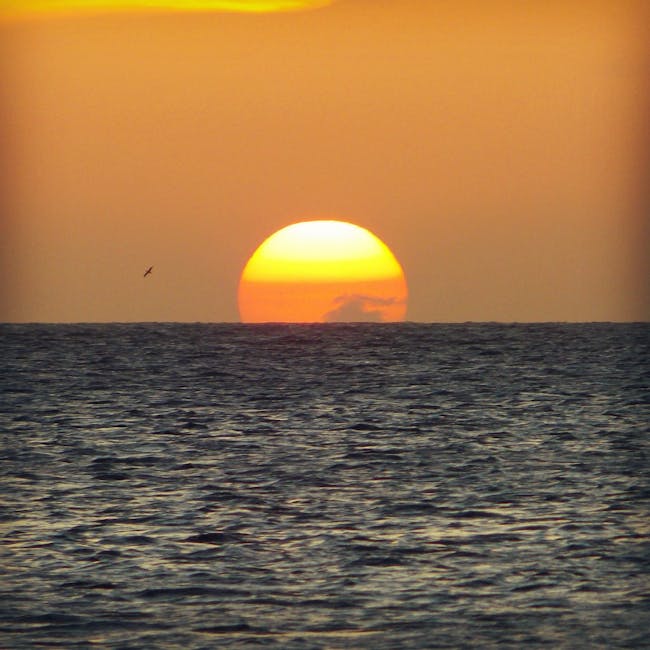
The green flash is a rare atmospheric optical phenomenon that occurs briefly at sunset or sunrise, manifesting as a vivid green spot, rim, or ray at the upper edge of the sun’s disk just as it appears to vanish or emerge from the horizon. It sounds simple, but the mechanics behind it are surprisingly layered.
The various colors of light bend different amounts based on their wavelengths. Shorter wavelengths, including blue, violet, and green, refract more strongly than longer wavelengths such as yellow, orange, and red. Blue and violet light are scattered by the atmosphere, while red, orange, and yellow are absorbed, leaving green light the most visible during the brief moments when the sun crosses the horizon.
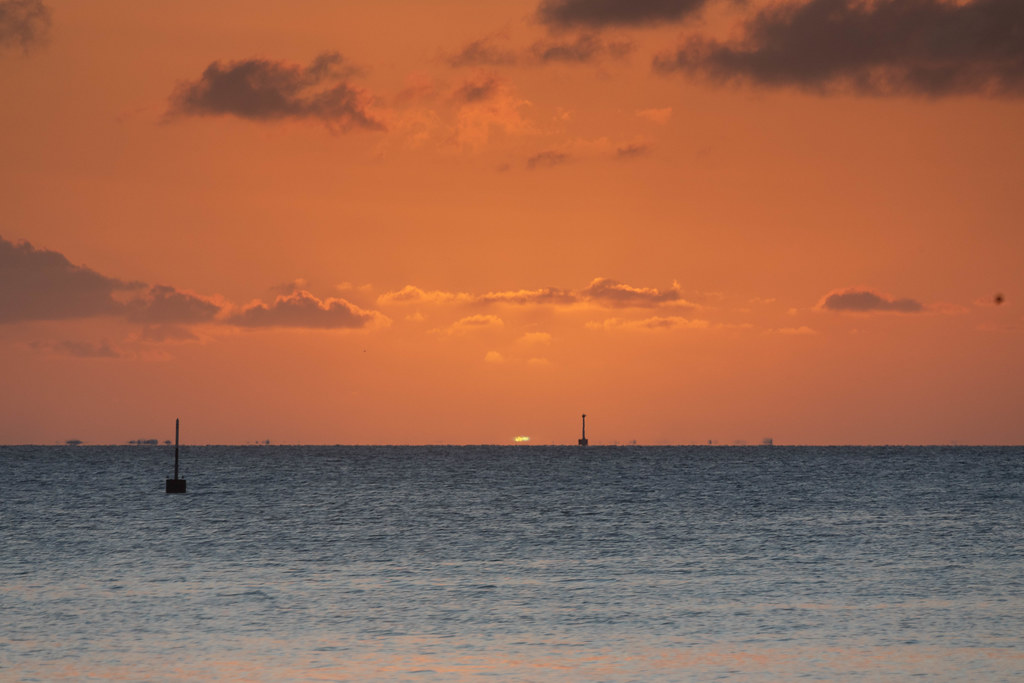
With slight magnification, a green rim on the top of the solar disk may be seen on most clear-day sunsets, although the flash or ray effects require a stronger layering of the atmosphere and a mirage, which serves to magnify the green from a fraction of a second to a couple of seconds. Most people never notice the green rim at all. The full flash is something else.
The Physics: A Natural Prism in the Sky

The green flash comes down to two properties of Earth’s atmosphere: refraction and dispersion. Refraction bends sunlight as it passes through the atmosphere, the same way a straw looks bent in a glass of water. When the sun is near the horizon, its light travels through a much thicker layer of atmosphere than when it’s overhead, so refraction is at its strongest. The total bending at the horizon is about 0.53 degrees, enough to make the sun appear slightly higher in the sky than it actually is.
At sunset, the refractive delay of the sunset is usually a second or two longer for blue and violet than for red. In general, the red image of the sun sets or disappears first, followed by yellow, green, blue, and violet. So why not violet? Air molecules and aerosol particles scatter the shortest wavelengths most strongly, which is why the sky is blue. At the horizon, the path length through the air is very long, and the shortest wavelengths are almost completely removed.
To amplify the minute refraction effects and give rise to a green flash, a mirage becomes essential. A mirage occurs when there are variations in air density due to temperature gradients. In a stable atmosphere, temperature decreases with altitude, resulting in a smooth decline in air density. However, localized temperature fluctuations can create regions of denser air. In such instances, the denser air acts as a giant lens, bending the rays of the setting sun toward the Earth.
The Four Distinct Types of Green Flash
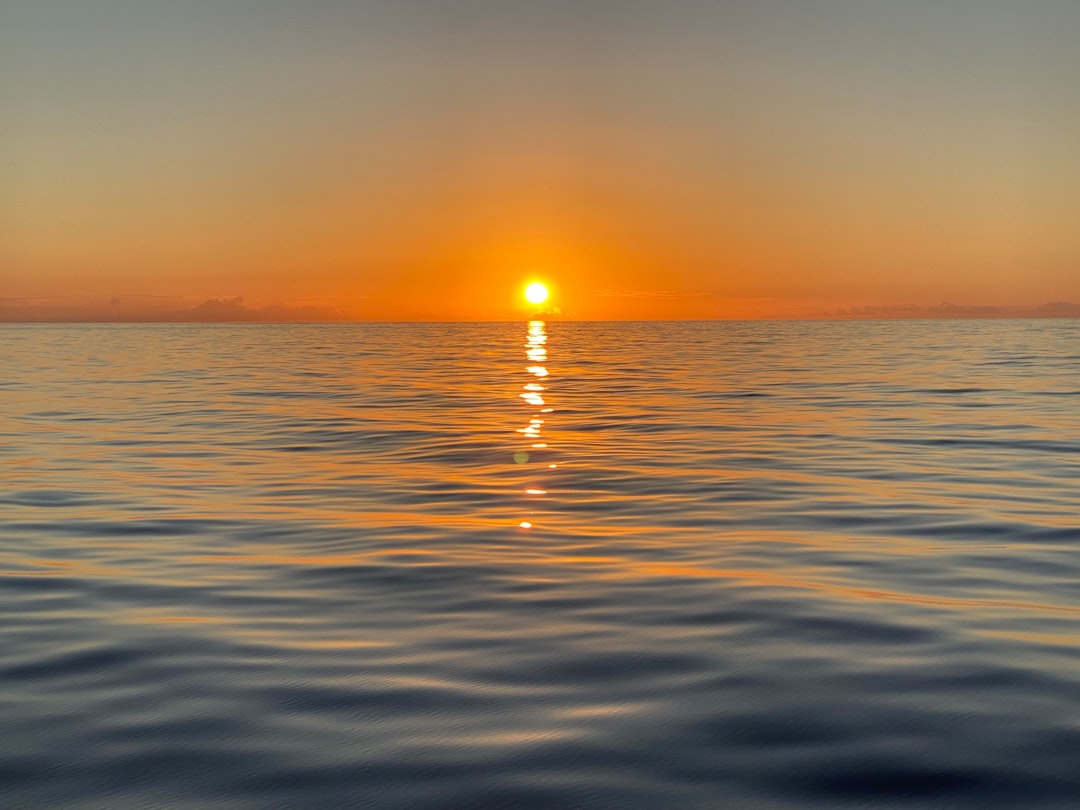
There are four categories of green flashes: inferior mirage, mock mirage, subduct flash, and green ray. Nearly all green flash sightings fall into the first two categories. Each has a noticeably different look, a different trigger, and a different duration.
Inferior mirage flashes are oval and flat and occur close to sea level when the surface of the water is warmer than the air above it. Mock mirage flashes, on the other hand, occur higher up in the sky and when conditions on the surface are colder than the air above. The flashes appear to be thin, pointy strips being sliced from the sun, and they last about one to two seconds. These are the types of green flash most commonly seen by pilots.
The much rarer subduct flash takes place during an atmospheric inversion, when a layer of warm air keeps cooler air and moisture close to the surface. It causes the sun to take the appearance of an hourglass, and the upper part of the shape turns green for up to 15 seconds. The rarest type of green flash is known as a green ray. In this instance, a beam of green light shoots straight up a few degrees from the green flash immediately after the sun sets for about a second. It’s caused by the combination of hazy air and an unusually bright inferior, mock, or subduct green flash.
How Rare Is It Really?
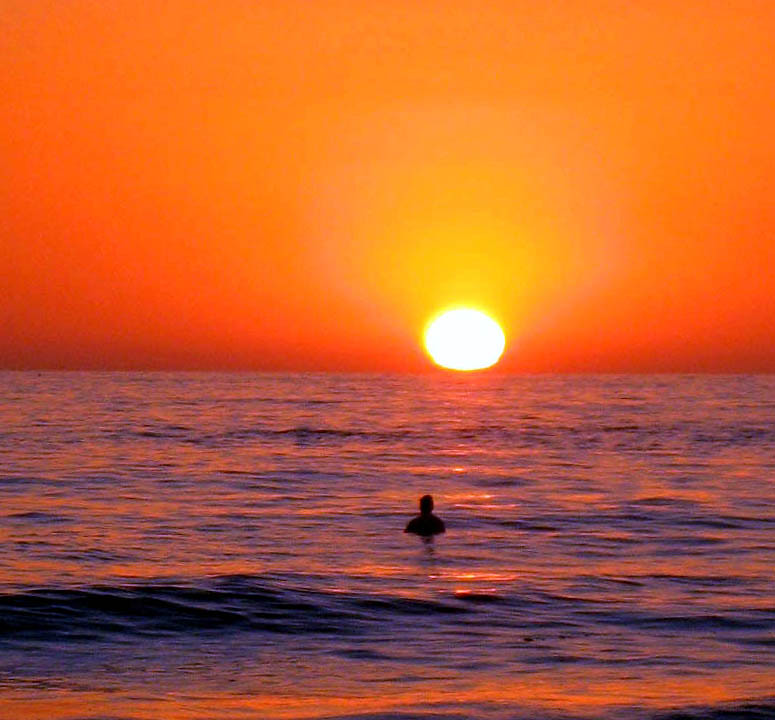
Although a green rim is present during every sunset, a green flash is rarer because of the required mirage. That distinction matters. The green rim is technically always there. But making it visible, let alone dramatic, requires the atmosphere to cooperate in very specific ways.
Using optical aid such as binoculars or a camera viewfinder behind a long telephoto lens, you should be able to see some green flash phenomena in most sunsets. In San Diego, researchers have observed one or more flashes in roughly five out of six sunsets over the ocean. Without magnification, that figure drops to closer to one in six.
The green flash is often described as rare, but it is more accurate to say it is rarely noticed. With the right conditions and a clear horizon, green flashes happen fairly regularly. The key is knowing what to look for and where to look. Most people simply aren’t watching at the right moment, in the right direction, with the right conditions underfoot.
Where to Find the Best Conditions

Successful observers of this phenomenon should have an unobstructed view of the horizon and the air must be clear, which is the reason green flashes are most commonly seen over water. They have, however, appeared just over the tops of clouds located over a water horizon. The green flash can also be seen on a distant horizon when looking down from a high location; it is said to be regularly visible from the top of the Empire State Building, as well as from airplanes and mountaintops.
One of the best places on Earth to see the green flash is at Cerro Paranal, Chile, home of the European Southern Observatory’s Very Large Telescope. Hawaii, particularly beaches with clear western horizons such as those in Maui or Kauai, often hosts green flash sightings. Along the Pacific coast, sunset watch points in Big Sur or San Diego provide panoramic views. The Caribbean, including islands like Barbados, has frequent reports thanks to dramatic ocean sunsets.
Humid, muggy coastal cities are poor choices despite their ocean views, because moisture in the air amplifies scattering. Dry coastal areas, mountaintops, and remote ocean locations offer much better odds. The cleaner and drier the air column between you and the horizon, the better your chances.
The Green Flash and the Human Eye
Green flashes involve physiological optics as well as physical optics. At sunset, the eye is almost invariably affected by looking at the bright red sun, even for a few seconds. The major effect is bleaching of the red-sensitive photopigment from the retina. This bleaching distorts color perception, usually without the observer being aware of it: loss of red sensitivity means that the yellow stage of the sunset flash that precedes the green one is usually perceived as green, not yellow.
The sun near the horizon is dimmer than at midday because its light passes through so much more atmosphere, but it can still be bright enough to cause retinal damage. The National Eye Institute warns that looking directly at the sun can damage cells at the back of the eye and cause permanent vision loss. Regular sunglasses, even very dark ones, do not provide adequate protection from direct solar viewing. The safest approach is to avoid staring at the sun while it’s still visibly bright.
The Blue Flash: Even Rarer Than Green
One might expect to see a blue flash, since blue light is refracted most of all and the blue component of the sun’s light is therefore the last to disappear below the horizon, but the blue is preferentially scattered out of the line of sight, and the remaining light ends up appearing green. It takes unusually pristine atmospheric conditions for blue to survive the journey.
Sometimes, when the air is especially clear, enough of the blue or violet light rays make it through the atmosphere and create a blue flash instead of a green one. In exceptionally clear air, enough blue light can survive for a blue flash to appear. These sightings are rare and usually reported from high-altitude locations or over very clean ocean air. Some lucky observers have reported seeing both green and blue in the same sunset, though that kind of stacked rarity is hard to plan for.
The green flash may also be observed in association with the Moon and bright planets at the horizon, including Venus and Jupiter. A green flash on a planet’s rim is a step above even the blue flash in terms of sheer improbability, and sightings of that kind remain among the more unusual entries in atmospheric optics records.
Jules Verne and the Legend Behind the Light
Jules Verne’s 1882 novel The Green Ray helped to popularize the green flash phenomenon. In the story, the flash carries an almost mystical weight. Verne fabricated the ancient Scottish legend of the green ray, a flash of green light that sometimes appears just as the sun is passing the horizon at sea when the sky is clear, and the viewer is enabled to see closely into his own heart and read the hearts of others.
No story is more widespread, nor more false, than the “ancient legend” Verne introduces in his 1882 novel, according to which one who has seen the green ray is incapable of being deceived in matters of sentiment. This is the stuff of 19th-century romantic French novels, not Scottish folklore. Anyone who examines the folklore record will find not only that no such legend exists, but that the Scots regard green as a color associated with evil spirits, death, and misfortune.
In Éric Rohmer’s 1986 film The Green Ray, the main character Delphine eavesdrops on a conversation about Jules Verne’s novel and the significance of the green flash, eventually witnessing the phenomenon herself in the final scene. The invented legend has now outlived the science for many people, which says something interesting about how we relate to rare natural events: we want them to mean something beyond physics.
How to Watch for It on May 12
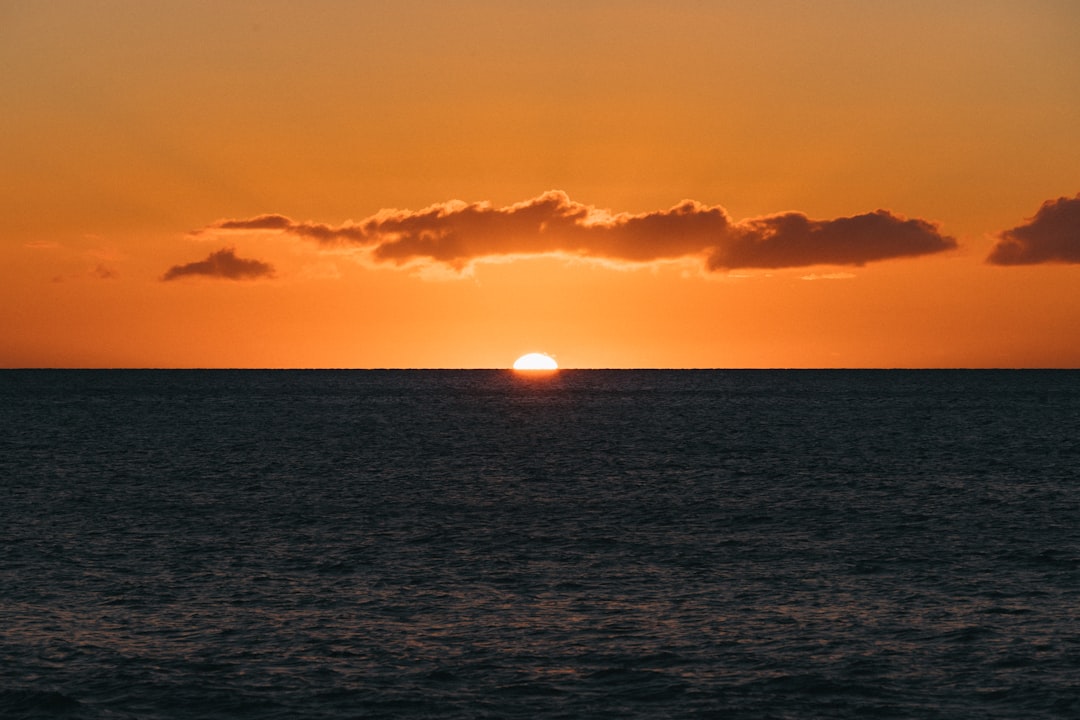
Timing and location are crucial for spotting the green flash. The best opportunities occur when the sky is clear and free of clouds, especially near the horizon. Areas with expansive, unobstructed views such as oceanfront beaches, high-altitude locations, or open deserts offer ideal conditions.
The best time to observe a green rim is about ten minutes before sunset. That is too early to use any magnification like binoculars or a telescope to look directly at the sun without potential harm to the eyes. Keep the sun in your peripheral vision or look away until only the very last sliver remains at the horizon. At that final moment, the sun is at its dimmest and the flash itself is extremely brief. Many experienced observers watch the horizon just above where the sun is setting rather than the sun itself, letting the flash appear in their field of view without prolonged direct exposure.
With an unrestricted view of the horizon, green flashes are regularly seen by pilots, particularly when flying westwards as the sunset is slowed. If the atmosphere is layered, the green flash may appear as a series of flashes. That last detail catches most people off guard. It doesn’t always end with one brief wink of green. Under certain layered atmospheric conditions, nature apparently finds it worthwhile to repeat itself.
A Phenomenon That Rewards Patience
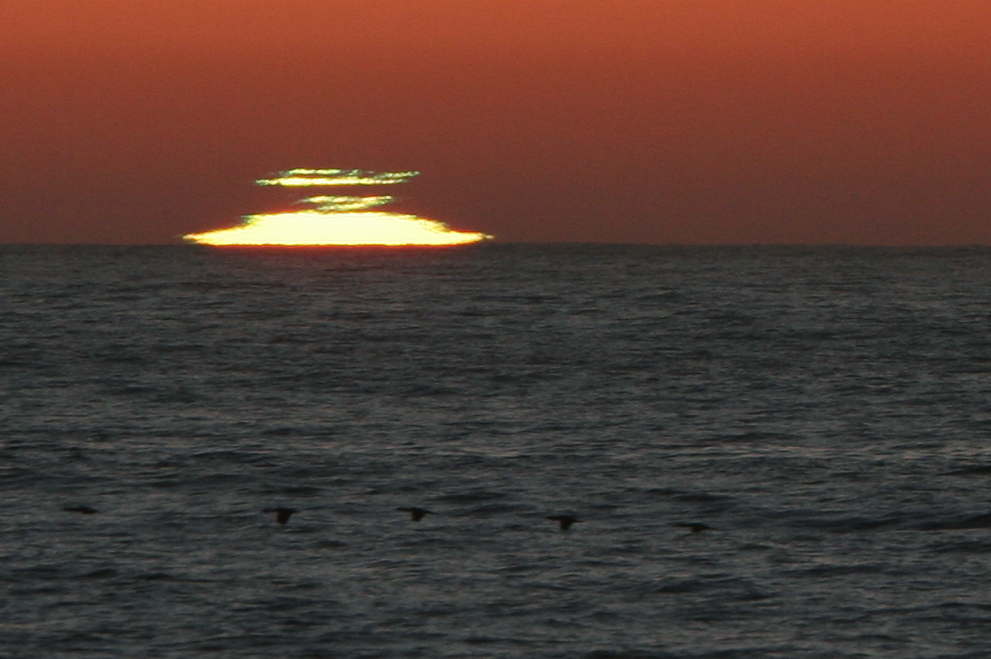
The green flash doesn’t announce itself. There’s no build-up, no gradual transition, no warning. One moment the sun is resting on the horizon, and then it’s gone and a tiny, vivid burst of green light hangs in the air where it used to be. The phenomenon is most commonly observed over a clear, distant horizon such as an ocean or flat plain, where atmospheric conditions are stable with minimal turbulence or inversion layers. It typically lasts only one to two seconds and requires the observer’s eye to be adapted to low light levels for optimal visibility.
While observing at the Vatican Observatory in 1960, D.J.K. O’Connell produced the first color photograph of the green flash at sunset. It took until 1960 to capture it reliably on film, which puts into perspective just how fleeting and elusive the phenomenon actually is, even for trained scientists actively searching for it.
What makes the green flash worth chasing isn’t mythology or legend. It’s the fact that the atmosphere can produce something this precise and brief and beautiful, just from the basic physics of light bending through air. You don’t need a telescope, a special date, or a lucky charm. You need a clear horizon, a little patience, and the good sense to look at exactly the right moment. The rest, as always, is up to the sky.