Marcel covers emerging tech and artificial intelligence with clarity and curiosity. With a background in digital media, he explains tomorrow’s tools in a way anyone can understand.
Sharing is caring!
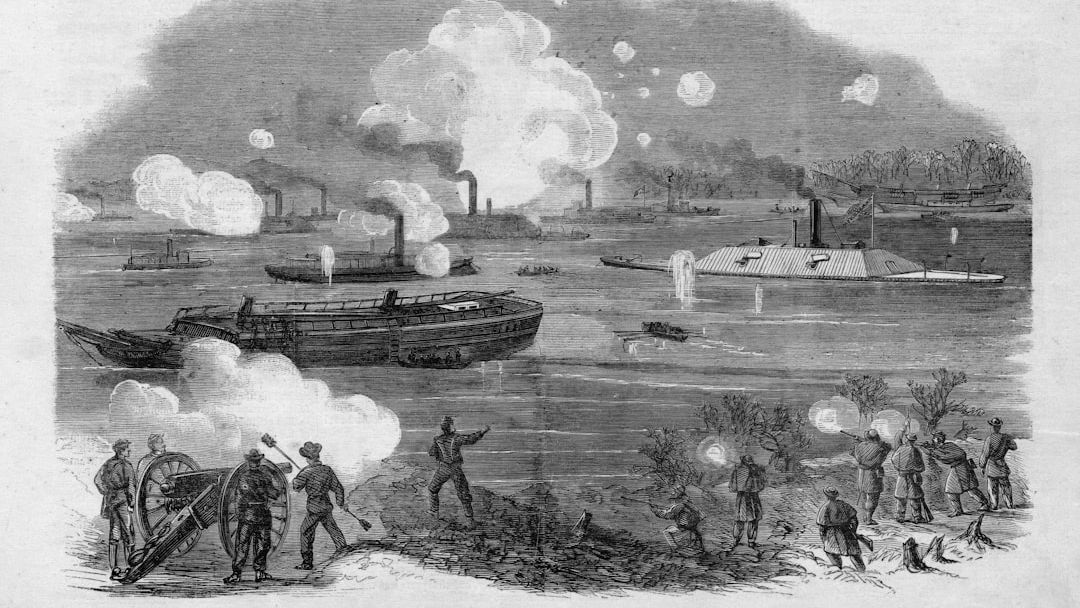
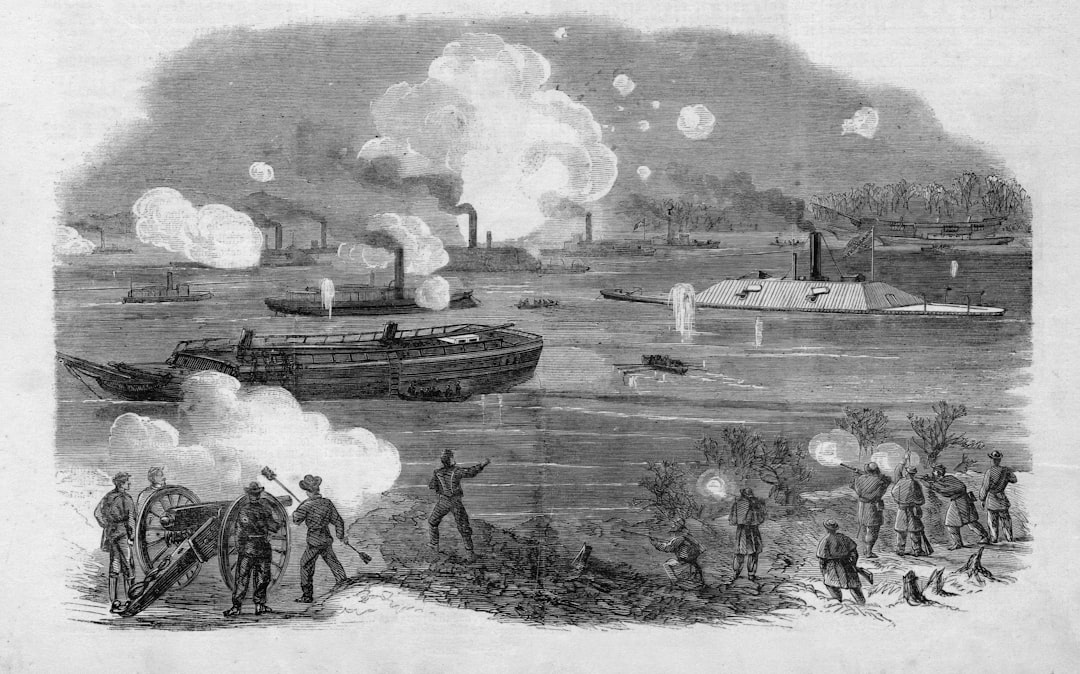
Few weapons in American military history have been as consequential, as feared, and as quickly forgotten as the Civil War torpedo. Union sailors called them “infernal machines,” and the name stuck for good reason. In the July 27, 1861 issue of Harper’s Weekly, editors published a story about an “infernal machine” recently removed from the Potomac River near where the sloop-of-war USS Pawnee was patrolling off Washington, D.C. This torpedo, or mine, was one of many that would be employed throughout the waters of the South by the Confederacy as a means of defense against Union warships. What followed was a technological arms race fought not on open water but beneath it, reshaping naval doctrine in ways that still echo today.
A Desperate Invention Born from Strategic Weakness
A Desperate Invention Born from Strategic Weakness (Image Credits: Unsplash)
At the opening of the American Civil War, Confederate president Jefferson Davis and his people faced an enemy that had a substantially larger and fully ocean-going navy and was wedded to a strategic “Anaconda Plan” of defeating the Confederacy by economic strangulation through a naval blockading of all its ports. Attempting to construct a national navy matching on a ship-for-ship basis the already-existing one of the northern states would quickly bankrupt the fledgling Southern government. Like their forefathers, the Confederates used the technology of the 19th century’s Industrial Revolution to even the odds by engineering an up-to-date version of a Revolutionary War weapon: the torpedo.
What the Word “Torpedo” Actually Meant
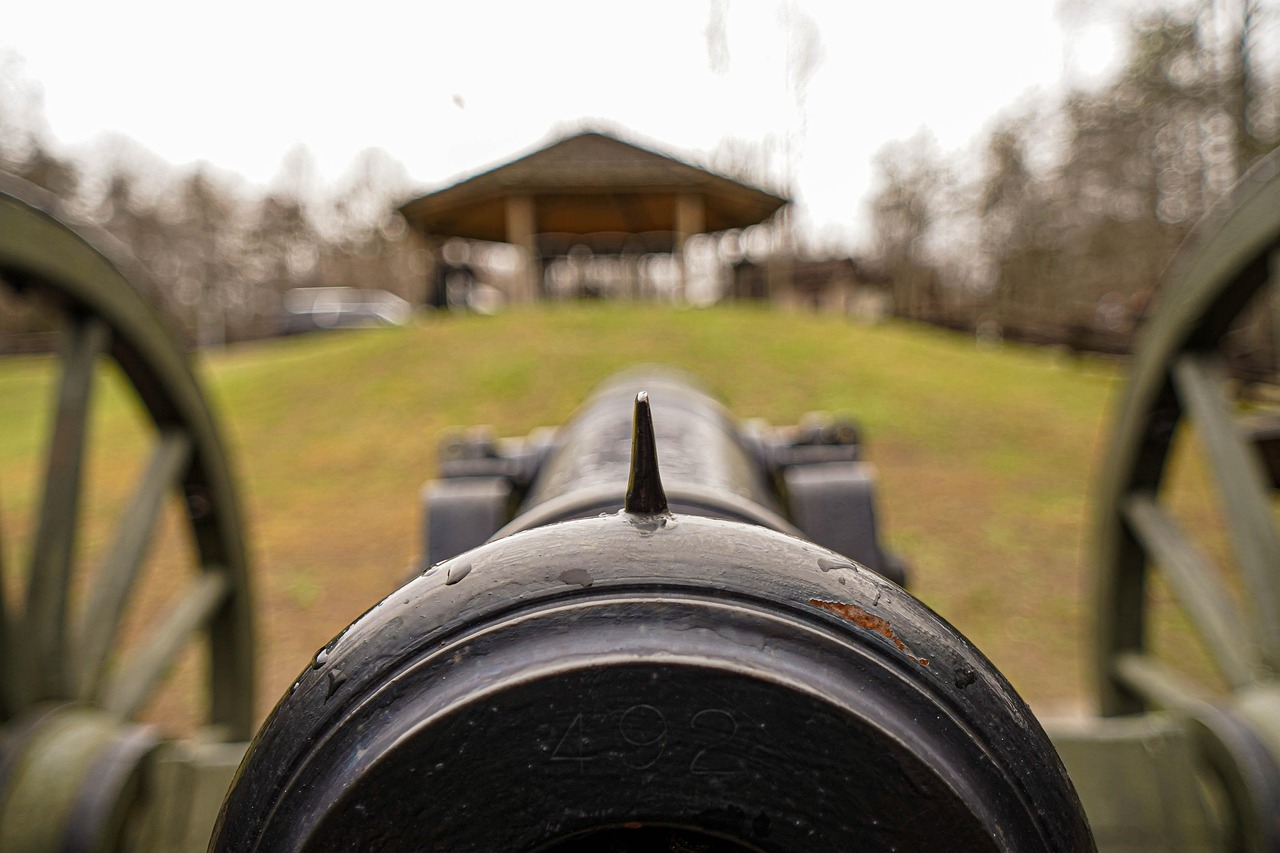
What the Word “Torpedo” Actually Meant (Ron Cogswell, Flickr, CC BY 2.0)
During the Civil War, the term “torpedo” was used to indicate a wide range of explosive devices, including what are now called land mines, naval mines, improvised explosive devices, and booby traps. During the Civil War, the word “torpedo” meant a device containing a charge of gunpowder and intended to sink or disable a ship, or a similar type of buried explosive that we would call a land mine. Inventors like David Bushnell, Robert Fulton, and Samuel Colt had experimented with underwater mines leading up to the war, laying the groundwork for future innovations. They called their devices torpedoes after the torpedo eel that gives an electric shock.
The Men Who Built the Bureaus of Destruction
The Men Who Built the Bureaus of Destruction (Image Credits: Pixabay)
With the Civil War entering its second year, the Confederate government set up two separate bureaus in Richmond, Virginia, to expedite development and deployment of the torpedo on land and sea. On June 17, 1864, Brigadier General Gabriel Rains was appointed chief of the newly created Torpedo Bureau of the Confederate army, born in New Bern in 1803. He began experimenting with mines, then called “torpedoes,” in 1839 during the Seminole War. The formation of two Congress-directed organizations – the Confederate States Submarine Battery Service in the Navy and the Torpedo Bureau in the Army – converted the haphazard distribution of mines into professional services that methodically produced and planted underwater mines. Standardizing this work for the first time was key to its successful implementation.
Matthew Fontaine Maury and the Electric Torpedo
Matthew Fontaine Maury and the Electric Torpedo (Image Credits: Unsplash)
The first real enhancement and development of torpedoes took place during the American Civil War, namely with Matthew Fontaine Maury. Maury was a native Virginian who had charted the ocean currents and written several books about the geography of the sea. Matthew Fontaine Maury (January 14, 1806 – February 1, 1873) was an American oceanographer and naval officer who is considered a founder of modern oceanography, nicknamed the “Pathfinder of the Seas.” In Richmond, Maury set to work on the development of underwater torpedoes. Others before him had experimented with such electrically charged devices, but Maury was the first American to use them successfully in battle. Maury assisted Lieutenant Isaac N. Brown and Major General Leonidas Polk in defending the Mississippi River. He proposed that setting electric torpedoes along the river would be the best defense. They planned to place electric mines on the bluffs of Columbus, Kentucky, to defend the Mississippi from “Cairo to New Orleans,” making it the first combat electric mine station in America and probably the world.
The USS Cairo: The First Ship Ever Sunk by an Electronic Mine
The USS Cairo: The First Ship Ever Sunk by an Electronic Mine (Image Credits: Pixabay)
Before reaching Haines Bluff on the Yazoo River, Union ships encountered a series of “torpedoes” the Confederates had strung across the river. Mines had been used earlier in the Civil War but to little effect. As they had done before, Union sailors dragged the river and carefully removed the mines. Five of them had been secured that fateful day when suddenly the sixth exploded under the bow of the Cairo, sinking the powerful armored ship in twelve minutes. The mine had been set off by men hiding nearby in the bushes who sent a spark via a galvanic battery to detonate the mine. It was the first time in history a ship had been sunk by a mine detonated electronically, and a new military weapon was born.
The Toll on the Union Navy
The Toll on the Union Navy (Image Credits: Pixabay)
The Confederate Navy used mines, or torpedoes, as they were then called, quite extensively during the American Civil War, and sank approximately 27 Federal vessels and damaged many more. By comparison, only nine Federal vessels were sunk by gunfire. Historians say that mines, or torpedoes, claimed thirty-five Union ships and one Confederate vessel during the Civil War. Gabriel Rains claimed fifty-eight in his postwar memoir, although he does not make clear whether he counted vessels of any size sunk by water-borne mines. These hidden weapons slowed General George McClellan’s advance on Richmond, closed the James River to the Union navy, broke up assaults on Fort Wagner outside Charleston, and wreaked havoc in the attack on Spanish Fort below Mobile. They were regarded as such a threat that Union commanders put prisoners of war and suspected guerrillas into rail cars to cross booby-trapped bridges, lead river sweeping parties, or march in front of infantry down country roads.
The Psychological Weapon: Fear as a Military Strategy
The Psychological Weapon: Fear as a Military Strategy (Image Credits: Pixabay)
In the history of naval mines, one lesson is clear: deployed in combination with other maritime components, they can be potentially decisive. A Baltimore reporter who witnessed the ill-fated April 1863 Union attempt to take Charleston summarized the Confederacy’s mining efforts. The torpedo and related weapons were sneaky and indiscriminate. Gunpowder had already expanded the distance at which a man could kill. Some thought that torpedoes made war unacceptably mechanical, anonymous, and inhuman. Like guns before them, they were disparaged as the tools of cowards, offenses against decency and civilized warfare. The weapon succeeded not only in sinking ships but in paralyzing entire fleets, forcing admirals to rethink every approach into a contested harbor.
The H.L. Hunley: A Torpedo Boat That Made History
The H.L. Hunley: A Torpedo Boat That Made History (Image Credits: Pexels)
On February 17, 1864, after months of practice runs and weather delays, the Confederate submarine under cover of darkness silently approached USS Housatonic, a 16-gun, 1,240-ton sloop-of-war on blockade duty four miles off the entrance to Charleston Harbor. The Confederate submersible H.L. Hunley has the distinction of being the first submarine to sink an enemy warship in wartime. Although the boat and its crew were lost as a result of this endeavor, the success of their mission proved that this new style of naval warfare would be an inevitable course of future development. Privately built in 1863 by Park and Lyons of Mobile, Alabama, with the financial backing of Horace Lawson Hunley, the submarine was constructed from rolled iron boiler plate with custom cast iron fittings, and it was powered by a hand crank operated by a crew of seven, with an eighth member to pilot the boat. Hunley did not survive the attack and sank, taking all eight members of her third crew with her. Twenty-one crewmen died in the three sinkings of Hunley during her short career. Finally located in 1995, Hunley was raised in 2000 and is on display in North Charleston, South Carolina, at the Warren Lasch Conservation Center on the Cooper River.
The Coal Torpedo: Sabotage Hidden in Plain Sight
The Coal Torpedo: Sabotage Hidden in Plain Sight (Image Credits: Unsplash)
Newspaper reports started to mention new devices and called them either the “infernal machine” or the “coal torpedo.” The term “torpedo” during this period was used to describe many different explosive devices, not necessarily the marine ones we understand today. What triggered significant debate was the “coal torpedo,” an explosive device set in a block of cast iron “dipped in beeswax and pitch and covered with coal dust,” developed by Belfast-born Thomas Courtenay, who was authorized to employ up to twenty-five volunteers to cast and distribute these devices, with their pay coming from bounties authorized by the Confederate War Department. The explosion of a coal torpedo under a ship’s boiler would not by itself be sufficient to sink the vessel. The purpose of the coal torpedo was to burst the pressurized steam boiler, which had the potential to trigger an extremely destructive boiler explosion. Accidental boiler explosions were not uncommon in the early years of steam transportation and could result in the complete destruction of the vessel by fire.
“Damn the Torpedoes”: The Battle of Mobile Bay
“Damn the Torpedoes”: The Battle of Mobile Bay (Image Credits: Pixabay)
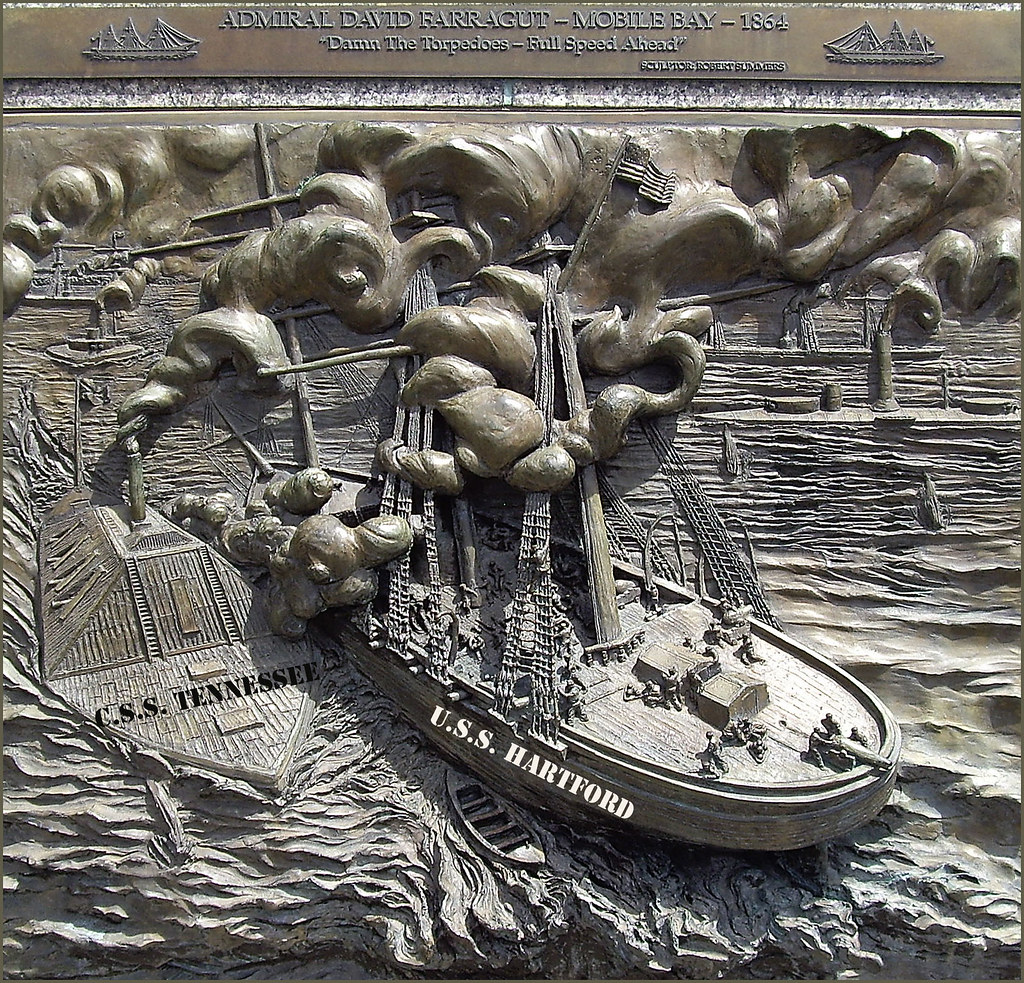
The Confederate Navy sank 27 Union vessels during the war using underwater weapons. The most dramatic, the rapid sinking of ironclad Tecumseh during the Battle of Mobile Bay, is also the most well-known because of Admiral David Farragut’s famous and often-quoted response: “Damn the torpedoes!” While Confederate mines were often faulty, at 7:40 a.m. a torpedo detonated on the starboard side of the Tecumseh. The ironclad rolled over to port as water rushed in and panic ensued. Much to sailors’ and soldiers’ chagrin, even after Mobile Bay was repeatedly swept, mines claimed river monitors Milwaukee and Osage in late March, with one commander reporting that a torpedo exploded under the bow and the vessel immediately commenced sinking.
A Legacy That Outlived the War – and Then Faded
A Legacy That Outlived the War – and Then Faded (Image Credits: Pixabay)
In the beginning there was much prejudice against this mode of warfare, which notwithstanding has since, under Captain Maury’s instruction, become the chief reliance of most maritime nations. It was considered uncivilized warfare thus to attack and destroy an unsuspecting enemy, and many Union naval officers were specially loud in their denunciations of those who resorted to it. During the Civil War, Maury served in the Confederate Navy as the Chief of Sea Coast, River, and Defenses. While he ran afoul of Confederate President Jefferson Davis on more than one occasion, Maury proved himself a competent international diplomat and invaluable inventor. He perfected the “electric torpedo,” similar to a modern contact mine, and thus wreaked havoc on Union ships. Following the war, Maury was eventually pardoned and accepted a teaching position at the Virginia Military Institute in Lexington, Virginia. He died there in 1873 after completing an exhausting state-to-state lecture tour on national and international weather forecasting.
The irony of the infernal machine is difficult to miss. A weapon born out of military weakness and desperation proved more lethal than cannon fire, more disruptive than blockade runners, and more psychologically potent than any ironclad. It was condemned as uncivilized, then quietly absorbed into the arsenals of every major naval power in the world. The torpedo didn’t vanish after the Civil War. It simply changed uniforms.
About the author
Marcel Kuhn
Marcel covers emerging tech and artificial intelligence with clarity and curiosity. With a background in digital media, he explains tomorrow’s tools in a way anyone can understand.