
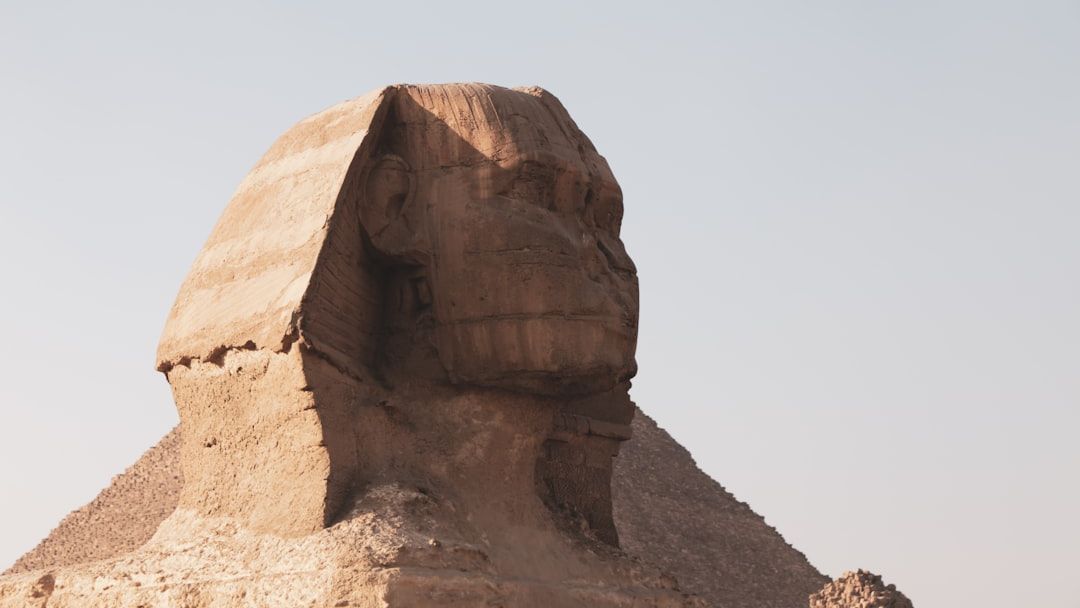

The God Who Wrote Everything Down

Before any radar was pointed at the ground beneath Giza, there was Thoth. In ancient Egyptian theology, Thoth was the god of writing, wisdom, knowledge, and the moon. In Egyptian mythology, Thoth is the god of wisdom, time, writing, magic, and the moon. Every text, every scroll, every inscription on temple walls was considered, in some sense, his authorship.
Since ancient Egypt practiced pseudepigrapha, all books were considered to have been written by Thoth because of his role as the God of Writing. Iamblichus explained that it was only natural that Egyptian priests should attribute all their writings to Thoth as homage for his being the source of all knowledge. This is not a fringe idea. It’s a documented feature of Egyptian intellectual culture.
The church father Clement of Alexandria, in the sixth book of his work Stromata, mentions forty-two books used by ancient Egyptian priests that he says contain “the whole philosophy of the Egyptians.” These texts covered subjects ranging from temple construction to medicine and astrology. Among the subjects they cover are hymns, rituals, temple construction, astrology, geography, and medicine.
The Fictional Book That Felt Too Real
One of the most striking early sources for a hidden library associated with Thoth is not a historical document. It’s a Ptolemaic-era Egyptian story about a prince named Neferkaptah who hunts down the sacred text at the bottom of the Nile. The book, written by Thoth, is said to contain two spells, one of which allows the reader to understand the speech of animals, and one of which allows the reader to perceive the gods themselves. According to the story, the book was originally hidden at the bottom of the Nile near Coptos, where it was locked inside a series of boxes guarded by serpents.
Anyone who read the book was punished by the gods, who would cause the reader’s loved ones to die until the book was returned. The story is clearly allegorical. Yet scholars have noted that the Egyptologists Richard Lewis Jasnow and Karl-Theodor Zauzich have dubbed a long Egyptian text from the Ptolemaic period “The Ancient Egyptian Book of Thoth.” This Demotic text, known from more than forty fragmentary copies, consists of a dialogue between a person called “The-one-who-loves-knowledge” and a figure that Jasnow and Zauzich identify as Thoth.
The topics of their conversation include the work of scribes, various aspects of the gods and their sacred animals, and the Duat, the realm of the dead. A real, physically preserved text exists. Its contents overlap in interesting ways with the legendary book. Whether any of this connects to something buried beneath Giza is a separate question entirely.
The Prophet Who Started a Century of Searching
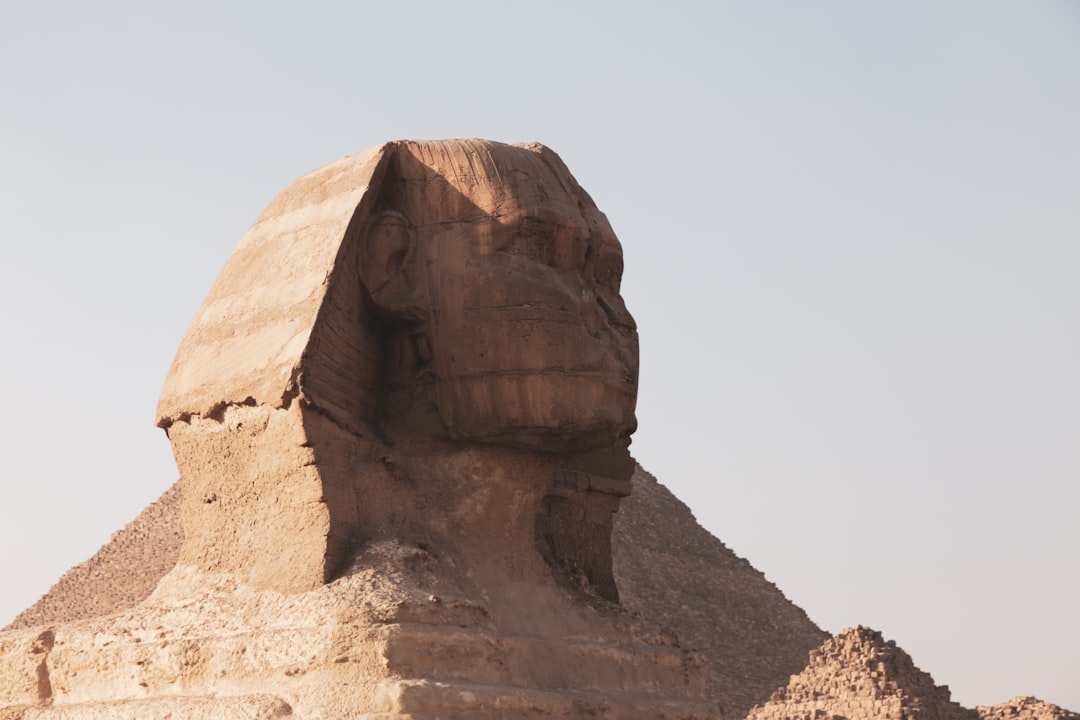
The Hall of Records is a purported subterranean chamber or repository of ancient knowledge and artifacts, said to be hidden beneath the Great Sphinx of Giza in Egypt, as described in the psychic readings of American clairvoyant Edgar Cayce during the early 20th century. Cayce claimed that the Hall contains records from the lost civilization of Atlantis, including historical, astronomical, and technological information preserved by Atlantean refugees who constructed it around 10,500 BCE.
He further stated that this hall lay somewhere between the sphinx and the Nile River, with an entrance near the sphinx’s right paw. Cayce was not a scientist. His claims were made while in a trance and have no documentary basis. Still, his specific geographic description has remained oddly persistent in the literature.
The Association for Research and Enlightenment has periodically supported investigations at the Giza Plateau in hopes of finding the Hall of Records. In 1978, the ARE cooperated with SRI International in an effort to detect possible chambers in the bedrock beneath the sphinx. Although ground-penetrating radar showed possible anomalies near the paws of the sphinx, test drilling in the area revealed only natural fissures in the rock. That 1978 result set the tone for decades of inconclusive findings.
The First Real Radar Signal: Beneath the Left Paw
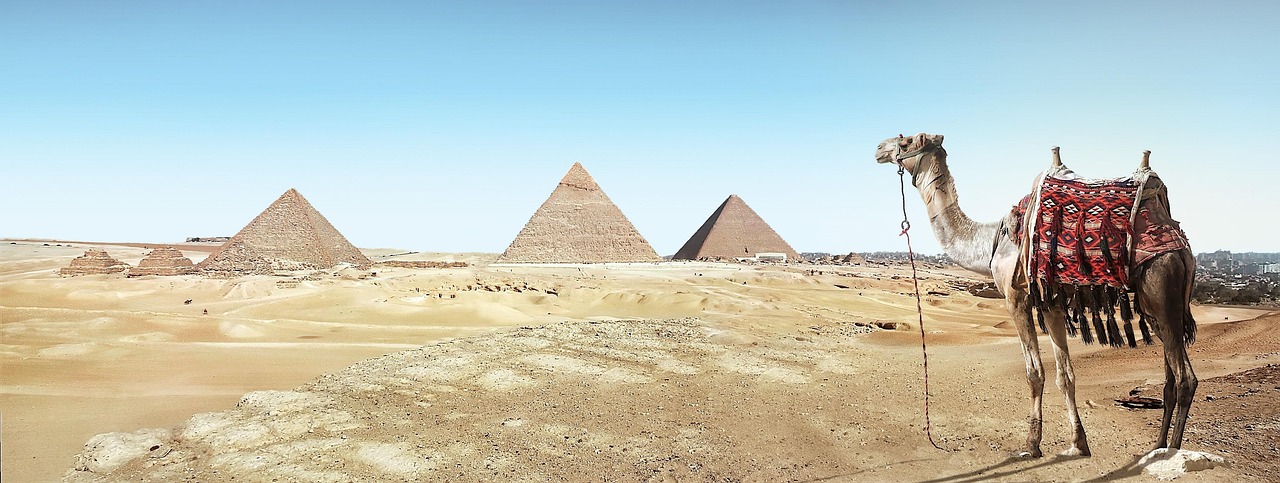
In August 2001, ground-penetrating radar surveys were collected at different sites on the Giza Plateau as part of an expedition sponsored by the Schor Foundation. One survey consisted of a set of 15 profiles using a commercial GPR with 250 MHz antennas on the northern side of the Sphinx enclosure, near the left front paw of the Sphinx.
The top planar surface first appears in the image at a depth of about 2 m at a distance of 6 to 7 m from the outer edge of the paw and reaches a depth of about 3.5 m just outside the paw. The apparent separation between the top and bottom surfaces varies from about 0.6 to 1 m; however, this separation could be larger, as much as 2.5 m, if the region is open space or filled with unconsolidated debris.
The two surfaces in the image could be interpreted as indicating a man-made structure, a tunnel or passageway, leading down beneath the Sphinx. Such features could also be caused by natural fractures in the underlying limestone bedrock, but the fractures would have to be relatively wide or filled with unusually conductive material to generate strong echoes. That is the core ambiguity. The signal is real. Its explanation remains open.
Seismic Evidence and the Regularity Problem
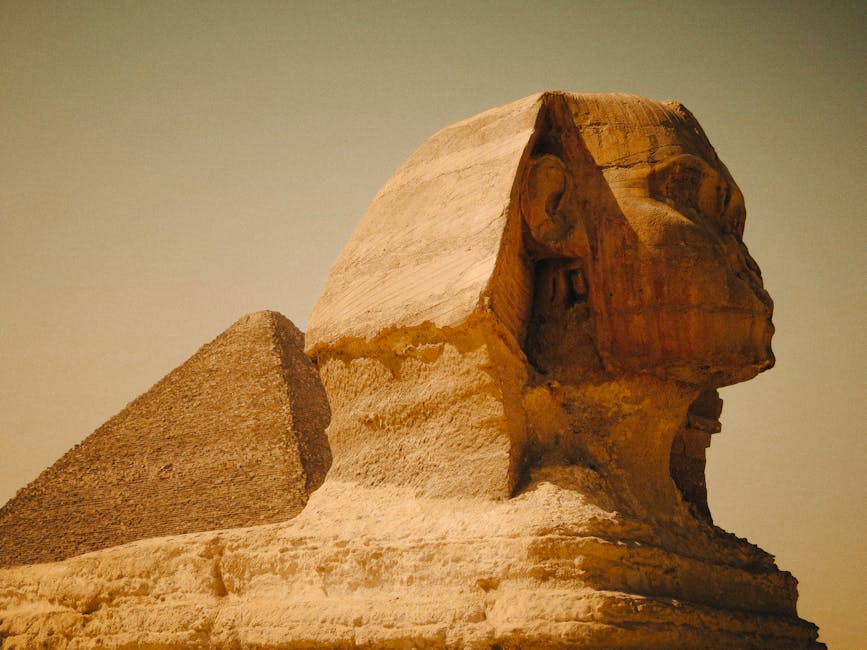
In the 1990s, geophysicist Thomas Dobecki and Egyptologist Mark Lehner carried out seismic surveys around the Sphinx. Their instruments recorded large underground cavities beneath the monument’s front paws and along its flanks. The shapes looked too regular to dismiss as random cracks in limestone.
One of the survey’s participants, the geophysicist Thomas Dobecki, argued that seismography showed a possibly man-made chamber under the sphinx’s right paw. These findings were publicized and created significant debate. Beginning in 1996, Schor and Florida State University sponsored a further survey of possible cavities in the rock on the plateau. In 1998, the Supreme Council of Antiquities permitted these investigators to drill into one of the anomalies near the Great Pyramid as a test. When the drilling revealed only a natural cavity, the council denied the investigators permission to drill elsewhere.
The pattern here is frustrating but important. Anomalies keep appearing in independent surveys. Physical verification is either denied or yields ambiguous results. That combination keeps the debate alive in a way that a single definitive excavation, one way or the other, would not.
Muon Tomography Changes the Rules at Giza
The technological breakthrough that changed the entire conversation at Giza did not happen at the Sphinx. It happened inside the Great Pyramid. On November 2, 2017, the ScanPyramids team announced, through a publication in Nature, its third discovery in the Great Pyramid, a “plane-sized” previously unknown void named the “ScanPyramids Big Void.”
The discovery reported a large void with a cross-section similar to that of the Grand Gallery and a minimum length of 30 metres, situated above the Grand Gallery. This constitutes the first major inner structure found in the Great Pyramid since the nineteenth century. Three independent teams using three different technologies all confirmed the same signal. In each experiment, the researchers saw a signal for the void that achieved at least a five-sigma level of statistical significance, which means there’s less than a one-in-a-million chance that any one experiment was a fluke. This same level of evidence is required when discovering new subatomic particles like the Higgs boson.
Muon technology famously exposed hidden spaces inside the Great Pyramid in 2017. The implication is clear: if muons can reliably find hidden voids inside solid ancient stone structures, the same method could be applied at the Sphinx. The ScIDEP Collaboration has already begun doing exactly that for Khafre’s pyramid. The ScIDEP Collaboration is constructing muon telescopes based on scintillator technology to investigate the internal structure of the Egyptian Pyramid of Khafre at Giza using cosmic-ray muons. The collaboration aims to scan the pyramid from multiple viewpoints, both inside the king’s burial chamber and outside of the pyramid, to potentially identify any new internal structures.
The Khafre Project and the 2025 Scan Results
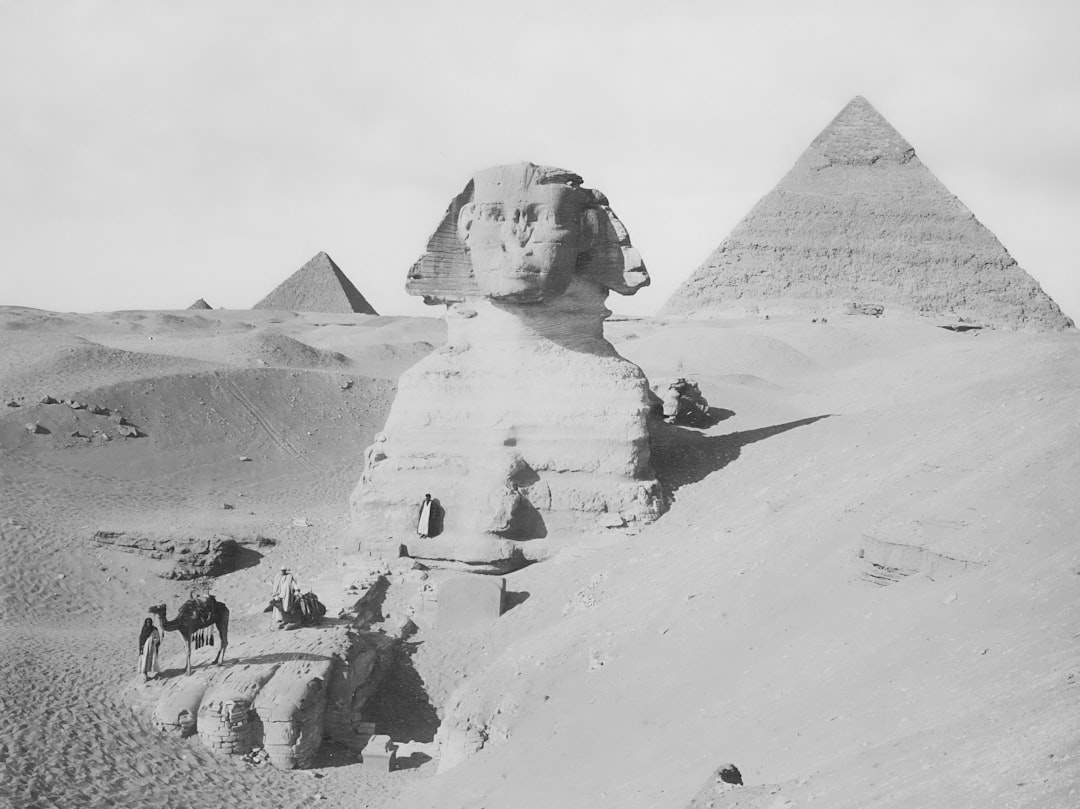
In 2025, Italian researcher Filippo Bondi and his Khafre Project brought the latest tools to Giza. Bondi’s team combined ground-penetrating radar with muon tomography, a particle-tracking method that measures cosmic rays passing through rock. The dual-method approach was deliberate. Using one technology alone leaves room for doubt. Using two simultaneously, and having them agree, is significantly harder to dismiss.
By pairing these two methods, Bondi aimed to create a three-dimensional map of the bedrock beneath the Sphinx. The results stunned even seasoned researchers. Early scans showed clear underground voids directly beneath the monument. The shapes appeared rectangular and symmetrical, unlike the irregular patterns of natural fissures.
Before scanning the Sphinx, his team tested their equipment on the Osiris Shaft, a known underground complex first recorded in 1933. The radar mapped the shaft’s interior with remarkable precision, matching every chamber and corridor that explorers documented decades ago. This successful test showed that the same technology can reveal accurate details far below the surface. That validation step matters enormously. It’s one thing to claim an anomaly. It’s another to demonstrate first that your instrument can accurately map known structures.
The Italian SAR Team and a Wider Underground Complex
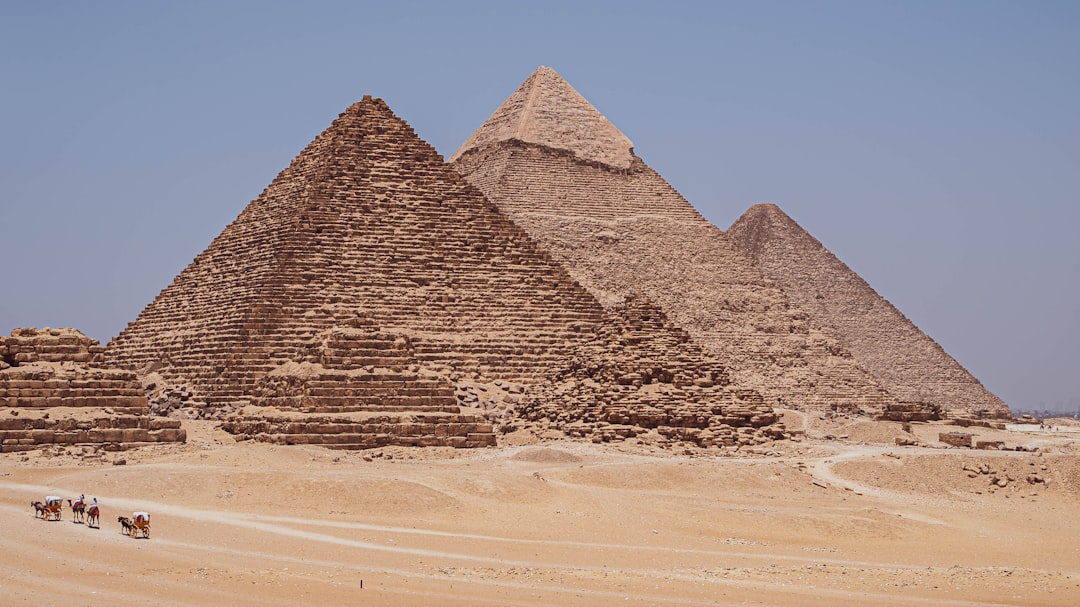
In March 2025, an interdisciplinary team of researchers announced a groundbreaking discovery beneath Egypt’s Giza Plateau: a vast complex of underground chambers and shafts extending nearly two kilometers under the famous pyramids. The team, consisting of Professor Corrado Malanga, Dr. Filippo Biondi, and Dr. Armando Mei, utilized advanced radar imaging technology to image almost two miles below ground without excavation.
To probe beneath the pyramids, the team employed cutting-edge Synthetic Aperture Radar imaging combined with a novel Doppler tomography technique. Their claimed findings were dramatic: multiple levels of chambers, vertical shafts, and organized geometric patterns deep underground. At a March 2025 press conference in Italy, Corrado Malanga of the University of Pisa and Filippo Biondi described processing satellite synthetic aperture radar data to map what they interpret as underground features. They described massive vertical shafts, spiral pathways, and large chambers that they say extend over 2,000 feet underground.
Independent experts urged significant caution. Lawrence Conyers, a professor at the University of Denver, says the idea of radar revealing structures 4,000 feet below ground is simply not possible with current technology. Egyptologist Hussein Abdel-Basir added that the study lacked proper scientific standards, noting that no peer-reviewed research had been published, only a press conference and radar images. The gap between provocative data and peer-reviewed confirmation remains very much open.
A 2024 Survey Near the Sphinx That Few Noticed
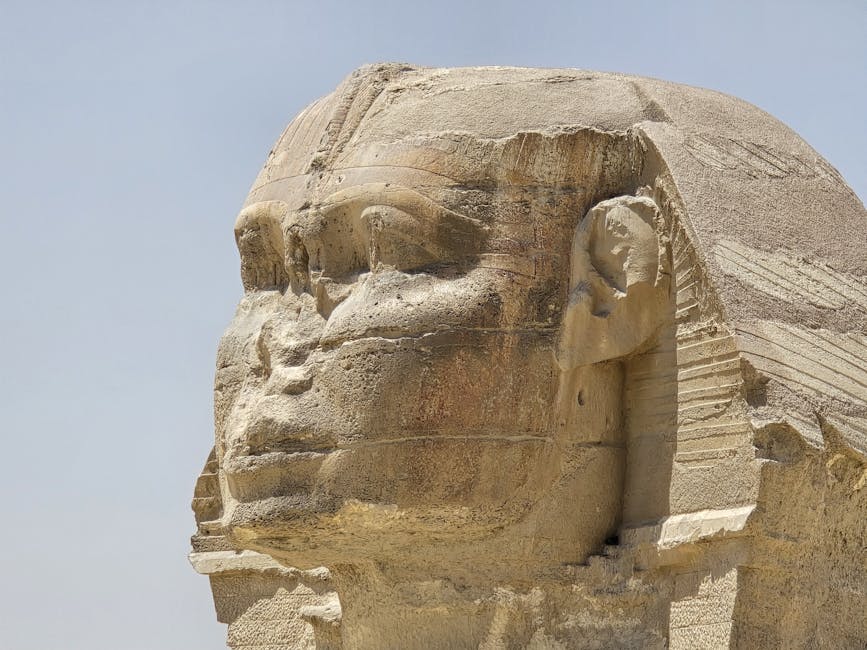
While the larger claims generated headlines, a quieter but more methodologically conventional study was also underway. A 2024 joint Japanese-Egyptian geophysical survey in the Western Cemetery near the Sphinx used GPR and electrical resistivity tomography to identify an L-shaped shallow structure approximately 10 m by 15 m, filled with sand, at a depth of 0.5 to 2 meters, connected to a deeper resistive anomaly measuring 10 m by 10 m at 5 to 10 meters depth. The study proposes this as a possible archaeological entrance or tomb shaft.
This is less dramatic than the claims of vast underground cities. It is also far more credible because it uses two established, peer-validated methods applied at close range, with detailed processing protocols. When archaeologists want to look underground without digging, they often combine tools with known limits, such as ground-penetrating radar and electrical resistivity tomography. In 2024, researchers used those methods to map an underground anomaly near a royal graveyard close to the Great Pyramid area.
The discovery hasn’t been widely celebrated, precisely because it doesn’t fit the more sensational narrative. That’s actually a point in its favor. Real archaeology rarely announces itself with grand press conferences.
The Official Stance, the Scientific Debate, and What Comes Next
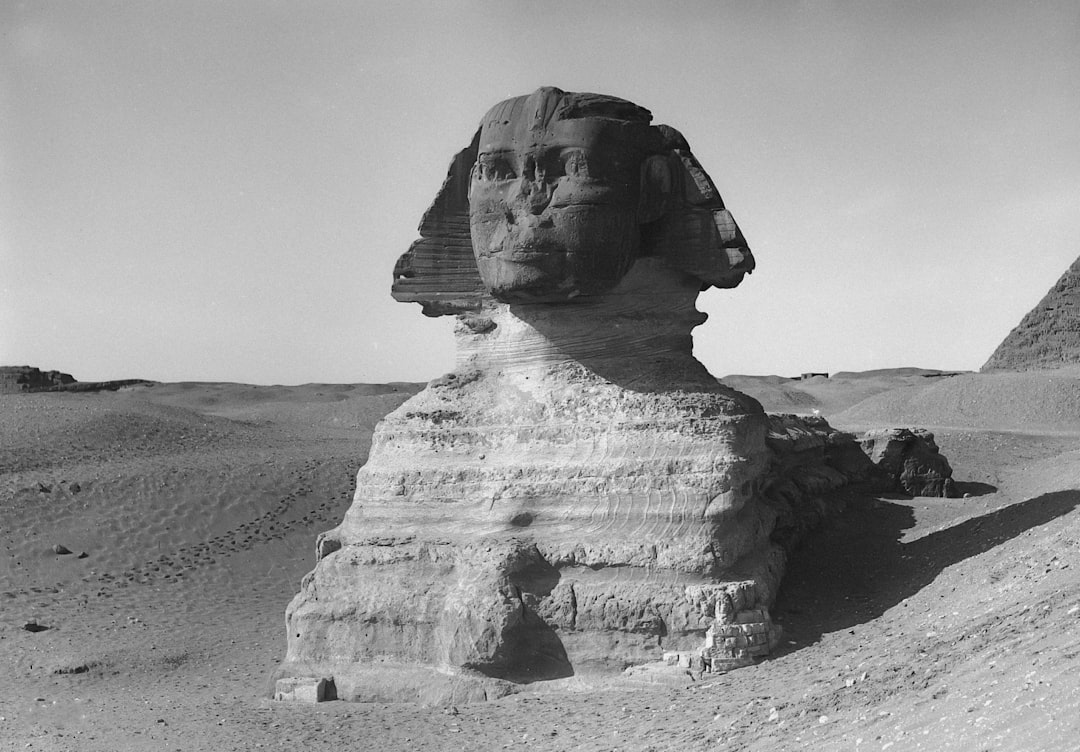
Zahi Hawass pushed back, insisting that no “Hall of Records” exists and that any anomalies are natural cavities. He maintained his long-held position that the Sphinx contains no hidden library. Hawass has been consistent on this for decades, and his standing as one of the world’s foremost Egyptologists means his objections carry real weight.
Still, the data keeps accumulating. The radar data that sparked recent headlines is primarily interpreted by some researchers as indicating subsurface features with notable geometry. Depending on the specific scan and processing method, these could include discontinuities or anomalies in the underground signal return. However, such interpretations are not universally accepted among scientists. Independent experts have pointed out that without ground-truthing through physical excavation or corroboration by multiple methodologies, radar anomalies cannot be conclusively linked to constructed spaces.
Bondi’s team plans another round of scans with even higher resolution. They must secure final approval from Egypt’s Supreme Council of Antiquities before releasing their full data. If officials grant access, the Khafre Project could publish the most detailed subsurface map of the Sphinx ever produced. That approval, or the lack of it, will shape everything that follows.
What It Would Mean If Something Is Actually There
If controlled excavation were ever to confirm a deliberately constructed chamber beneath the Sphinx, the implications would extend far beyond archaeology. If the anomalies prove to be chambers, the implications are enormous. They could contain artifacts from Egypt’s Old Kingdom, sealed away for millennia. They might hold records of a lost pre-dynastic culture that built advanced monuments long before the pharaohs.
Even a simple empty void would carry meaning. It would confirm that the ancient builders shaped the Sphinx’s bedrock with more complexity than previously believed and that undiscovered passages may still wind beneath the Giza Plateau. An empty chamber is still a human-made chamber. That alone would reframe what we know about who built what, and when.
No verified underground Hall of Records has been located despite extensive modern scanning projects such as the ScanPyramids initiative, which has identified smaller voids in other pyramids. That is the honest current state of the evidence. The anomalies are documented. Their nature is unconfirmed. What the scans have done is transform a question once dismissed as fringe speculation into one that serious physicists, geophysicists, and archaeologists now debate in published journals.
The Sphinx has been sitting in the same spot for roughly four and a half thousand years. The sand around it has been excavated, mapped, and analyzed dozens of times. What the latest generation of scanning technology has found is not proof of a lost library. It’s something more precise than that: clear evidence that the ground beneath it has not yet fully given up its story. Whether that story involves carved chambers, ancient records, or simply the irregular geology of a limestone plateau carved by ancient hands, the next round of data will be worth watching closely.