


A Monument Built to Extraordinary Precision

The Great Pyramid was constructed around 2560 BCE during the reign of Pharaoh Khufu, making it roughly 4,600 years old. Originally standing about 146.5 meters tall, it remained the tallest human-made structure on Earth for more than 3,800 years. The structure held that record until the construction of medieval European cathedrals, a fact that still feels almost impossible to process.
The sheer scale of its construction is staggering. Originally reaching a height of approximately 146.59 meters, its base forms a near-perfect square with each side measuring about 230.36 meters. Scientists estimate it contains roughly 2.3 million stone blocks, some weighing several tons each, assembled with tolerances that rival modern engineering standards. Its alignment to true north illustrates a thorough grasp of geospatial concepts.
The Mathematics Hidden in the Stone

One of the more genuinely curious features of the Great Pyramid is the way its proportions seem to reflect fundamental mathematical constants. If one divides the pyramid’s perimeter by its height, one obtains a very good approximation to 2π, and this relationship is accurate to within .04% or better, depending on the data used. That level of precision is hard to dismiss without at least pausing to think about it.
Two main theories have been proposed for the pyramid’s proportions: one stating that Pi was used to set the proportion of base to height, the other that this proportion was determined using the Golden Ratio Phi. Both theories fit the Great Pyramid’s proportions with two or three decimal precision, good enough for construction purposes. However, the honest answer is that archaeologists still debate whether any of this was intentional. There is no reliable archaeological or textual evidence that the Golden Ratio was deliberately used in the Great Pyramid’s design, and apparent relationships come from selective measurement choices and hindsight pattern-finding.
Earth’s Electromagnetic Pulse: The Schumann Resonance Explained

Before any pyramid-frequency connection can be evaluated, it helps to understand what the Schumann resonance actually is. The Schumann resonances are a set of spectral peaks in the extremely low frequency portion of the Earth’s electromagnetic field spectrum, generated and excited by lightning discharges in the cavity formed by the Earth’s surface and the ionosphere. This is not a mystical concept. It is measurable, documented physics.
At any given moment, roughly 2,000 thunderstorms are active across the planet, producing about 50 lightning strikes per second. Each bolt releases a burst of electromagnetic energy in the extremely low frequency range. These waves don’t simply radiate outward and dissipate. They bounce between two conductive layers: Earth’s surface below and the ionosphere above, starting at roughly 90 km altitude, acting as a waveguide that channels the energy horizontally around the globe. The circumference of the Earth is about 40,000 km, and the speed of light divides into that distance to produce a standing wave at approximately 7.83 Hz. This is the fundamental mode, the lowest frequency that “fits” inside the cavity. The resonance is named after German physicist Winfried Otto Schumann, who predicted its existence mathematically in 1952 before it was confirmed by measurement.
What the Physics Research Actually Found

The most scientifically grounded chapter in the pyramid-electromagnetic story came from a 2018 study published in the Journal of Applied Physics. Scientists from the Laser Zentrum Hannover and Russia’s ITMO University found that under resonance conditions, the Great Pyramid of Giza can concentrate electromagnetic energy both in its internal chambers and the area located under its base. This was not a fringe claim. It was peer-reviewed physics, derived from numerical modeling.
The researchers first estimated that resonances in the pyramid can be induced by radio waves with a length ranging from 200 to 600 meters. They then modeled the electromagnetic response of the pyramid and calculated the extinction cross section, a value that helps estimate which part of the incident wave energy can be scattered or absorbed by the pyramid under resonant conditions. The co-author of the study was careful to note that their goal was scientific, not historical. The team simply wanted to see how a structure of the pyramid’s shape and size would interact with electromagnetic fields. The results were surprising but, in the team’s view, coincidental.
Nikola Tesla and His Vision of Earth as a Conductor
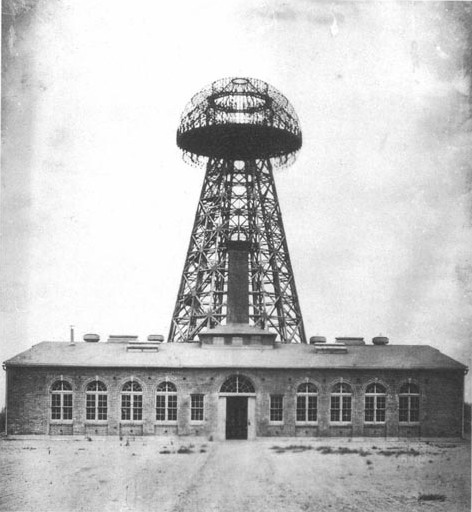
Nikola Tesla was genuinely one of the most original electrical thinkers in recorded history, and his ideas about Earth’s electromagnetic properties were not casual speculation. In 1899 Tesla traveled to Colorado Springs, Colorado, to build a high-altitude laboratory and conduct large-scale experiments on wireless power transmission. As early as 1891, he had begun experimenting with high-frequency alternating currents, and by 1897 he filed a patent for a system of transmitting electrical energy through the natural medium, using the Earth’s surface and ionosphere as a conductor.
At the right frequencies, Tesla believed the Earth could act like a gigantic conductor, with the ground carrying currents and the atmosphere acting as a return path. If true, energy and signals might ripple through this natural circuit to distant receivers. His proposed World Wireless System was based on theories of using Earth and its atmosphere as electrical conductors, and he claimed this system would allow for the transmission of electric energy without wires on a global scale. The Wardenclyffe Tower on Long Island was the physical embodiment of that ambition, though it was never completed.
Where the Tesla-Pyramid Connection Comes From (and Where It Breaks Down)
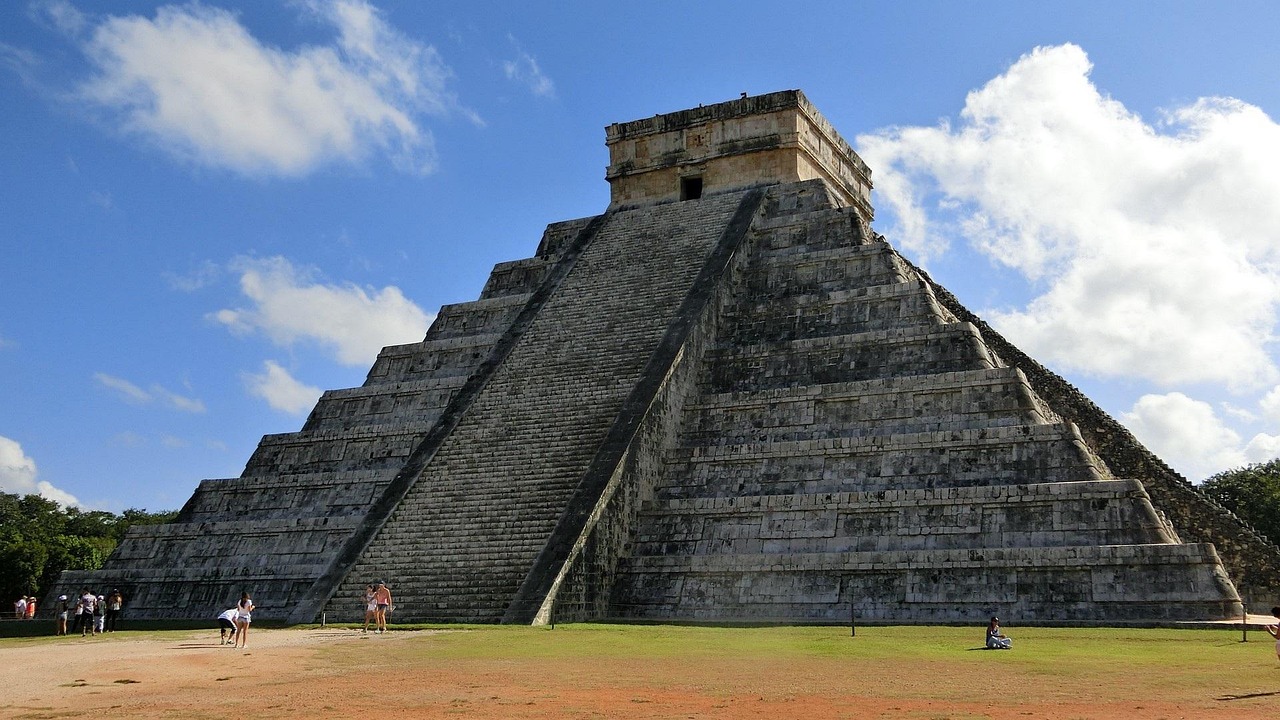
The idea linking Tesla’s theories to the Great Pyramid is not Tesla’s own. He never wrote about Egyptian monuments in the context of electromagnetic resonance. The connection emerged largely through alternative history media, documentaries, and internet forums during the 2000s and 2010s, gaining traction as the 2018 ITMO University study was circulated far beyond its original scientific context. The leap from “the pyramid focuses electromagnetic energy at certain radio frequencies” to “ancient Egyptians designed it to match Earth’s electromagnetic pulse” involves several unsupported assumptions.
The Schumann resonance fundamental frequency sits at roughly 7.83 Hz, corresponding to wavelengths in the tens of thousands of kilometers. The pyramid’s resonant interaction, by contrast, occurs at radio wavelengths between 200 and 600 meters, which are entirely different parts of the electromagnetic spectrum. While the study doesn’t claim that ancient Egyptians understood electromagnetic physics, the findings inevitably spark speculation. That speculation, though understandable, outpaces the evidence considerably. There is currently no peer-reviewed scientific proof that the pyramid was intentionally designed to match Earth’s electromagnetic frequencies.
What Archaeology Says About the Pyramid’s Purpose

Mainstream Egyptologists are not simply being conservative when they identify the Great Pyramid as a royal tomb and ceremonial monument. The historical and archaeological evidence for this is substantial. Khufu’s pyramid is part of a complex that includes mortuary temples, a causeway, and subsidiary structures entirely consistent with funerary practice in the Fourth Dynasty. Inscriptions, graffiti from workers, and the broader context of Egyptian pyramid-building tradition all point in the same direction.
It was circular proportions that determined the shape of the pyramid at Giza for Khufu, not Phi or any Golden Ratio, which were culturally unknown and even irrelevant for the ancient Egyptians whose life was based on practical, functional geometry and basic symbolic systems. The pyramid’s mathematical properties, real as they are, can be explained as natural byproducts of the measurement system and construction methods the Egyptians actually used. The essential point is that the measurement system the ancient Egyptians used would lead architects to use certain slopes in pyramid design. One of those slopes just happens to be an excellent approximation to 4/π, and if the architect chooses that slope, the pyramid would exhibit the famous π relationship. From this point of view, the probability that an architect might choose that particular slope is actually rather high.
The Real Takeaway: Coincidence, Curiosity, and Cautious Wonder
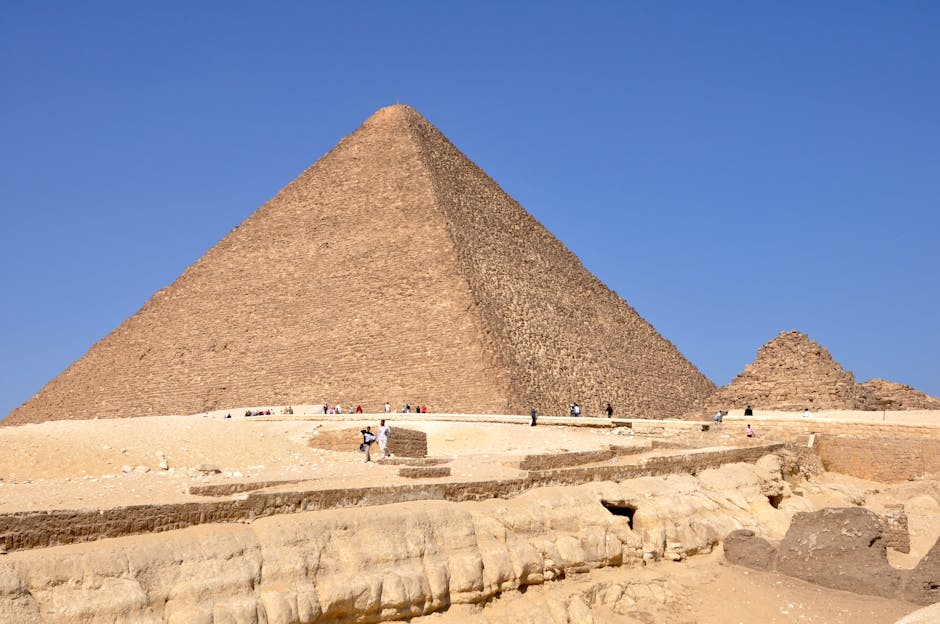
None of this means the pyramid is unworthy of wonder. The fact that a 4,600-year-old limestone structure happens to concentrate electromagnetic energy in its chambers, regardless of whether that was intended, is genuinely interesting physics. The research group plans to apply findings from the pyramid’s resonance behavior to design nanoparticles capable of reproducing similar effects in the optical range, which may be used to develop sensors and highly efficient solar cells. That’s a real and useful scientific outcome, even if it has nothing to do with ancient knowledge.
Tesla’s ideas about Earth’s electrical conductivity were bold and partially correct. The Schumann resonance is real and measurable. The Great Pyramid’s geometry is extraordinary. All three of these facts are true, and none of them require an invented connection between them to be fascinating. The how, what for, or why the Great Pyramid was constructed will be a topic open to speculation and debate. The incredible precision in the construction of this colossal structure will always spark the curiosity and imagination of many. The most honest position is probably also the most interesting one: some questions about this structure remain genuinely open, and the difference between a remarkable coincidence and a deliberate design is harder to prove than either side typically admits.