

Of all the planets in our solar system, Uranus may be the most overlooked. It has no dramatic storm like Jupiter’s Great Red Spot, no iconic ring portrait like Saturn, and no rovers crawling across its surface. Yet right now, in labs and conference rooms across NASA, the European Space Agency, and top universities, Uranus has quietly become one of the most exciting destinations in planetary science.
What we know about Uranus largely dates back to Voyager 2’s brief flyby nearly 40 years ago. No spacecraft has visited Uranus or Neptune since, making them the only planets yet to have a dedicated orbital mission. That single, rushed encounter has left scientists sitting on decades of unanswered questions. The push to finally go back is gaining real momentum.
The Only Visit We’ve Ever Made
The exploration of Uranus has, to date, been through telescopes and a lone probe. NASA’s Voyager 2 made its closest approach to Uranus on January 24, 1986, discovering 10 moons, studying the planet’s cold atmosphere, and examining its ring system, discovering two new rings. It also imaged Uranus’s five large moons, revealing that their surfaces are covered with impact craters and canyons.
When NASA’s Voyager 2 flew by Uranus in 1986, it provided scientists’ first and, so far, only close glimpse of this strange, sideways-rotating outer planet. Alongside the discovery of new moons and rings, baffling new mysteries confronted scientists. The energized particles around the planet defied their understanding of how magnetic fields work to trap particle radiation, and Uranus earned a reputation as an outlier in our solar system.
That single snapshot in time shaped everything we thought we knew. As recent research now reveals, it may have given us a wildly skewed picture of the planet.
A Planet Lying on Its Side
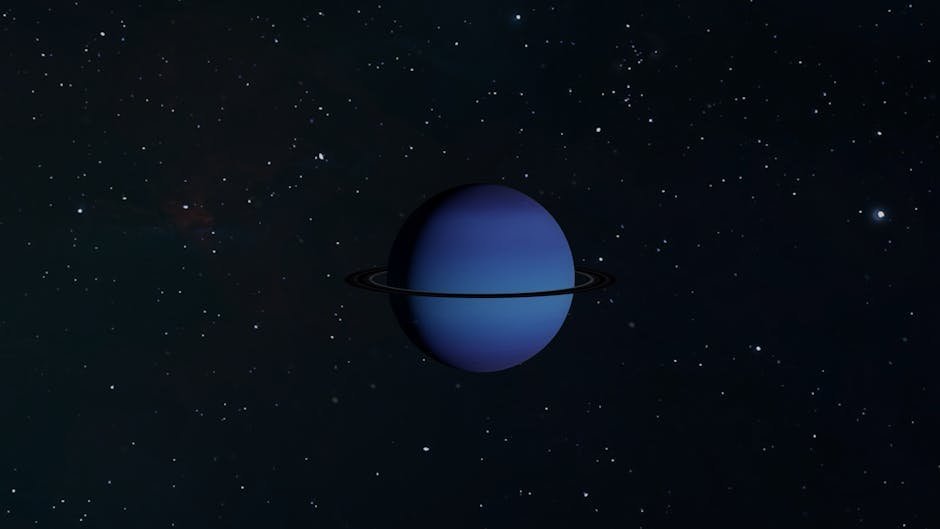
Uranus rotates at a nearly 90-degree angle from the plane of its orbit. This unique tilt makes Uranus appear to spin sideways, orbiting the Sun like a rolling ball. No other large planet behaves quite like this.
Uranus has a marked axial tilt of 82.23 degrees with a retrograde rotation period of 17 hours and 14 minutes. This means that in an 84-Earth-year orbital period around the Sun, its poles get around 42 years of continuous sunlight, followed by 42 years of continuous darkness.
This may be the result of a collision with an Earth-sized object long ago. The sheer strangeness of that geometry ripples outward into the atmosphere, the magnetosphere, and the behavior of its moons, making almost every aspect of the planet scientifically unusual.
What “Ice Giant” Actually Means

Collectively, Uranus and Neptune are referred to as ice giant planets. In spite of that name, relatively little solid ice is thought to be in them today, but it is believed there is a massive liquid ocean beneath their clouds, which accounts for about two-thirds of their total mass. This makes them fundamentally different from the gas giant planets, Jupiter and Saturn, and from terrestrial planets like Earth or Mars.
Most of the planet is made of water, ammonia, and methane in a supercritical phase of matter, which astronomy calls “ice” or volatiles. The planet’s atmosphere has a complex layered cloud structure and has the lowest minimum temperature of all the solar system’s planets.
Uranus gets its blue-green color from methane gas in the atmosphere. Sunlight passes through the atmosphere and is reflected back out by Uranus’ cloud tops. Methane gas absorbs the red portion of the light, resulting in that blue-green color.
The Magnetic Mystery That Fooled Everyone

Uranus has an unusual, irregularly shaped magnetosphere. Its magnetic axis is tilted nearly 60 degrees from the planet’s axis of rotation, and is also offset from the center of the planet by one-third of the planet’s radius. No other planet in the solar system has anything quite like it.
A new look at the Voyager 2 data revealed that it happened to zoom by the distant planet during a rare event, which suggests that scientists’ current understanding of the planet may have been shaped and skewed by an unusual stellar coincidence. The findings were published in the journal Nature Astronomy. According to lead study author Jamie Jasinski, space plasma physicist at NASA’s Jet Propulsion Laboratory, “The spacecraft saw Uranus in conditions that only occur about 4% of the time.”
New research analyzing the data collected during that flyby found that the source of the mystery is a cosmic coincidence: in the days just before Voyager 2’s flyby, the planet had been affected by an unusual kind of space weather that squashed the planet’s magnetic field, dramatically compressing Uranus’ magnetosphere. Four decades of scientific assumptions, shaped by a few unlucky days of space weather.
The Decadal Survey That Changed Everything
Over the past several decades, an increasing number of planetary scientists have been advocating for a flagship-class mission to explore the Uranian system. The latest Planetary Science and Astrobiology Decadal Survey ranked a Uranus Orbiter and Probe mission the highest-priority new flagship mission for NASA in this decade.
The Uranus Orbiter and Probe was advocated within the pages of “Origins, Worlds, and Life, A Decadal Strategy for Planetary Science and Astrobiology 2023-2032.” Released in 2022, that document came from the prestigious U.S. National Academies of Sciences, Engineering, and Medicine and was sponsored by NASA and the National Science Foundation.
Though not a binding document, the report carries significant weight with Congress, the White House, and NASA itself. Its prior top recommendations have become reality, leading to missions such as Curiosity, Perseverance, and Europa Clipper. In short, when this report speaks, missions eventually get built.
What the Uranus Orbiter and Probe Would Actually Do

The proposed concept, called Uranus Orbiter and Probe (UOP), would release a probe into the planet’s atmosphere and then embark on a multiyear tour of the system to study the planet’s interior, atmosphere, magnetosphere, rings, and moons.
The concept is being developed as a potential large strategic science mission for NASA. The science phase would last 4.5 years and include multiple flybys of each of the major moons. That kind of sustained orbital presence would be transformative compared to a fleeting flyby.
If scientists get their wishes, NASA in the early 2030s will launch a roughly 4.2 billion dollar orbiter and atmospheric probe to Uranus, seeking to understand the formation and composition of this ice giant. Launch windows in the 2030 to 2034 range have been identified as viable trajectories.
The Problem of Getting There
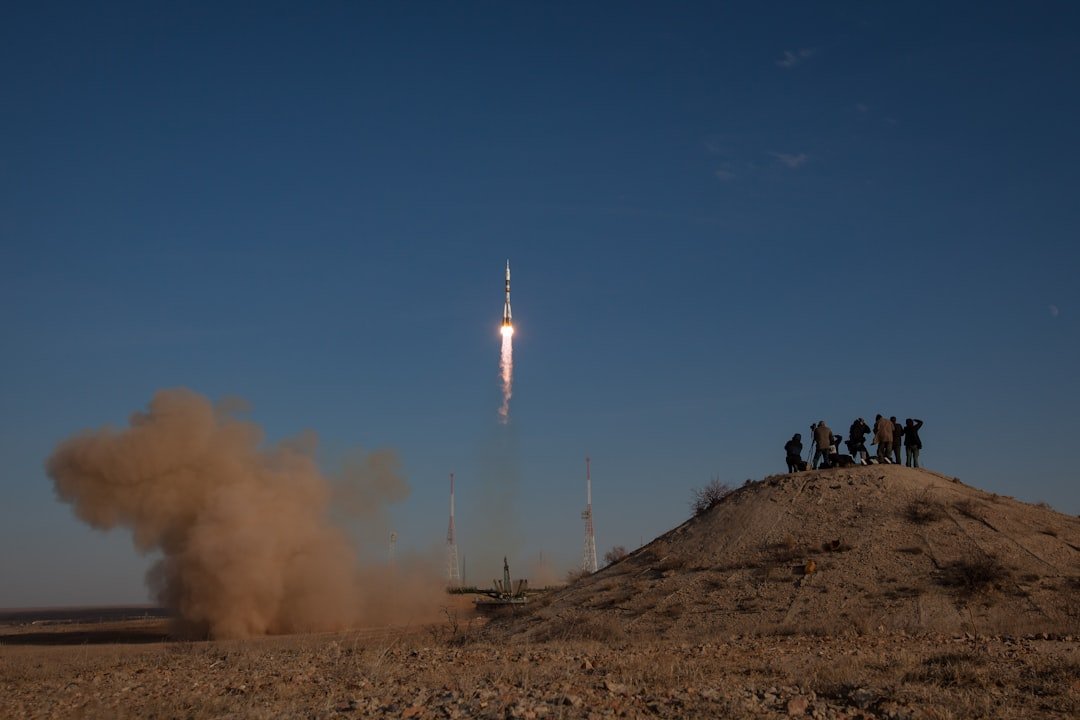
One of the main obstacles has been the sheer distance. Uranus is 19 times farther from the Sun than the Earth is, and nearly twice as far as Saturn. Reaching it requires a heavy-lift launch vehicle and trajectories involving gravity assists from other planets.
The Uranus decadal study showed that launching on a Falcon Heavy Expendable results in a cruise time of at least 13 years. Long cruise times present challenges, such as loss of team expertise and a higher operational budget.
When refueled in orbit, a SpaceX Starship could launch a spacecraft directly to Uranus, without detours by other planets for gravity-assist maneuvers. The proposed spacecraft could then arrive at Uranus in just over six years, less than half the time currently envisioned. That prospect has added a new dimension of engineering possibility to the mission planning.
New Discoveries Still Coming from Telescopes
For the first time, an international team of astronomers mapped the vertical structure of Uranus’s upper atmosphere, uncovering how temperature and charged particles vary with height across the planet. Using Webb’s NIRSpec instrument, the team observed Uranus for nearly a full rotation, detecting the faint glow from molecules high above the clouds. These data provide the most detailed portrait yet of where the planet’s auroras form, how they are influenced by its unusually tilted magnetic field, and how Uranus’s atmosphere has continued to cool over the past three decades.
Webb’s data confirm that Uranus’s upper atmosphere is still cooling, extending a trend that began in the early 1990s. The team measured an average temperature of around 426 kelvins, lower than values recorded by ground-based telescopes or previous spacecraft.
The findings are based on data from JWST General Observer program 5073, led by H. Melin of Northumbria University. On January 19, 2025, researchers used NIRSpec’s Integral Field Unit to observe Uranus continuously for 15 hours. The results were published in the journal Geophysical Research Letters.
A New Moon, Discovered in 2025

Using NASA’s James Webb Space Telescope, a team led by the Southwest Research Institute identified a previously unknown moon orbiting Uranus, expanding the planet’s known satellite family to 29. The detection was made during a Webb observation on February 2, 2025.
The newly discovered moon is estimated to be just six miles (10 kilometers) in diameter, assuming it has a similar reflectivity to Uranus’ other small satellites. That tiny size likely rendered it invisible to Voyager 2 and other telescopes.
Scientists say the discovery of S/2025 U1 shows that there is still much to learn about Uranus and its complex system of moons and rings. “No other planet has as many small inner moons as Uranus, and their complex inter-relationships with the rings hint at a chaotic history.”
Hidden Oceans and the Question of Life

Uranus, along with Neptune, is in a class of planets called ice giants. Astronomers have detected more ice giant-sized bodies outside of our solar system than any other kind of exoplanet. If Uranus’s moons are found to have interior oceans, that could mean there are vast numbers of potentially life-harboring worlds throughout the galaxy.
An accurate picture of Uranus’s magnetic environment is important for scientists to understand whether its moons could be ocean worlds. The moons’ magnetic environment is likely influenced by variations in Uranus’s magnetic field, similar to the conditions that led to the discovery of Europa’s ocean. That new analysis suggests scientists could look for subsurface oceans on Uranus’s moons too.
Astronomers have also found that Ariel, a moon of Uranus, has some of the most carbon dioxide-rich deposits in the solar system, hinting at a buried water ocean. Some of the most carbon dioxide-rich deposits in the solar system reveal Ariel could be another solar system moon with buried liquid water.
Why Scientists Can’t Wait Any Longer
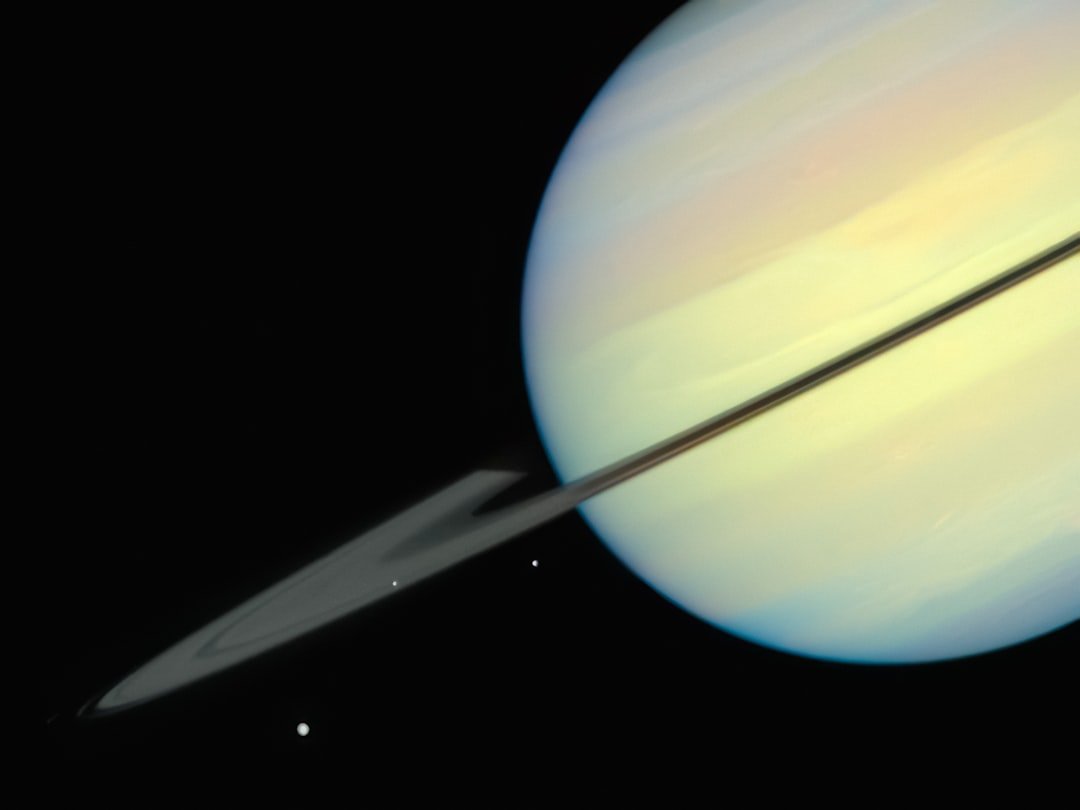
Scientists have identified Uranus as next in line for exploration, pointing out that the ice giant may be the most common type of planet in the universe, but one we have investigated the least. That gap is starting to feel less like a scheduling issue and more like a fundamental scientific blind spot.
The scientific community is already embracing an active planning cadence with the 2024 Uranus Flagship workshop held at NASA Goddard. The potential for interdisciplinary science was one of the reasons a spacecraft to the Uranus system was ranked as a high priority by the Planetary Science and Astrobiology Decadal Survey.
As of April 2026, no dedicated Uranus mission has been formally approved. Yet the scientific groundwork being laid right now, through workshops, instrument designs, trajectory studies, and a stream of new telescope discoveries, is building the case that this is the right time. The ice giant has waited patiently for nearly four decades. The scientists racing to reach it have stopped waiting at all.