


The idea of an artificial colleague who never sleeps, never requests a raise, and processes a thousand documents in the time it takes you to refill your coffee is no longer science fiction. It’s a 2026 reality unfolding in offices, call centers, factory floors, and legal departments around the world. The numbers tell a story that even the most skeptical boardroom can no longer ignore.
Experts project that roughly a quarter of all jobs globally will experience significant disruption between 2025 and 2027, with a realistic net displacement of five to ten percent after accounting for new job creation. The question facing workers today is not whether AI will arrive at their desk, but whether it will pull up a chair or claim the whole seat.
1. Customer Service Representatives

Few sectors have felt AI’s presence as tangibly as customer service. The transformation is already well underway, driven by cost efficiency and the sheer speed of automated systems.
According to research firm Gartner, AI systems will autonomously resolve up to 80 percent of common customer service issues by 2029. Gartner also predicts organizations will replace between twenty and thirty percent of service agents with generative AI by 2026, though roughly half of organizations that planned workforce reductions are expected to revisit those plans.
AI has already reduced first response times from over six hours to less than four minutes, and resolution times from thirty-two hours to thirty-two minutes, an improvement of nearly ninety percent across industries. That kind of speed is genuinely hard to argue with from a business perspective. The World Economic Forum lists customer service clerk roles among those declining fastest due to AI, replaced by positions like “customer success specialist” that involve managing AI-driven processes and handling escalations.
2. Data Entry and Administrative Clerks

Data entry clerks and administrative support staff sit at what researchers consistently identify as the highest-risk end of the automation spectrum. The work is rule-based, repetitive, and entirely predictable – exactly what AI handles best.
AI automation could eliminate as many as 7.5 million data entry and administrative jobs by 2027, with manual data entry clerks facing a 95 percent risk of automation, since AI systems can process over a thousand documents per hour with an error rate of less than one tenth of a percent. Clerical and administrative roles, including secretaries and data entry clerks, are consistently among the first to be automated as AI tools mature.
Oxford University research places data entry keyers at 99 percent automation risk, among the highest of any occupation studied. For context, that figure reflects the near-total susceptibility of the role’s core tasks to algorithmic replacement. The work does not change enough day to day to require human judgment, and that consistency is precisely its vulnerability.
3. Manufacturing Assembly Line Workers
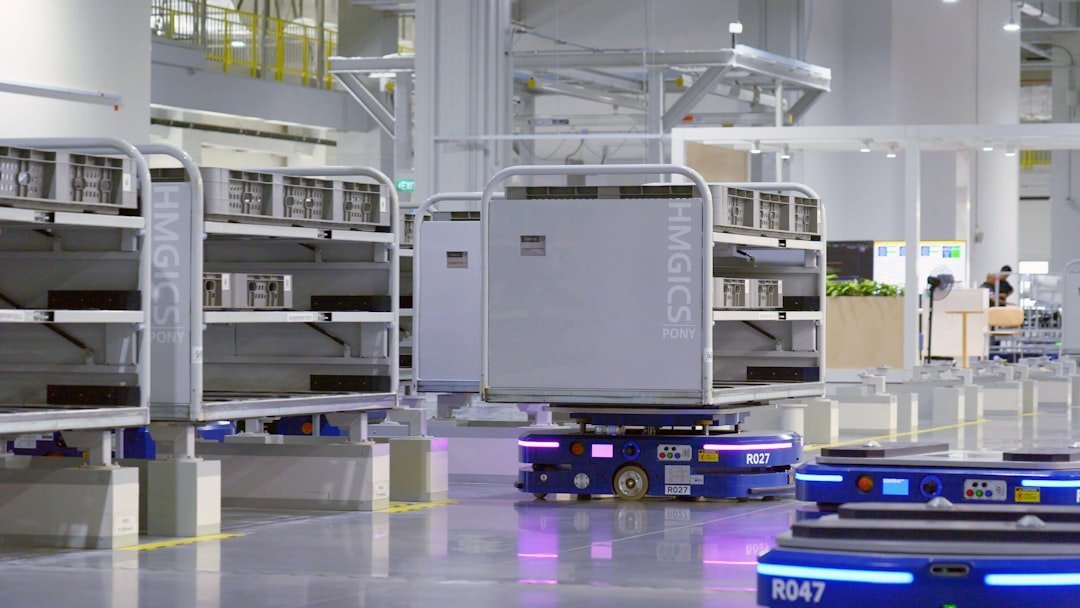
Manufacturing automation is not a new story, but the pace and precision of AI-powered robotics in the 2025 and 2026 period marks a genuinely different chapter from what came before.
Research from MIT and Boston University indicates that AI-driven robotics will have replaced approximately two million manufacturing workers globally by 2026. By 2030, more than half of assembly line, packaging, and quality control positions may be automated, with assembly line employment projected to decline from 2.1 million in 2024 to just 1.0 million.
Many companies have turned to AI and automation to bridge existing labor gaps, with some countries running fully automated factories, and plants in the U.S. such as Tesla’s Gigafactories implementing similar models. Sectors with high-volume production and repetitive tasks, including automotive, semiconductors, electronics, aerospace, and pharmaceuticals, are experiencing the highest adoption of AI and automation. The shift is structural, not cyclical.
4. Legal Support and Paralegal Research Roles

Law firms are quietly undergoing one of the most significant reorganizations of any professional sector. AI tools can now scan entire legal databases, cross-reference case histories, and flag relevant precedents in seconds, tasks that previously justified entire support teams.
A McKinsey Global Institute report indicates that nearly thirty-five percent of tasks in legal occupations could be automated with current technology. AI tools are expected to replace a significant portion of legal support roles, with paralegals facing an 80 percent risk of automation by 2026 and legal researchers facing a 65 percent risk by 2027.
AI scans legal databases, identifies relevant statutes, and cross-references case history faster than human researchers, and law firms are discovering they can replace entire research teams with software subscriptions. That said, senior paralegal work involving client interaction, ethical accountability, and complex contextual judgment remains firmly in human territory for now. The division between routine legal tasks and nuanced legal thinking is where the actual line is being drawn.
5. HR Screening and Recruitment Coordinators

Human resources was once considered a people-first function, almost immune to automation by its very nature. The data from 2025 and 2026 tells a more complicated story, particularly at the entry and coordination levels of the profession.
In human resources, 85 percent of recruitment screening and 90 percent of benefits administration functions are expected to be automated between 2025 and 2027, potentially replacing large portions of HR support staff. AI use across HR tasks climbed to 43 percent in 2026, up from 26 percent in 2024, reflecting a clear shift from pilot programs to real workflows according to SHRM.
About 87 percent of companies now use AI in their hiring tech stack, and virtually all Fortune 500 firms have it embedded in their recruitment process. For budget-focused organizations, replacing entry-level HR roles with AI looks like an easy win, until you ask where tomorrow’s leaders will come from, since when early-career roles vanish, so do the internal pathways that build future HR and talent leadership. That tension is unresolved, and it makes this particular shift more fraught than the others.
The Broader Picture: What the Research Actually Says

It’s worth pausing on the scale of what’s being projected. Goldman Sachs economists found that generative AI could automate tasks equivalent to 300 million full-time jobs worldwide, with two-thirds of current jobs exposed to some degree of AI automation. The World Economic Forum projects a net displacement of 14 million jobs by 2027.
However, full job displacement is rarer than task displacement. AI typically automates parts of jobs first, not entire roles. This nuance matters enormously when reading headlines. A job can shed half its tasks to automation while the worker who holds it evolves to handle what remains. The IMF estimated that 300 million full-time jobs globally could be affected by AI-related automation, but emphasized that most will undergo task-level transformation rather than outright loss.
Entry-Level Workers Bear the Sharpest Edge

If there is one group where the data is particularly concerning, it’s early-career workers. They tend to occupy precisely the roles that AI can absorb most readily.
A recent Stanford University study evaluating payroll data showed AI is causing a 13 percent decline in jobs for early-career workers. Unemployment among workers aged 20 to 30 in tech-exposed occupations has risen by almost three percentage points since the start of 2025, notably higher than for their same-aged counterparts in other fields.
Entry-level job postings have dropped 15 percent year over year. For recent graduates entering the workforce, this is not an abstract concern about a distant future. It is a present reality reshaping which rungs of the career ladder even exist.
The Finance and Banking Sector: Quiet but Accelerating

Wall Street’s relationship with AI has been steady and methodical, far less headline-grabbing than tech, but the structural changes underway are substantial.
Wall Street banks expect to cut around 200,000 roles over the next three to five years as AI takes over entry-level and back-office tasks. In banking and finance, 70 percent of basic operations are projected to be automated, and loan processing automation is expected to increase from 35 percent today to around 80 percent by 2030.
As much as 54 percent of banking jobs carry high potential for AI automation. Much of this involves roles that have always sat in the back of the office: document processing, loan assessment, compliance checking, and trade reconciliation. These are not glamorous jobs, but they employ tens of thousands of people. Employment of bank tellers is projected to decline by 15 percent from 2023 to 2033, eliminating approximately 51,400 jobs over that period.
What Actually Protects a Job from AI

The question most workers are quietly asking is not which jobs are disappearing, but which skills actually provide shelter. The research gives a fairly consistent answer.
The most protected workers across all major studies share specific traits: strong analytical and critical thinking skills, high social and emotional intelligence, creativity, complex problem-solving ability, adaptability to new tools including AI itself, and cross-functional expertise. Jobs that involve managing people, exercising complex judgment, or performing unpredictable physical work remain hard to automate, because machines are unable to match human performance in those areas, at least for now.
Professionals with specialized AI skills now command salaries up to 56 percent higher than peers in identical roles without those skills. This wage premium is one of the clearest market signals about where value is migrating. The skill gap between those who understand how to work with these systems and those who do not is widening faster than most retraining programs are moving.
The Jobs AI Creates as It Displaces

No honest account of AI’s impact on work can ignore the creation side of the equation. The displacement story is real, but it’s only half the picture.
Software developer roles are projected to grow by nearly 18 percent between 2023 and 2033, even as AI automates some coding tasks, while AI Engineer roles show demand rising by over 140 percent, making it one of the fastest-growing careers on record. The WEF predicts a 40 percent increase in AI and machine learning specialist roles by 2027, adding hundreds of thousands of jobs globally.
While around 170 million new job opportunities will emerge, primarily in technology-driven sectors, green industries, and care services, about 92 million existing roles are projected to disappear, resulting in a net increase of roughly 78 million jobs worldwide. The math is net positive. The human challenge is that the jobs disappearing and the jobs appearing are rarely held by the same people, or located in the same places.
The Transition Problem Nobody Wants to Talk About

There is a gap in the AI jobs narrative that often goes unaddressed. Net creation figures look reassuring on paper. The lived reality of displacement, particularly for older workers or those in lower-income regions, is less tidy.
The WEF Future of Jobs Report 2025 estimates that AI will displace 85 million jobs but create 97 million new roles by 2030, a net positive of 12 million jobs. However, the timing mismatch is critical, as displaced workers may lack the skills for newly created roles without significant retraining. Over 40 percent of workers will require significant upskilling by 2030, with emphasis on skills that complement rather than compete with AI capabilities.
Roughly 65 percent of retail jobs could be automated due to technological advancements, rising costs and wages, tight labor markets, and reduced consumer spending. For workers in those roles, the question of retraining is not academic. It involves time, money, and geographic mobility that many simply do not have. The technology is moving faster than the social infrastructure built to support transitions through it.
Conclusion

The “silicon colleague” is not coming. In most cases, it has already arrived. The five job categories most at risk by 2027, customer service, data entry, assembly line work, legal support, and HR coordination, share a common thread: they are built on repetition, pattern recognition, and rule-based decisions. These are the exact capabilities where AI outperforms humans by every measurable standard.
What protects a worker is not a job title or even a degree. It is the texture of the work itself, whether it demands empathy, original judgment, physical improvisation, or ethical accountability. Those qualities remain stubbornly human, and employers who strip too much of that texture from their organizations are beginning to discover what gets lost along with the headcount.
The most useful framing is not fear or dismissal, but preparation. The workers and organizations navigating this shift best are the ones treating AI as a tool that redefines what their jobs are, not a replacement that eliminates the need for them entirely. That distinction, small as it sounds, makes all the difference.