


Remote work redrew the map of where people live and work. Millions took that freedom seriously and started crossing borders with laptops in tow. What followed, quietly and steadily, was a global reckoning with tax rules that were never designed for a person working from a café in Chiang Mai, a co-working space in Lisbon, or an Airbnb in Mexico City.
The tax landscape for location-independent workers has shifted considerably since 2023, and more changes are expected before 2027. Whether you’re a freelancer, a remote employee, or a full-time nomad, the rules now demand more attention than ever.
The Size of the Movement Has Changed the Stakes

Globally, an estimated 40 million people were living as digital nomads by 2025, roughly doubling from around 20 million just a few years prior. In the United States alone, the number of people identifying as digital nomads increased from approximately 7.3 million in 2019 to 18.1 million in 2024, a 147% rise since pre-pandemic times.
The number of independent workers who are digital nomads declined 7% in 2025, from 7.9 million in 2024 to 7.3 million in 2025. This dip, however, tells only part of the story. The number of digital nomads with traditional jobs increased by 10% in 2025, reaching 11.2 million compared to 10.2 million in 2024.
Common surprise costs for digital nomads include medical expenses, taxes, banking fees, and roaming charges, with taxes ranking among the top unexpected financial shocks. As the nomad population has grown, so has government interest in making sure this mobile workforce pays its fair share somewhere.
The U.S. Still Taxes You Wherever You Roam
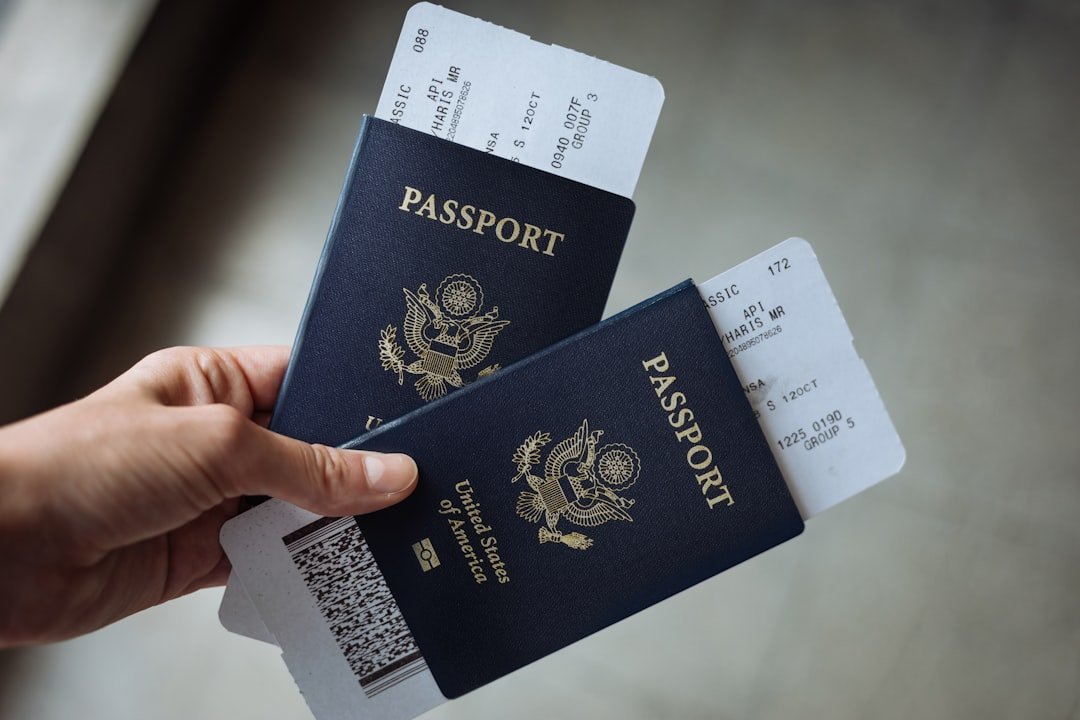
Other countries base their taxes on where you live. The U.S. taxes based on the passport you hold. This is one of the most important facts for American nomads to internalize, and one of the most frequently misunderstood.
U.S. citizens and green card holders must report and potentially pay U.S. taxes on their global income, even if they live abroad for decades. The obligation doesn’t disappear because you reside in another country or earn money outside the U.S.
A proposed shift to residence-based taxation for U.S. expats is under discussion, but no changes to citizenship-based taxation have been enacted as of early 2026. Until that changes, filing remains mandatory, year after year, no matter where you are on April 15.
The Foreign Earned Income Exclusion: Your Best Tool

The Foreign Earned Income Exclusion exists specifically to prevent you from being taxed twice on the same income. For the 2025 tax year, filed in 2026, you can exclude up to $130,000 of foreign earned income from U.S. federal income tax. This limit rises to $132,900 for the 2026 tax year, filed in 2027.
The Physical Presence Test is probably the most important concept you’ll learn as a digital nomad. Pass this test, and you unlock the Foreign Earned Income Exclusion. The requirement is simple: be physically present in foreign countries for at least 330 full days during any 12-month period.
If you earn under $130,000 and qualify for the full year, your federal income tax bill could be zero. That said, qualifying correctly requires meticulous documentation. The moment you start living this lifestyle, start tracking your days. Use a spreadsheet, calendar app, or travel journal to track your expenses. Document every border crossing, every flight, every move.
The Self-Employment Tax Nobody Talks About

Many digital nomads get surprised by this: if you’re freelancing, consulting, or running your own business, the Foreign Earned Income Exclusion will eliminate your federal income tax, but it won’t touch your self-employment tax. Self-employment tax covers Social Security and Medicare and runs at 15.3% of your net business income – 12.4% for Social Security on income up to $176,100 in 2025, plus 2.9% for Medicare on all income.
Location doesn’t matter. Work from Bali, work from Barcelona – you still owe this tax. It’s one of the biggest financial surprises in the nomad world and something many freelancers discover only when it’s time to file.
There is an escape route: totalization agreements. Countries like Germany, France, Spain, and Canada have deals with the United States. If you’re paying into their social security systems, you might avoid U.S. self-employment tax. Popular spots like Thailand, Mexico, Portugal, and Costa Rica, however, don’t have these agreements.
Thailand’s Rule Change: A Wake-Up Call for Southeast Asia

On September 15, 2023, the Thai Revenue Department issued Departmental Instruction No. Por.161/2566, fundamentally changing how foreign income is taxed in Thailand. This change took effect on January 1, 2024, and represents one of the most significant tax changes affecting expats in decades. Previously, Thailand only taxed foreign-sourced income if it was remitted to Thailand in the same calendar year it was earned.
Thailand has introduced significant tax reforms as of January 2024, subjecting all foreign income remitted to Thailand to local taxation under progressive income tax rates reaching up to 35%. This change places Thailand among countries aligning with OECD standards for tax transparency and stricter regulations on cross-border income.
If you spend 180 days or more in Thailand within a calendar year, you’re considered a tax resident. This status means you’re liable for taxes on income earned both within Thailand and abroad. The old strategy of simply waiting a year before wiring money to a Thai bank account no longer works cleanly.
The 183-Day Rule and Multi-Country Complications

Since the general rule of thumb is that if you spend 183 days or more in a country, you become a tax resident, digital nomads often get confused as to where they owe taxes because they move around so often. Many only stay in one place for three months at a time, precisely to stay under that threshold.
Different countries may claim tax residency based on 183-day rules, creating potential dual obligations. This isn’t a theoretical concern. Spend enough cumulative time in two countries in one year, and both governments may have a legitimate claim on your income.
Whether you owe tax locally depends on that country’s residency, source-of-income, and special-regime rules – and a visa does not automatically create a tax break. For example, Portugal’s old NHR regime has been replaced by the narrower IFICI regime, Georgia has a territorial system plus a separate 1% small-business regime for qualifying entrepreneurs, and Thailand taxes residents under its own income-source and remittance rules.
Digital Nomad Visas Don’t Equal Tax Exemptions
Over 50 countries now offer dedicated digital nomad visas that allow remote workers to live and work legally while earning income from clients or employers outside the host country. It’s a competitive market for globally mobile workers. The fine print, though, matters a great deal.
For Americans, these visas provide legal residency without requiring a local employer, but they do not change U.S. tax obligations. You must still file a U.S. return on worldwide income and may qualify for the Foreign Earned Income Exclusion.
You must be cautious, as some countries consider digital nomads tax residents if you overstay a visa or earn local income. Always research the tax laws of the visa country before applying. Not every nomad visa includes automatic tax breaks.
Some Countries Still Offer Genuine Tax Advantages

The United Arab Emirates offers a one-year remote work visa and has no personal income tax, making it a favorite among crypto traders and high earners. Keep in mind: no tax treaty means no relief on U.S. self-employment tax. That caveat is meaningful for freelancers earning six figures.
Digital nomads in Hungary do not pay personal income tax if they are present in the country for less than 183 days a year. Otherwise, they are obliged to pay 15% of their income, which is the lowest rate in the EU. The Hungarian government has double tax treaties with over 80 countries, including EU members, the UK, Australia, Canada, China, and Turkey.
Malta’s Nomad Residence Permit lets you stay tax-free on foreign income not brought into the country. Local tax is only due on remitted income. Croatia offers foreign income exemptions as well, though taking on local clients can complicate that status quickly. The best approach is always to verify current rules in the specific country before committing to a residency strategy.
Foreign Bank Accounts and FBAR: An Overlooked Obligation

If you have more than $10,000 combined in foreign bank accounts at any time during the year, you must file an FBAR. It’s submitted separately from your tax return through the FinCEN portal. FBAR requirements for digital nomads become important as soon as your aggregate foreign balances cross that threshold, even briefly.
Digital nomads with foreign bank accounts exceeding $10,000 must file a Foreign Bank Account Report (FBAR) to comply with U.S. anti-money laundering regulations. Forgetting this requirement carries significant penalties, even when no actual tax is owed.
For nomads who hold accounts in multiple countries simultaneously, the aggregate balance calculation can creep above the threshold without any single account being especially large. Tracking this across currencies adds another layer of complexity to an already complicated compliance picture.
What to Do Before 2027: Practical Steps

Failing to file can trigger penalties, interest, and, eventually, enforcement actions. The most important thing a digital nomad can do right now is get their records in order, regardless of how much they think they owe. The IRS is not the only authority watching.
Keep detailed records to satisfy the Physical Presence Test or 183-day thresholds. Digital travel logs are admissible during audits. Alongside day-count records, keep invoices, contracts, and travel proofs for tax audits, foreign currency conversions, and treaty claims.
Day-count tracking tools, relocation management companies, tax advisors, and immigration counsel help companies and individuals minimize compliance risks while supporting location flexibility. Before 2027, countries are expected to tighten information-sharing frameworks further, making undeclared income harder to conceal and easier to penalize. Getting ahead of that curve now is simply the smarter move.
The “work-from-anywhere” era hasn’t come with a matching “tax-from-anywhere” simplicity. Governments are catching up, and the window for operating in the grey areas is narrowing. The nomads who will thrive beyond 2027 won’t just be the ones with the best destinations in mind – they’ll be the ones with the clearest picture of what they owe and where.