
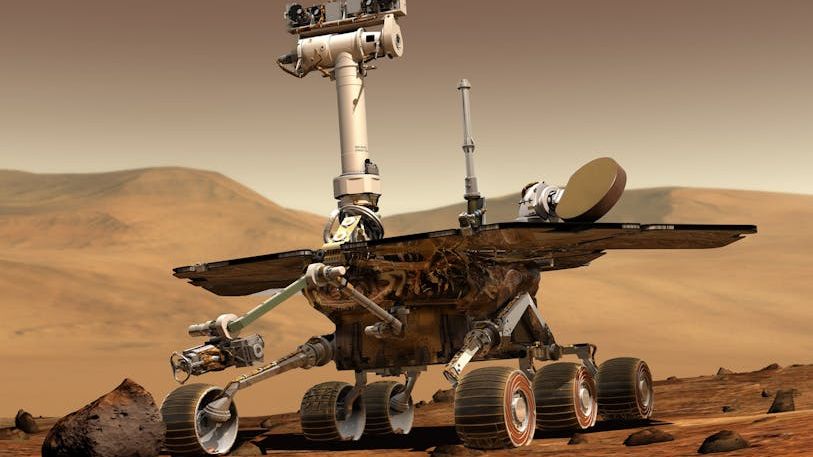

Claims like this one have a reliable life cycle on the internet. A rover image surfaces, someone points to a shadow or an oddly shaped rock, and within hours the theory spreads: ancient tool, alien artifact, proof of something deliberate. The headline grabs attention precisely because it touches something real: we genuinely do not know the full story of Mars, and the planet’s surface holds billions of years of geological history that science is still painstakingly decoding.
This particular type of claim combines several irresistible ingredients. An ancient age. A familiar object in a strange place. A location that sounds dramatic. None of those elements are enough to make a claim credible, but together they make it memorable. What follows is an honest look at what Mars exploration actually tells us, why viral “artifact” claims keep appearing, and what the science says about the Red Planet’s true mysteries.
No Tool Has Ever Been Confirmed on Mars
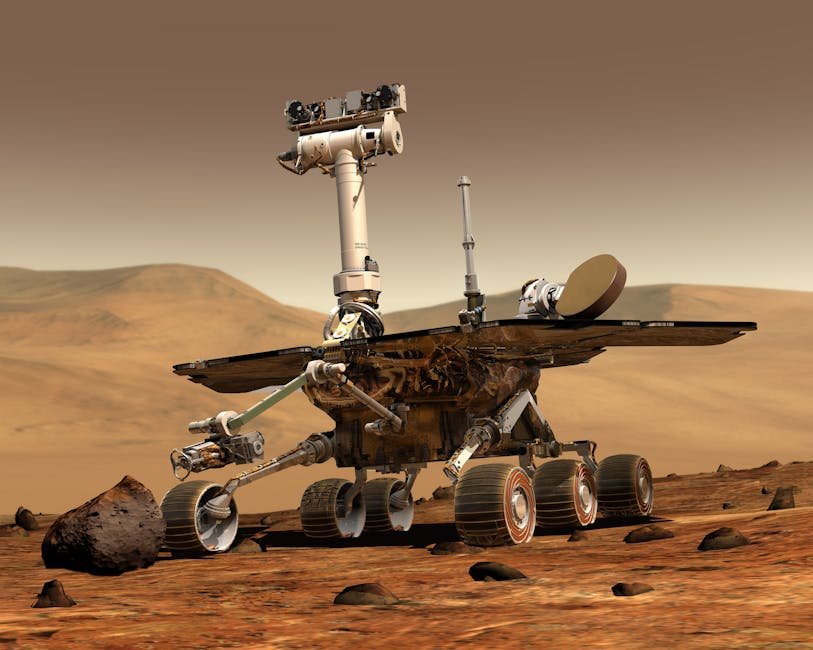
The most important thing to state clearly at the outset is that no human-made or alien tool has ever been confirmed on Mars by any space agency or peer-reviewed scientific study. Not one. Every Mars rover mission, from the early rovers through to the Perseverance and Curiosity missions still operating today, has been equipped with highly sensitive scientific instruments, and none of their data has produced any verified evidence of an artifact, structure, or object of non-geological origin.
The rover’s main goals are to search for signs of ancient life, study the planet’s geology and climate, and collect rock and regolith samples for possible return to Earth by a future mission. These are methodical, well-documented scientific endeavors. When rover cameras capture something unusual, geologists and mission scientists analyze the data carefully. The results, consistently, point to natural processes. That doesn’t make Mars boring. Far from it. It simply means the real story of Mars is different from the viral version.
What Pareidolia Actually Does to Our Perception
The phenomenon that causes people to see faces in random objects is known as pareidolia, and it plays a central role in Mars mysteries. Human brains are wired to recognize faces, a survival trait developed over millennia to help our ancestors identify friends, foes, and social cues. As a result, when we encounter ambiguous shapes or patterns, our minds are often inclined to interpret them as faces, even if they are not. Tools, weapons, monuments: the same mechanism applies to all of them. Once the brain forms an interpretation, it becomes very hard to unsee it.
The brain, always seeking patterns, fills in gaps in visual information, interpreting ambiguous stimuli as something familiar. Influenced by expectations and biases, it uses visual recognition, memory, and expectation to create our perception of the world, often resulting in illusions of faces or objects in random shapes. Mars images are particularly susceptible to this effect. The terrain is alien enough to be unfamiliar, but rocky enough to produce the kinds of angular, irregular forms that trigger pattern-recognition in human brains. The conditions are almost ideal for pareidolia.
A Long History of Martian “Discoveries” That Weren’t
In 1976, NASA’s Viking 1 Orbiter sent back a series of images from Mars that would spark one of the most enduring mysteries in space exploration: the Face on Mars. Captured in the Cydonia region, this peculiar formation appeared to resemble a humanoid face, complete with eyes, a nose, and a mouth, staring back at Earth. This eerie image, which quickly spread across the media, became the focal point for countless theories and speculations about life on the Red Planet.
When the Mars Global Surveyor captured higher-resolution images in 2001, the “face” resolved into what it truly was: a natural hill shaped by eons of wind and erosion. It’s a classic case study in how perception and expectation can shape interpretation. That pattern has repeated many times since. Rocks photographed from specific angles, under particular lighting conditions, with shadows deepening certain features, have been called skulls, helmets, spoons, doorways, and tools. Every single time, closer examination or different imaging conditions has revealed ordinary geology.
The Real Age of Martian Rock and How Scientists Determine It
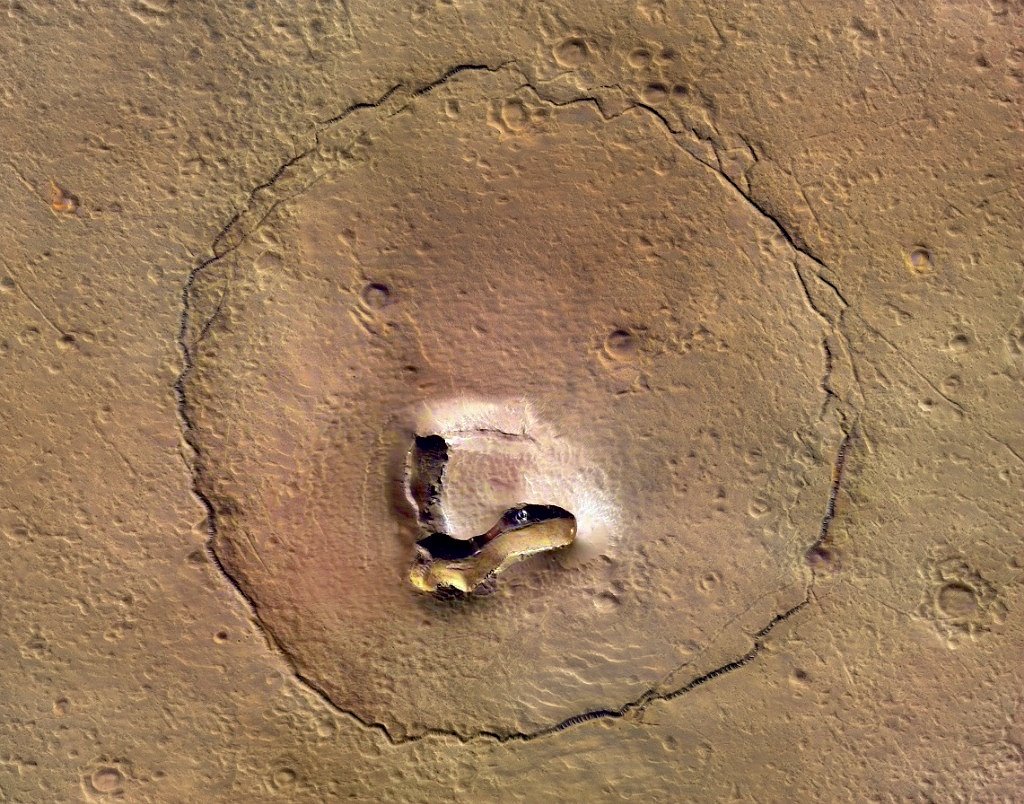
Crater counting is a method for estimating the age of a planet or moon’s surface based upon the assumptions that when a piece of planetary surface is new, then it has no impact craters, and impact craters accumulate after that at a rate that is assumed known. Counting how many craters of various sizes there are in a given area allows determining how long they have accumulated and, consequently, how long ago the surface formed. The method has been calibrated using the ages obtained by radiometric dating of samples returned from the Moon by the Luna and Apollo missions.
Based on the presence of the largest impact structures, the highest crater densities, and the impact history of the inner solar system, the southern highlands of Mars represent the oldest crust. They are believed to have formed prior to 3.8 billion years ago. This is a rigorous scientific process that involves counting, analysis, and cross-referencing with radiometric data from Martian meteorites. It has nothing to do with identifying objects or artifacts. A rock that looks like a tool doesn’t affect the geology’s age. The terrain’s age is established through entirely separate methods.
Jezero Crater: What’s Actually Being Found There
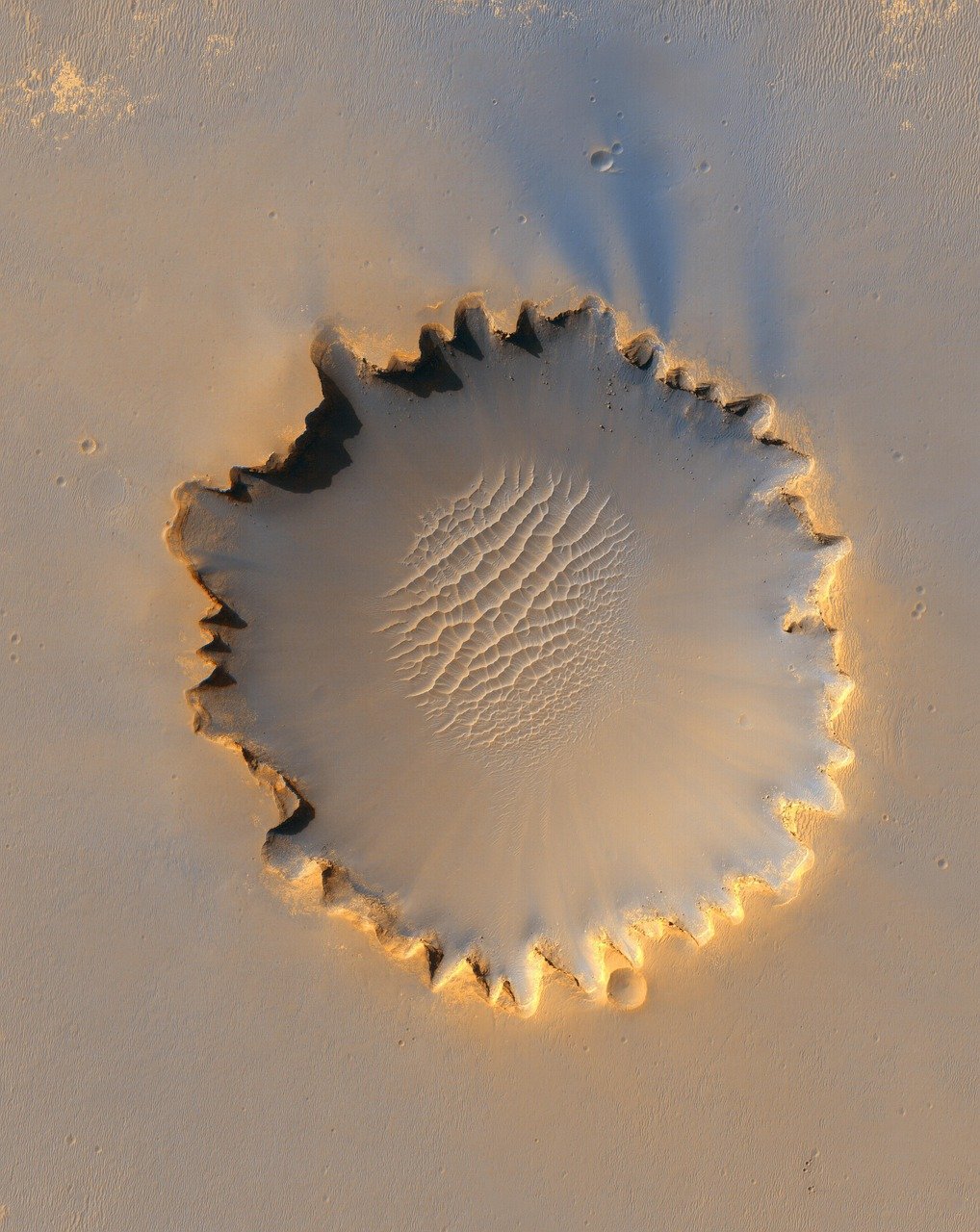
Ground-penetrating radar on board NASA’s Mars Perseverance rover has confirmed that Jezero Crater, formed by an ancient meteor impact just north of the Martian equator, once harbored a vast lake and river delta. Over eons, sediment deposition and erosion within the crater shaped the geologic formations visible on the surface today. This is genuinely remarkable science. The crater preserves a record of liquid water, ancient sediment, and potentially the chemical conditions that once supported microbial life.
In July 2024, Perseverance discovered the Cheyava Falls rock containing a “possible biosignature.” Taken from a rock named “Cheyava Falls,” the sample, called “Sapphire Canyon,” contains potential biosignatures, according to a paper published in the journal Nature. A potential biosignature is a substance or structure that might have a biological origin but requires more data or further study before a conclusion can be reached about the absence or presence of life. That’s the kind of discovery worth paying attention to. It’s cautious, peer-reviewed, and based on instrument data rather than visual impression.
What the Rocks Are Actually Made Of
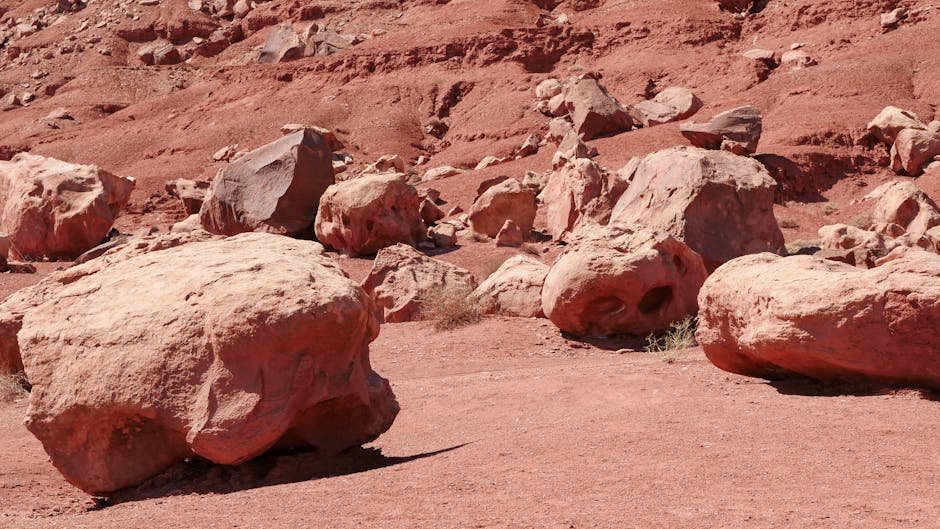
NASA’s Perseverance rover has discovered mudstones in Mars’ Jezero Crater that contain organic carbon and unusual textures hinting at possible biosignatures. These findings suggest that ancient Martian environments may have supported chemical processes similar to those on Earth, where microbial life thrives. While the team stresses they have not discovered evidence of life, the rocks show chemical reactions and mineral formations that could point to biological activity.
The different minerals show how conditions changed from barely habitable to increasingly habitable over time. As one researcher described it, these minerals tell us that Jezero experienced a shift from harsher, hot, acidic fluids to more neutral and alkaline ones over time, conditions we think of as increasingly supportive of life. The story of Mars, as science is gradually piecing it together, involves billions of years of changing chemistry, water activity, and environmental shift. It’s a story about microbial possibility, not ancient civilizations or hand tools.
How Planetary Protection Keeps the Science Honest
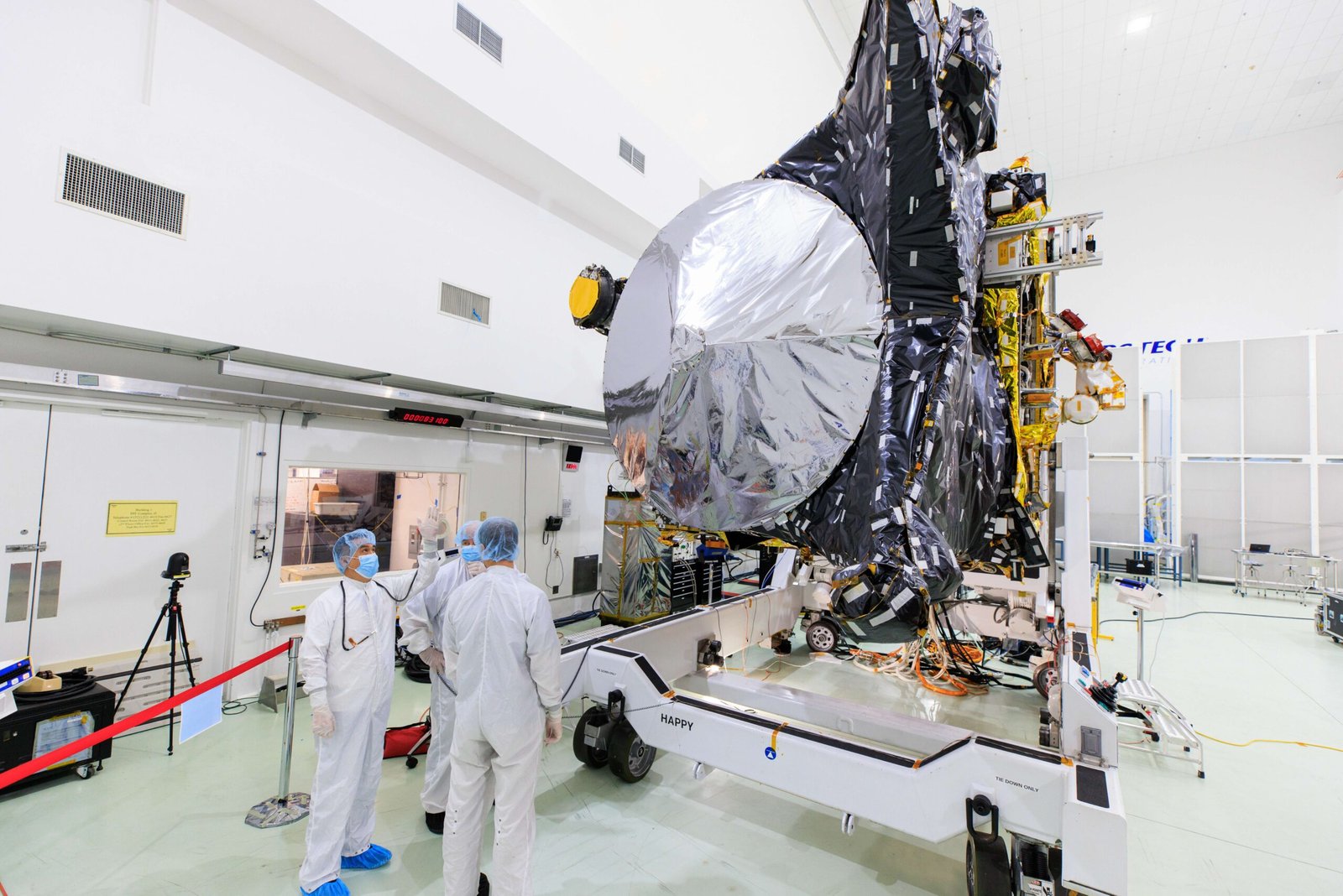
Planetary Protection addresses microbial contamination of the solar system by spacecraft that we launch from Earth, known as forward contamination. This contamination must be prevented in order to preserve the integrity of exploring the solar system, as celestial bodies that may have once held an environment suitable for life, such as Mars, are especially vulnerable. This is a fundamental constraint on every mission. The instruments, hardware, and sampling systems are all designed, built, and maintained under strict contamination controls.
Planetary Protection’s primary strategy to prevent contamination is to confirm that spacecraft launched from Earth are clean. This precaution ensures that planets, and any life that might be there, remain in their original pristine state for scientific analysis. These protocols are directly relevant to the tool-finding claim: no artificial object has been brought to Mars by any mission and lost there, no mission data has recorded any object that defies geological explanation, and the entire framework of planetary exploration is built around exactly this kind of scientific accountability.
Why These Claims Keep Spreading Despite the Evidence
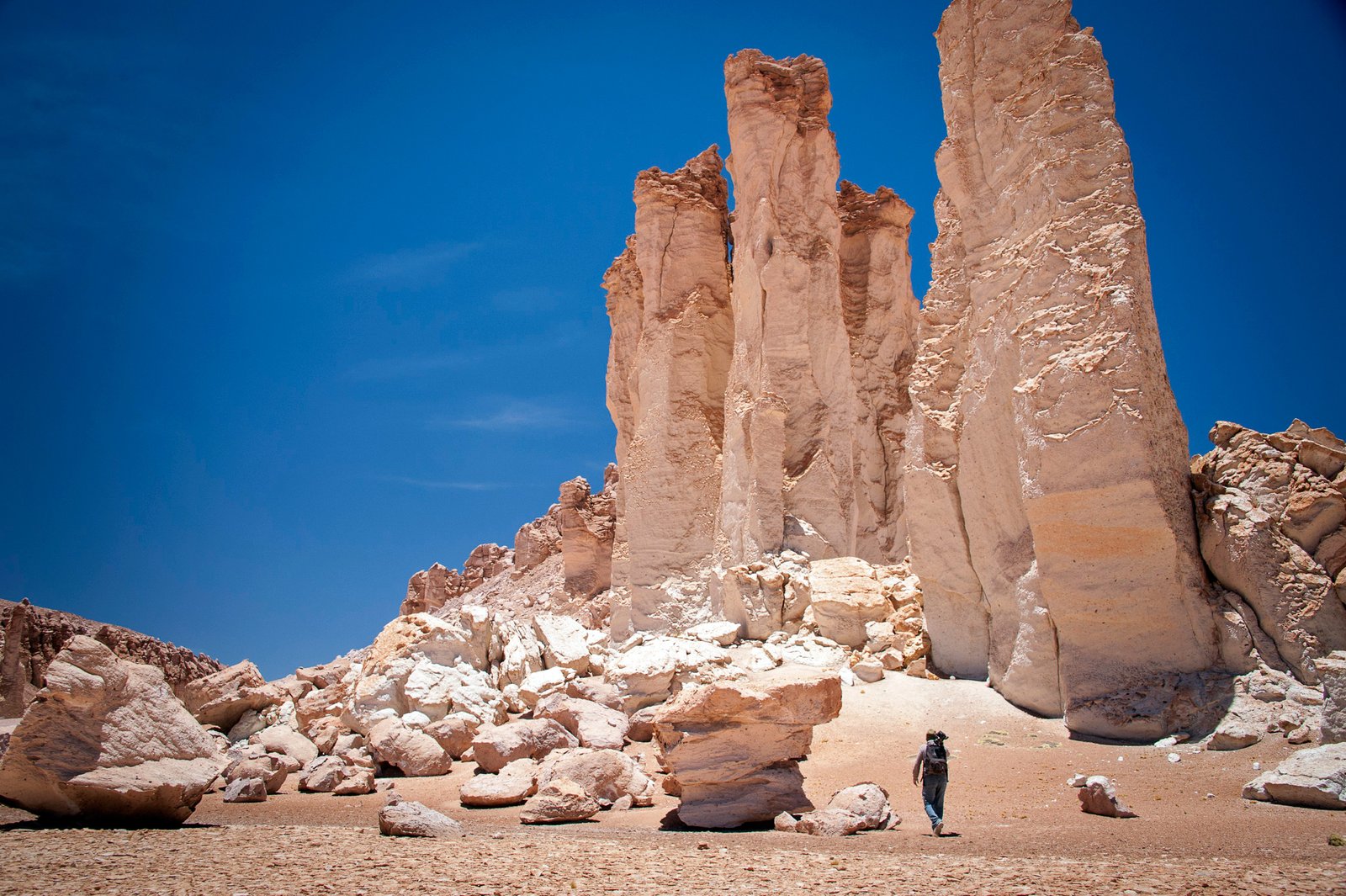
The exploration of Mars has been marked by a series of intriguing observations, ranging from spider-like patterns to smiley faces and even what seemed to be a doorway. These findings have fueled public interest and scientific curiosity alike. The internet has a way of feeding on ambiguity. An unusual Mars rock photographed under specific lighting conditions becomes a shared image, then a claim, then a headline. The original caveats and geological context get stripped away at each step.
There’s a real tension at the core of all this. Mars exploration is genuinely fascinating, and the results coming back from active missions are scientifically significant. The steady stream of data, particularly from instruments designed to probe beneath the surface, is bringing forth perplexing signals and structures that have nothing to do with seeing faces in rocks. There are whispers from the deep interior, strange happenings in the thin air, and chemical signatures that hint at processes we don’t fully understand. Mars, it seems, still holds profound secrets. Those real secrets deserve the public attention that viral artifacts receive. They just require a bit more patience.
The Difference Between Speculation and Scientific Inquiry
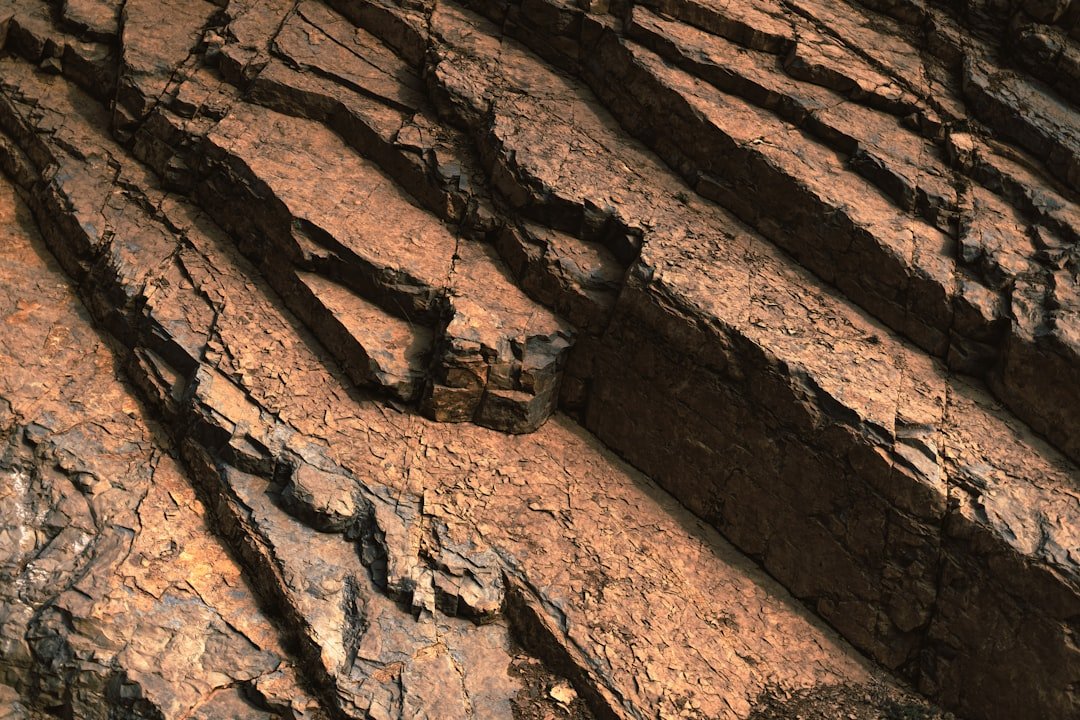
The claim of a 500,000-year-old tool in a Martian crater belongs to a category of speculation that borrows the language of science without its methods. Real scientific inquiry about Mars involves peer-reviewed papers, instrument calibration, cross-referenced data, and repeated testing. It involves stating clearly what has been found, what it might mean, and what further evidence would be needed. A compelling headline is not evidence, and an unusual-looking rock is not a tool.
While pareidolia often leads to fascinating interpretations, it is essential for scientists to remain grounded in objective research. Each of these strange formations, though they might resemble everyday objects, offers crucial insights into Mars’ geological and environmental history. That grounding is not a limitation on curiosity. It’s what makes curiosity productive. The actual findings from Jezero Crater, the biosignature research, the mineral maps, the layered geological record of ancient water activity, these are extraordinary things. They just don’t fit on a dramatic headline.
What Mars Exploration Is Actually Telling Us in 2026
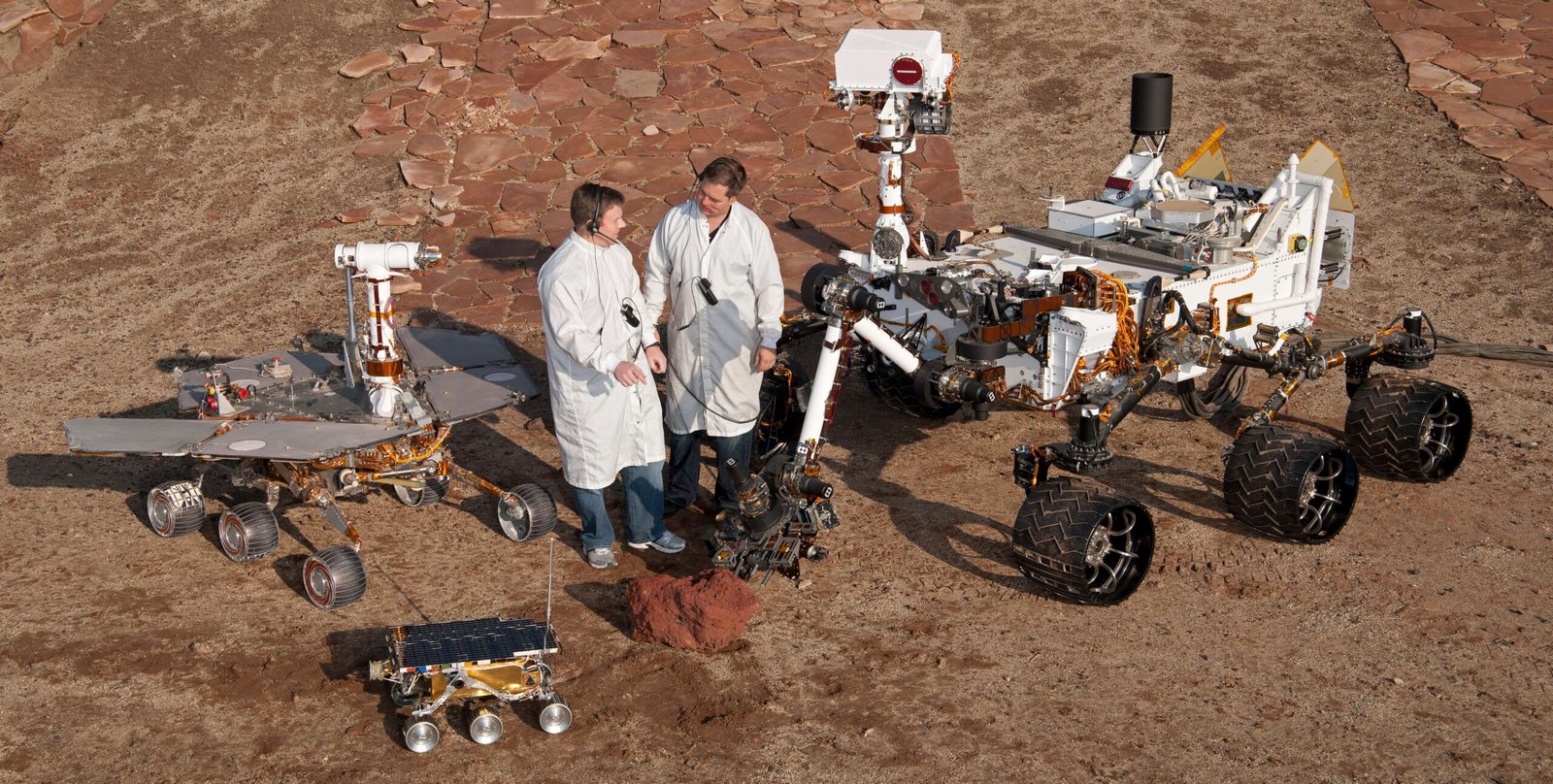
After nearly five years on Mars, NASA’s Perseverance rover has traveled almost 25 miles, and the mission team has been busy testing the rover’s durability and gathering new science findings. As of mid-2025, 33 out of 43 sample tubes had been filled, including igneous rock samples, sedimentary rock sample tubes, and impactite samples. These are tangible results from an active mission. Every sample represents real scientific data that will eventually be analyzed in laboratories on Earth, offering more precise answers than any current rover instrument can provide.
Scientists think these samples may be particularly useful for showing how ancient rocks from Mars’ deep interior interacted with water and the atmosphere, helping create conditions supportive for life. That is the real frontier. Not the search for a carved tool in the dust, but the search for chemical evidence that life, at the microbial level, may once have found a foothold on a planet that was briefly wet, warm, and willing. That question remains genuinely open, and the evidence needed to answer it is slowly, carefully being collected.
The Ghost in the Image
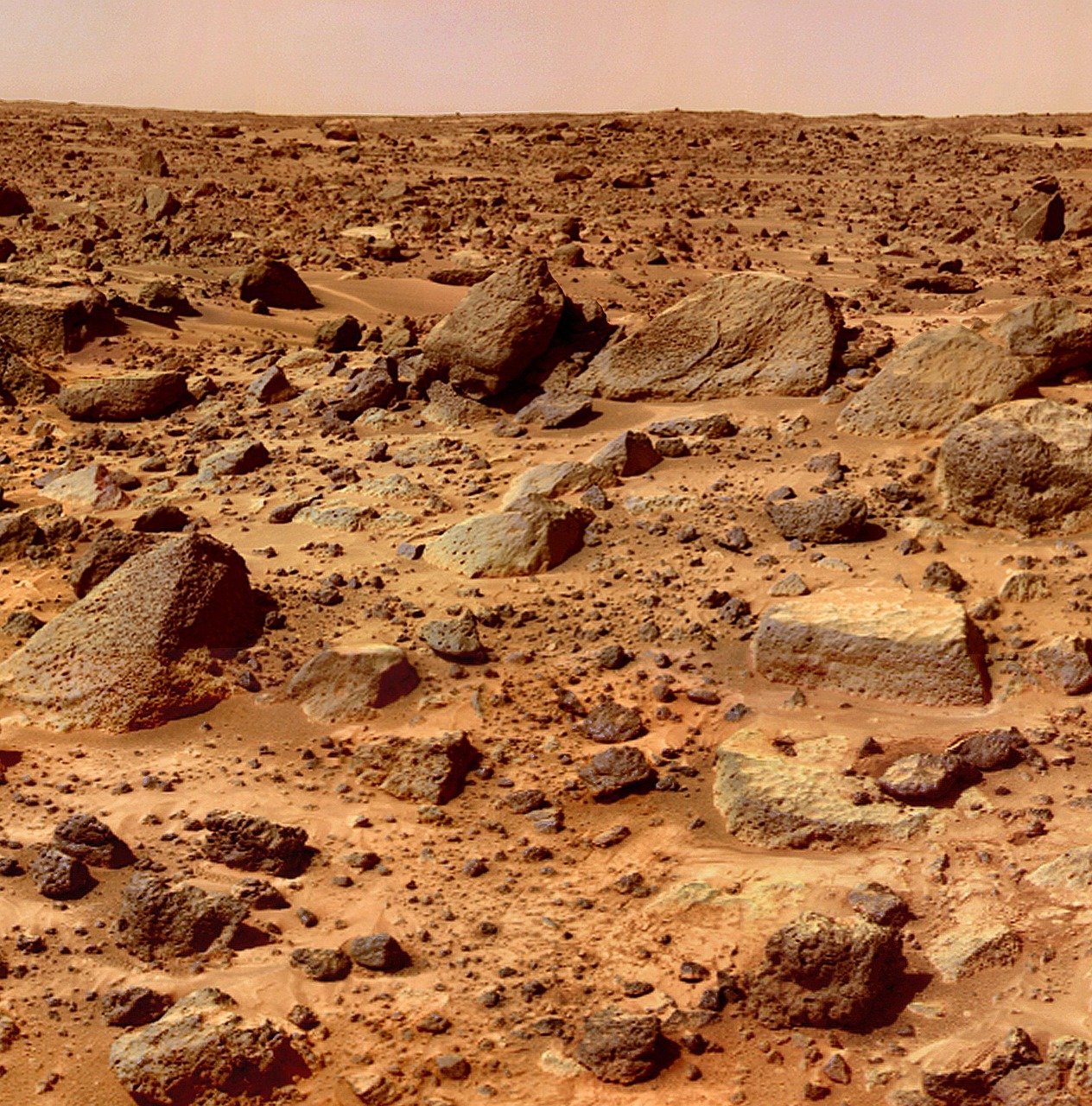
There’s something worth understanding about why “Titan’s Ghost” and headlines like it persist. They reflect a real human longing to not be alone in the universe, to find that intelligence left a mark somewhere beyond Earth. That longing is not irrational. It drives serious scientific funding and genuine curiosity. The problem is when it substitutes a dramatic story for the slower, messier process of actual discovery.
Mars is a genuinely strange and ancient world. Its surface is over four billion years old in places, shaped by volcanic eruptions, asteroid impacts, catastrophic floods, and slow atmospheric loss. Little is known about the earliest period of Martian history, which dates back to the formation of its crust some 4.5 billion years ago, but scientists think that the planet endured an extremely high rate of impacts. The planet’s real story is already remarkable. The ghost isn’t in the crater. It’s in the gap between what we want to find and what the evidence currently supports, and science is the only honest way to close that gap.