

Few episodes in early American history reveal the tension between federal ambition and frontier survival quite like the Whiskey Rebellion. What looks, on the surface, like a simple tax dispute was really a collision between two different worlds: a new central government desperate to assert itself, and a rural population that had built an entire economy around a copper pot and a grain surplus. The ingenuity those farmers showed in resisting, evading, and outlasting the first federal tax collectors deserves more credit than it usually gets.
Hamilton’s Tax and the Debt Behind It
As part of the compromises that led to the adoption of the United States Constitution in 1789, the new federal government agreed to assume the Revolutionary War debts of the thirteen states. In early 1791, to help pay off the resulting national debt, Congress passed the first nationwide internal revenue tax – an excise tax on distilled spirits. It was a bold move by a government that was barely two years old.
Unlike tariffs paid on goods imported into the United States, the excise tax on distilled spirits was a direct tax on Americans who produced whiskey and other alcohol spirits. The 1791 excise law set a varying six to eighteen-cent per gallon tax rate, with smaller distillers often paying more than twice per gallon what larger producers paid. That structural imbalance was not an accident of poor drafting. It reflected a genuine divergence in how eastern commercial operations and western frontier farms actually functioned.
Taxes were politically unpopular, and Hamilton believed that the whiskey excise was a luxury tax and would be the least objectionable tax that the government could levy. In this, he had the support of some social reformers, who hoped that a “sin tax” would raise public awareness about the harmful effects of alcohol. Hamilton had clearly misread the frontier.
Whiskey as Currency, Not Luxury
The western part of Pennsylvania at this time was separated from the east by the Allegheny Mountains. With the majority of the population being farmers, there was often a limited market for the sale of their grain locally and it was difficult to transport the grains to the east for sale. The goods had to be transported by pack horse over the mountains and along dirt roads, and the horses could only carry limited amounts at a time. Converting the grain to whiskey made it more transportable and there was a better market for this product.
Usually cash-poor, frontier residents also used whiskey to pay for the goods and services they needed. Naturally, many westerners quickly came to resent the new excise tax on their “currency.” This is the context that eastern officials largely failed to grasp. The tax, which was payable only in cash, was particularly hard on small frontier farmers, who bartered and did not have access to hard currency. Asking these men to pay coin taxes on a barter commodity was, to them, a contradiction in terms.
Roughly nine in ten of the population of Western Pennsylvania were farmers, and rye, distilled into whiskey and transported east, was their principal crop. Whiskey was a staple in every household, and it was also the most commonly used form of currency in what was primarily a barter economy. Taxing whiskey here was effectively taxing money itself.
The Rigged Structure of the Tax Rate
There were two methods of paying the whiskey excise: paying a flat fee per still, or paying by the gallon. Large distilleries produced whiskey in volume and could afford the flat fee. The more efficient they became, the less tax per gallon they would pay, as low as six cents according to Hamilton. Western farmers who owned small stills did not typically have either enough time nor enough surplus grain to operate them year-round at full capacity, so they ended up paying a higher tax per gallon, which made them less competitive.
Since the retail price of whiskey in the West was about half what it was in the East, the effective tax rate in the West was twice as high, computed as a percentage of the price. Stills located outside of a city, town, or village were taxed on their capacity, regardless of whether they actually produced that much. Large distillers, located primarily in the East, could defer their tax payment if they posted a bond, but small, mostly western, distillers had to pay immediately, before removal of their product from the distillery.
Large, commercial distillers in the eastern United States generally accepted the new excise tax since they could pass its cost onto their cash-paying customers. However, most smaller producers west of the Appalachian and Allegheny Mountains, then the nation’s frontier, opposed the “whiskey tax.” The playing field wasn’t level. It was tilted from the start.
The Hardware of Resistance: Copper, Wood, and Ingenuity
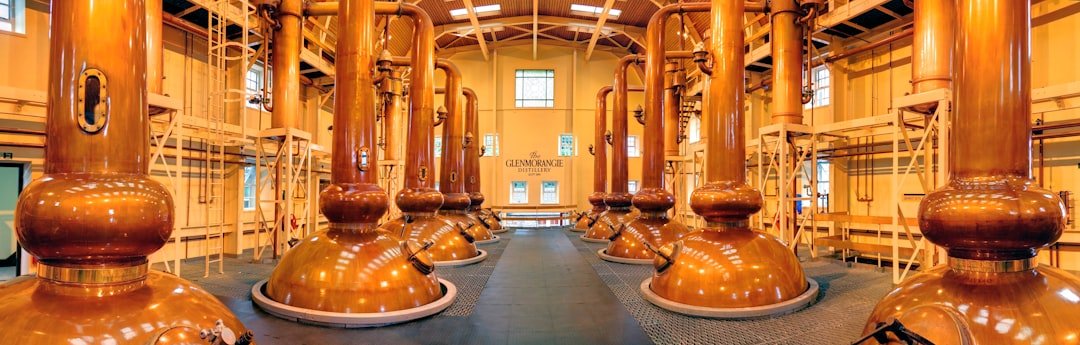
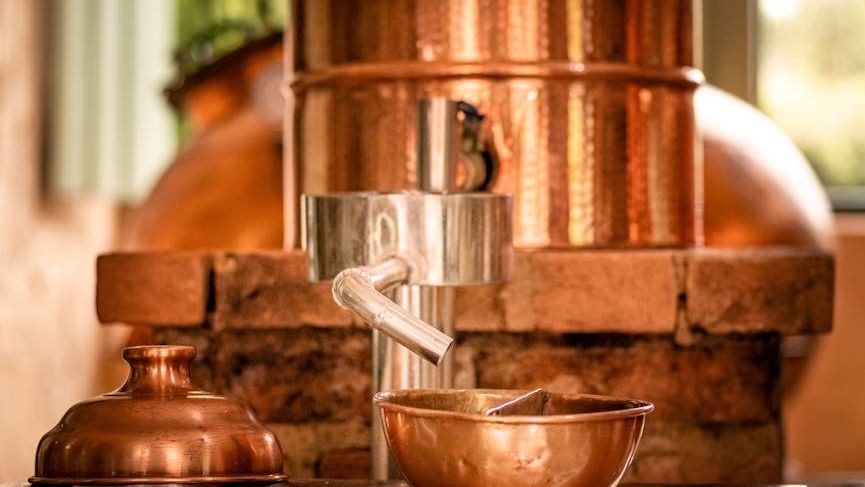
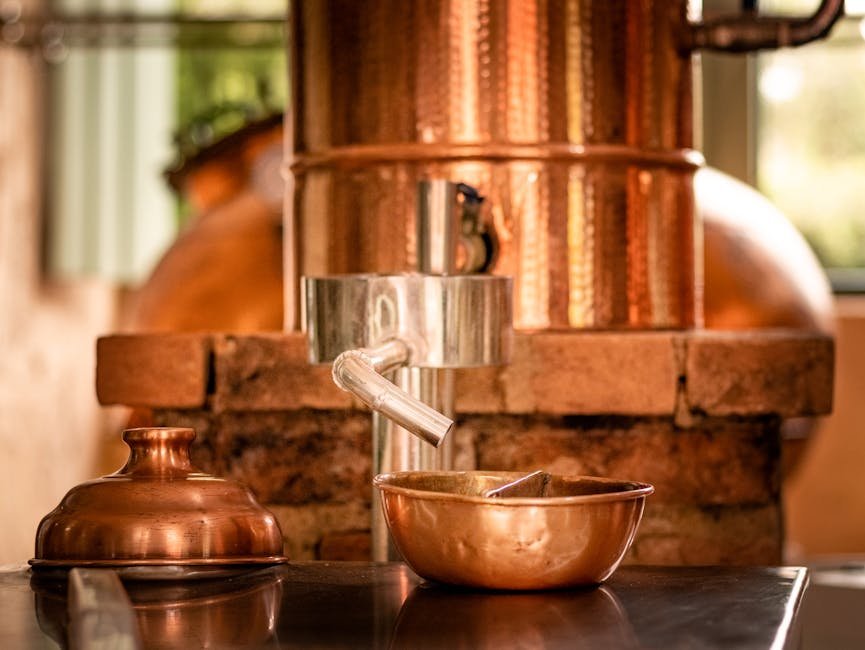
When America first started distilling alcohol in 1640, copper pot stills were being used. As people moved west into western Pennsylvania and Kentucky in the 18th century, they took copper pot stills with them. Not every pioneer could afford a copper pot still, and some made their stills out of hollowed-out logs, but they needed to distill excess grain and fruits to use as barter.
In the frontier hinterlands and for those who could not afford copper, they were “running the log.” This method was first reported in the 1780s. A tree trunk was cut, split, and hollowed out, then hooped back together with saplings. It sounds crude, but it worked. These improvised vessels required no metal merchant, no supply line, no paper trail. They could be assembled from materials already on the property and dismantled just as fast.
Copper, with its historic significance in distillation, plays a pivotal role in shaping the flavor and aroma of spirits. When copper comes into contact with the vapor during distillation, it interacts with sulfur compounds, helping to eliminate unwanted impurities. This reactivity with sulfur compounds results in a smoother and cleaner spirit. Copper is also known for its heat conductivity, ensuring even heat distribution during distillation, which can lead to a well-balanced and refined final product. Frontier distillers understood these properties not through chemistry textbooks, but through generations of practical craft passed down from Scottish and Irish immigrant traditions.
Concealment, Remote Operations, and Nighttime Runs
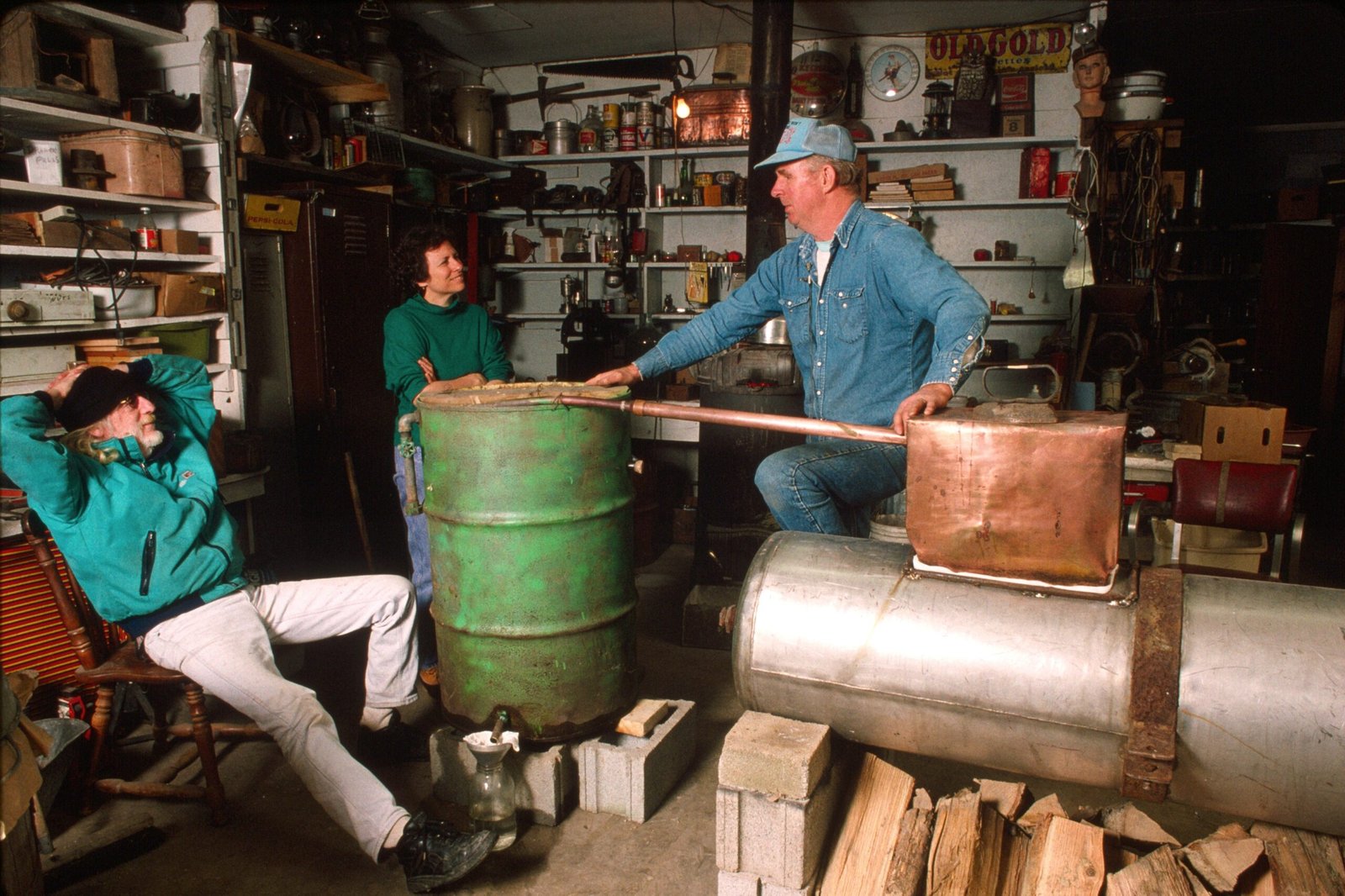
The four counties of southwestern Pennsylvania – Allegheny, Fayette, Washington, and Westmoreland – were the location of up to one-fourth of the nation’s stills. Concentrating that much production in a relatively small area created both solidarity and risk. Distillers responded by pushing their operations deeper into the woods, further from roads, and away from prying eyes.
Tax collectors found it difficult to determine just how much whiskey distillers produced, which required closer surveillance to prevent evasion of the tax. Producing at night, using remote creek hollows for condensing, and keeping still sites off known paths were all practical countermeasures that made accurate assessment nearly impossible. To protest the tax, frontiersmen simply refused to register their stills with the government. Without registration, there was no official record of output, no capacity calculation, and no legal basis for a bill.
The geography itself was an ally. Thick Appalachian forest, unmarked trails, and the absence of reliable roads meant that a federal inspector arriving in western Pennsylvania was, in practical terms, working blind. Moving a small copper pot still to a new site in the woods took a day’s work at most – far less time than it took a revenue officer to travel from one county seat to another.
Tom the Tinker and the Social Technology of Resistance

The rebellion was further fueled by someone writing under the pseudonym “Tom the Tinker.” Tom became the invisible leader of the movement, inspiring gangs of rebels to call themselves “Tom the Tinker’s Men” and carrying out his written threats. It was an early and remarkably effective example of anonymous, decentralized organizing – a network held together not by hierarchy but by shared grievance and the fear of social consequence.
Tom the Tinker was the name given to an invisible persona who posted notes to those cooperating and registering their stills with the government, warning that their property would be destroyed if they didn’t honor the cause. “Tom” also threatened actions against newspapers unless they printed his anti-tax messages. The target wasn’t just the government. It was compliance itself. His men would come by to “mend the stills” of anyone who actually paid the tax. He also published threats in the Pittsburgh Gazette and posted helpful advice on how to evade the tax on trees all over Western Pennsylvania.
The attackers painted their faces black and further disguised themselves as Indians or by wearing women’s dresses. These “Blackface Raiders” stripped the tax collectors naked, covered them with tar and feathers, and left them in the forest. Soon mysterious notes circulated from “Tom the Tinker” who threatened not only the taxmen but also anyone who paid the hated whiskey excise. The disguises weren’t theater. They were a deliberate evasion of identification, used consistently from the earliest attacks in 1791 onward.
The Distillers Who Used Cunning Over Violence
Not all resistance was armed confrontation. Some of the most effective evasion was quiet and personal. David Hamilton offered the excise officers his hospitality and drinks of whiskey with Jamaica ginger when they came to seize his still. After the officers fell into a sound sleep, Hamilton and his neighbors rushed the still and whiskey to a place of safety. The area is known as Ginger Hill today.
Most frontier farmers did not sell all of the whiskey they produced. Instead, the farmers distilled whiskey for use as gifts, barter, and personal consumption. In this instance the distillers would also be the consumers and thus pay the full tax themselves. Keeping production figures ambiguous, sharing whiskey informally rather than selling it in measurable quantities, and operating multiple smaller batches rather than one large registered run were all ways of keeping the taxable volume low and the true output hidden.
Tensions escalated throughout 1793 and early 1794 with harassment extending not only to federal officials but to residents who had registered their stills with the government. Registration, in other words, became a social liability on top of a financial one. The community enforced noncompliance from below just as firmly as the government tried to enforce compliance from above.
Washington’s Army and the Limits of Force
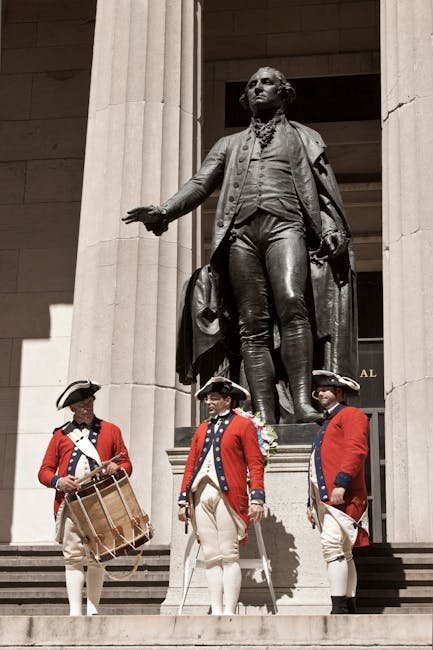
President George Washington, in accordance with the Militia Act of 1792, received permission from Supreme Court Justice James Wilson to raise an army to combat the rebellion in western Pennsylvania. With the help of Henry “Light Horse Harry” Lee and Daniel Morgan, President Washington was in command of nearly thirteen thousand federal soldiers to crush the rebellion on the frontier. It was the largest military mobilization the young nation had attempted since the Revolution itself.
As the army marched towards western Pennsylvania, Washington personally rode to review his soldiers in September of 1794. This was the first and only time a sitting United States President ever led soldiers in an active campaign. The spectacle was intentional. By the time the militia reached Pittsburgh, the rebels had dispersed and could not be found. The stills had gone silent, the operators had vanished into the countryside, and there was nothing left to arrest.
While no real battle ensued, about one hundred and fifty rebels were arrested. Most were released due to lack of evidence, and only two were convicted of treason and then later pardoned. The force had worked as a symbol, not as an enforcement mechanism. The actual collection of the tax remained nearly impossible in the backcountry for years afterward.
The Political Aftermath and Jefferson’s Repeal
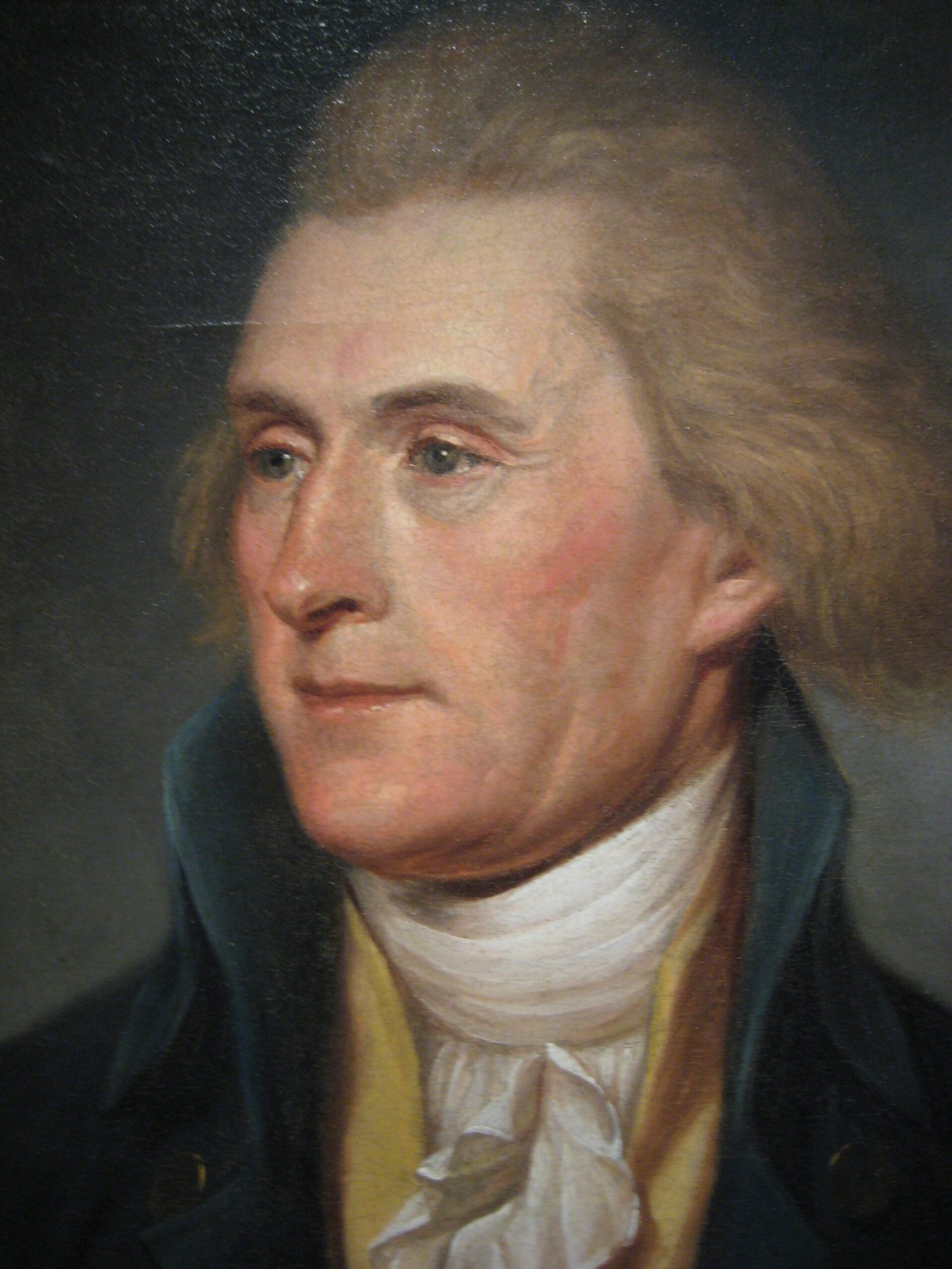
The whiskey tax became a significant issue in the presidential election of 1800. Federalist John Adams had succeeded President Washington in 1797, but the Federalist party had begun losing support. Jefferson and the Democratic-Republicans pledged to repeal the detested whiskey tax and gained enough votes to carry the election. The rebellion had not ended in 1794. It had simply moved from the woods to the ballot box.
The whiskey tax was repealed by President Thomas Jefferson in 1802. Jefferson, who had voiced his opposition to the tax before it was even enacted in 1791, was strongly opposed to the excise. In the end, Washington’s military expedition had cost roughly one and a half million dollars – about one third of the total revenue collected during the entire lifetime of the whiskey tax. The arithmetic of suppression was brutal and clarifying.
Older accounts of the Whiskey Rebellion portrayed it as being confined to western Pennsylvania, yet there was opposition to the whiskey tax in the western counties of every other state in Appalachia, including Maryland, Virginia, North Carolina, South Carolina, and Georgia. The resistance was never just one county’s problem. It was a structural conflict between a centralized fiscal system and a decentralized frontier economy – and that conflict outlived the rebellion itself.
The Legacy of Frontier Distilling Innovation
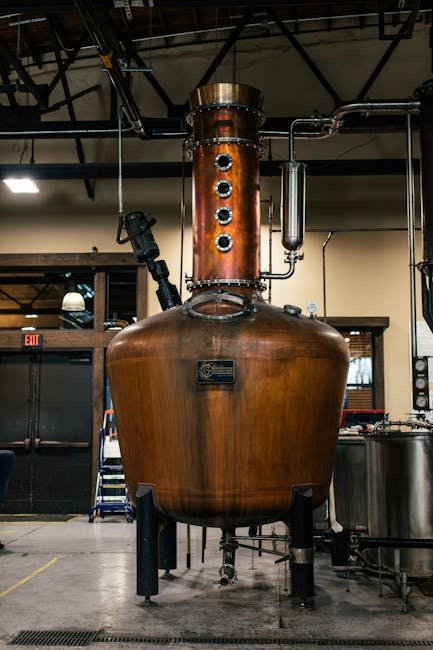
America between 1791 and 1834 generated roughly two hundred patents for distillation techniques. In America, distillers were dealing with a distinctly different grain mash compared to Europe – rye and corn – and evolved new methodologies to distil this American mash. That wave of innovation didn’t emerge from academic laboratories. It came from the same frontier communities that had spent years building stills from local materials and running them under pressure.
The Monongahela River Valley played an essential role in forming what is now recognized as American whiskey. Before Bourbon was a county or Kentucky a state, farmers in the western counties that formed the new nation’s frontier used excess grain from their harvests to produce whiskey. The techniques those farmers refined under duress – compact still designs, efficient wood-fire heating, improvised condensers using local creek water – fed directly into the American whiskey tradition that followed.
The copper pot still, the hollowed-log vessel, the remote creek-side operation, the nighttime run: these weren’t just acts of defiance. They were the practical responses of people who understood their tools, their land, and their economy far better than any federal inspector ever would. What Hamilton taxed as a luxury, the frontier had already transformed into something closer to survival technology. That gap in understanding cost the young republic a small fortune, and it never fully closed.