

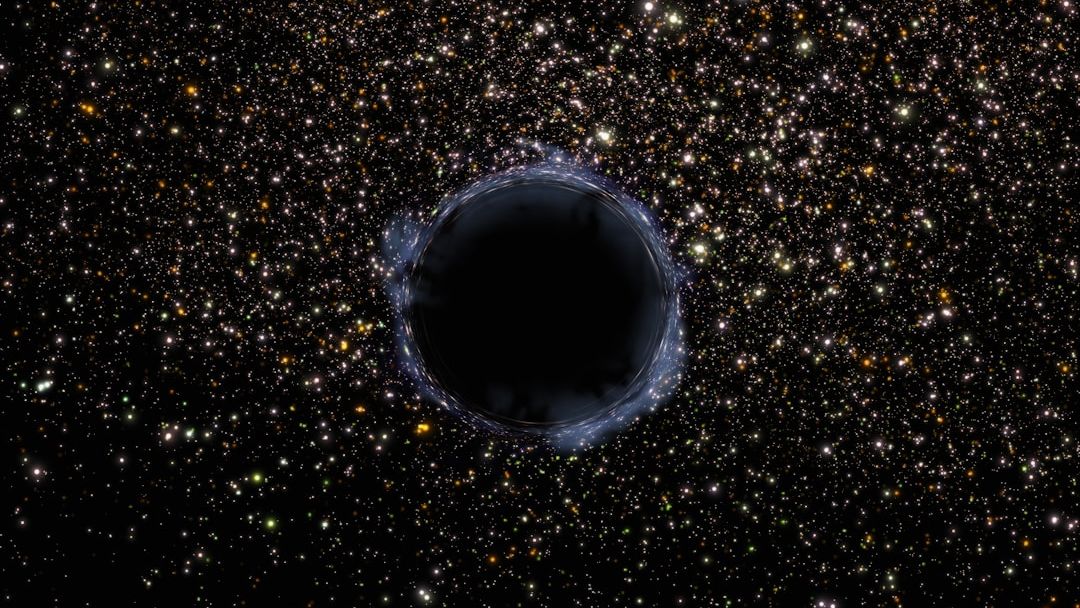
How do the biggest black holes in the universe form? Ripples in spacetime provide a clue – Image for illustrative purposes only (Image credits: Unsplash)
Researchers continue to examine how the largest black holes in the universe come into existence. Observations of merging black holes and neutron stars reveal that these objects often follow elongated oval paths in the moments before they collide. Such patterns stand out because they do not match the smooth, circular orbits that standard models predict.
Patterns in the Final Moments
The oval orbits appear consistently in data from recent detections. Pairs of black holes or a black hole and a neutron star spiral inward along these stretched trajectories rather than tightening into neat circles. This detail emerges directly from measurements of the gravitational signals produced during the mergers.
Physicists note that the shape of these paths carries information about the conditions right before the final plunge. The elongated routes suggest that the objects may have approached each other from wider separations or experienced different gravitational influences than expected. Each new case adds to a growing catalog of events that share this trait.
Challenges to Existing Models
Current theories of black hole formation assume that most mergers occur after long periods of gradual orbital decay. The observed oval shapes introduce tension with that picture. They imply that some systems reach the merger stage through routes that current simulations have not fully captured.
Scientists point out that these findings do not overturn established physics outright. Instead, they highlight gaps in how models account for the final stages of binary evolution. Further detections will help determine whether the oval orbits represent a common pathway or a rarer exception tied to specific environments.
What Remains Unknown
Key questions persist about the origins of these unusual orbits. It is still unclear whether they arise from particular formation channels, such as dense star clusters, or from other dynamical processes. Researchers emphasize that more events must be recorded before firm conclusions can be drawn.
Continued monitoring of spacetime ripples will provide the additional data needed to test revised models. Each confirmed merger refines the understanding of how the universe builds its most massive black holes.