

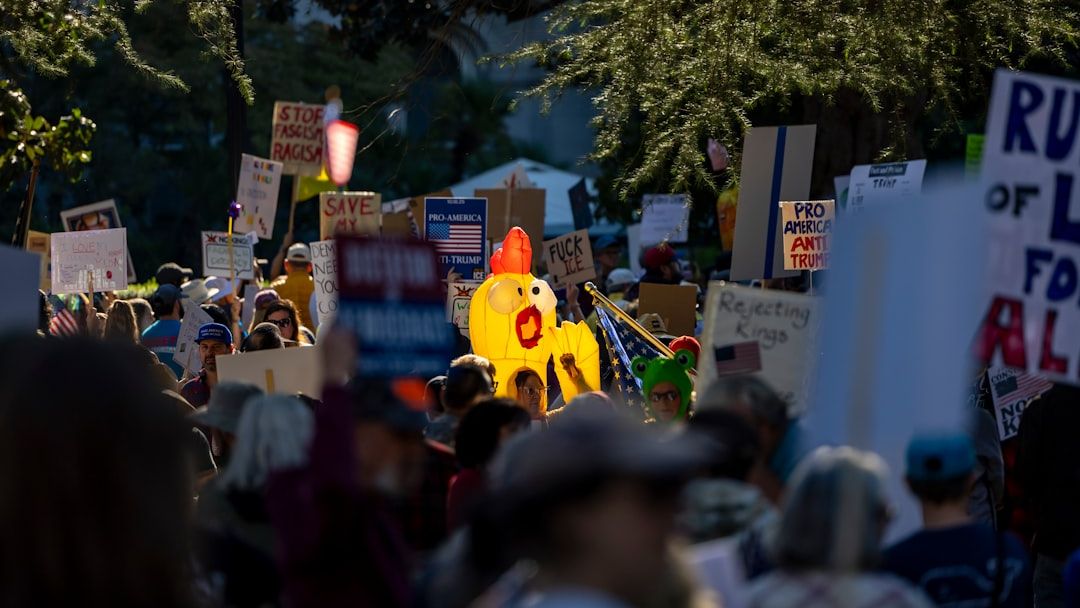
We Need More Men To Join the Anti-Trump Resistance – Image for illustrative purposes only (Image credits: Unsplash)
Activist networks opposing the current administration have grown rapidly since the 2024 election, yet one demographic stands out for its limited presence. Across many local groups, women now make up roughly 80 percent of participants, a shift that organizers describe as both a strength and a constraint. This imbalance raises practical questions about how to broaden participation without diluting focus or momentum. The stakes involve more than numbers; they touch on the long-term durability of efforts to check executive power and protect democratic norms.
The Current Composition of Resistance Groups
Research tracking participation in what some call Resistance 2.0 shows a consistent pattern. Groups are predominantly white, highly educated, female, and middle-aged, according to data compiled by political scientist Dana R. Fisher. During the first Trump term, women already formed about 70 percent of participants and held most leadership roles. The trend has intensified, leaving many organizers to note that men appear conspicuous by their absence in regular meetings, protests, and volunteer shifts.
This shift did not happen overnight. Some men who joined earlier have drifted away, while others who express concern privately remain on the sidelines. Organizers in Brooklyn and similar cities report that their core teams now consist almost entirely of women, prompting quiet discussions about recruitment strategies that feel inclusive rather than exclusionary.
Practical Barriers and Opportunities
One recurring observation is that spaces dominated by women can feel less inviting to men who are not already deeply engaged. At the same time, shared concerns such as the future of public schools and family stability offer natural entry points. Leaders in several cities have begun reaching out specifically to fathers, framing involvement around protecting children’s education and safety rather than abstract political theory.
Broader outreach also requires addressing perceptions that activist environments prioritize certain voices over others. Simple adjustments, such as scheduling events at times convenient for working parents or creating mixed-gender planning committees, have shown early promise in pilot efforts. The goal is not to change the character of existing groups but to expand their reach.
Building Coalitions That Last
Effective resistance has historically drawn strength from diverse coalitions. When participation narrows along gender lines, the movement risks appearing narrower than the issues it addresses. Organizers emphasize that men who join do not need to lead; consistent attendance and willingness to handle logistics or public outreach can make a measurable difference in sustaining pressure on policymakers.
National networks focused on issues like immigration enforcement and judicial independence continue to issue calls for volunteers. These appeals increasingly highlight the need for broad demographic representation to maintain credibility with the wider public. Groups that have experimented with targeted invitations report modest but steady gains in male attendance when the invitation centers on concrete actions rather than ideological alignment.
What Matters Now
The immediate priority for many organizers is converting private frustration into structured participation. This means creating clear pathways for new members, regardless of gender, while preserving the energy that has already mobilized thousands. Success will depend less on dramatic gestures and more on steady, inclusive habits that keep people returning week after week.
Ultimately, the strength of any sustained opposition lies in its ability to reflect the society it seeks to influence. Expanding the circle of active participants remains one of the most direct ways to ensure that resistance efforts retain both scale and staying power in the months ahead.