

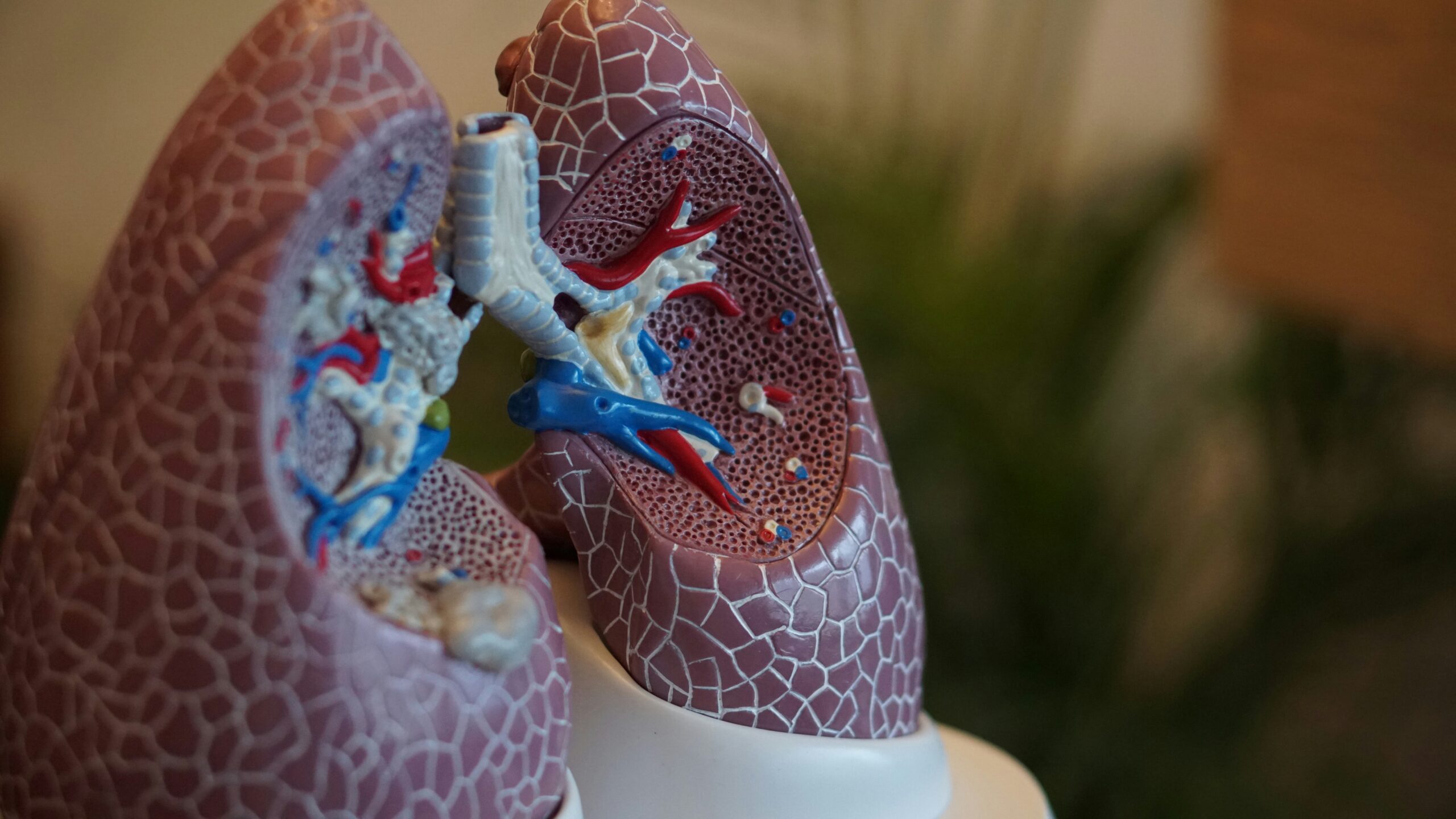
A single human exhale contains roughly 25 sextillion molecules, and the air on Earth is mixed thoroughly enough that statistically, every breath you take contains at least one molecule that was exhaled by Julius Caesar, by Cleopatra, and by every human who has ever lived – Image for illustrative purposes only (Image credits: Unsplash)
Take a quiet moment and draw in a normal breath. The air that fills your lungs right now carries an invisible record of human history. Generations of scientists have shown that the atmosphere mixes so completely that molecules from long-ago exhalations remain available for anyone to inhale today.
The Immense Number in One Ordinary Breath
A typical exhale releases roughly 25 sextillion molecules. Written out, that figure reaches 25 followed by 21 zeros. The human mind struggles to grasp such scale, yet the number matters because it forms the starting point for a precise statistical argument.
Earth’s entire atmosphere holds about 10 to the 44th molecules. When the two quantities are compared, the chance that any single molecule in the air came from one specific ancient breath appears vanishingly small. The calculation changes, however, once the full size of a modern breath enters the picture.
How Air Circulates Across Centuries
Winds, jet streams, and shifting pressure systems move gases around the planet within months. Within two to three years, molecules released anywhere on Earth become distributed throughout the global atmosphere. This steady mixing explains why events far in the past still leave traces in the air people breathe now.
Julius Caesar’s final exhalation on the Ides of March in 44 BC therefore did not remain confined to Rome. The same process applies to Cleopatra’s last breath in 30 BC and to the exhalations of every person who lived long enough ago for complete mixing to occur. Their molecules have been inhaled and exhaled countless times by billions of organisms since then.
The Math That Makes the Claim Likely
Begin with the probability that one random molecule in today’s atmosphere came from Caesar’s last breath. That chance equals roughly two times 10 to the negative 22nd power. Multiplying the complementary probability across all 25 sextillion molecules in a single breath drives the result toward certainty. The outcome is a roughly 99 percent likelihood that at least one Caesar molecule is present in any given inhalation.
The identical reasoning applies to Cleopatra, Shakespeare, and every other historical figure whose final breath had time to disperse. The atmosphere functions as a vast, continuously stirred reservoir. Any gas released thousands of years ago has had ample opportunity to reach every corner of the planet and every pair of lungs alive today.
Yet limits exist. Molecules from dinosaurs that lived 66 million years ago have almost certainly been incorporated into rocks, oceans, or plant matter and no longer circulate freely. The statistical argument holds firmly only for the last few thousand years of human history.
What the Finding Implies for Daily Life
The same air that once filled the lungs of Marcus Aurelius or Joan of Arc now moves through modern bodies. Boundaries between one person’s breath and another’s therefore become less distinct in chemical terms. Every inhalation draws from a shared pool that has accumulated contributions from all earlier generations.
When a person exhales, those molecules re-enter the atmosphere and will be redistributed within a year or two. The cycle has continued without interruption for as long as lungs have existed. The result is a literal, physical connection that links every living individual to every human who has ever breathed.
Key points to remember: every breath contains about 25 sextillion molecules; global mixing occurs in roughly two to three years; the statistical chance of encountering a Caesar molecule exceeds 99 percent; the pattern applies to all humans from the last few thousand years but not to dinosaurs.
The next time an ordinary breath is taken, the air carries more than oxygen and nitrogen. It also carries a measurable trace of lives that ended long ago. That quiet fact turns a routine action into a direct encounter with the past.