

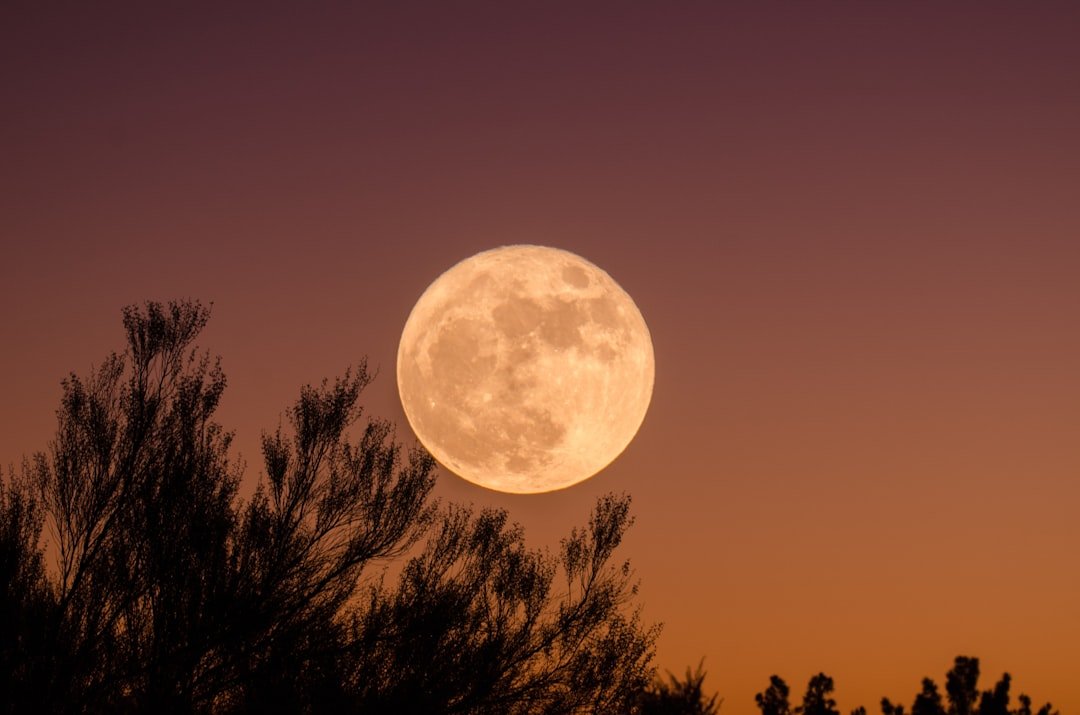
The Science Behind Full Moons (Image Credits: Unsplash)
Stargazers marked 2026 as a banner year for lunar enthusiasts, with 13 full moons gracing the night sky. This unusual tally stemmed from May’s dual illuminations, including a rare blue moon. Observers already reveled in early highlights like the total lunar eclipse during March’s Worm Moon, while supermoons and another eclipse promised more thrills ahead.[1][2]
The Science Behind Full Moons
Earth aligned perfectly between the Sun and Moon during each full moon phase, bathing the lunar near side in sunlight. This opposition made the Moon appear fully illuminated for about three days to human eyes, though the precise peak lasted mere moments. The Moon’s 29.5-day orbit around Earth drove these rhythmic changes, cycling through waxing and waning phases.
Special types added intrigue. A supermoon occurred when the full moon coincided with perigee, the Moon’s closest approach to Earth, amplifying its size and brilliance. Blue moons marked the second full moon in a month, a seasonal rarity. Eclipses brought drama: total ones shrouded the Moon in Earth’s shadow, turning it reddish, while partials dimmed portions of its glow.[1]
Full Moon Schedule for 2026
All times listed below reflect Eastern Daylight Time (EDT) or Eastern Standard Time (EST) as applicable; local observers adjusted accordingly. The year opened with a supermoon and closed with two more, framing a diverse lineup tied to Native American, colonial, and European traditions.
| Date | Traditional Name | Peak Time (Eastern) | Highlights |
|---|---|---|---|
| January 3 | Wolf Moon | 5:03 a.m. | Supermoon |
| February 1 | Snow Moon | 5:09 p.m. | – |
| March 3 | Worm Moon | 6:38 a.m. | Total lunar eclipse |
| April 1 | Pink Moon | 10:12 p.m. | – |
| May 1 | Flower Moon | 1:23 p.m. | – |
| May 31 | Blue Moon | 4:45 a.m. | Second in May; micro full moon |
| June 29 | Strawberry Moon | 7:57 p.m. | Micro full moon |
| July 29 | Buck Moon | 10:36 a.m. | – |
| August 28 | Sturgeon Moon | 12:19 a.m. | Partial lunar eclipse |
| September 26 | Corn Moon | 12:49 p.m. | – |
| October 26 | Hunter’s Moon | 12:12 a.m. | – |
| November 24 | Beaver Moon | 9:54 a.m. | Supermoon |
| December 23 | Cold Moon | 8:28 p.m. | Supermoon |
January’s Wolf Moon evoked winter howls amid deep snows. February’s Snow Moon lived up to its name in many regions. By March, the Worm Moon drew crowds for its eclipse, signaling spring’s thaw. April’s Pink Moon honored early blooms, not its hue.[1]
Traditional Names and Their Origins
These monikers reflected seasonal shifts observed by Indigenous peoples and early settlers. The Wolf Moon in January captured howling packs in the cold. February’s Snow Moon nodded to persistent winter blankets.
- Worm Moon (March): Earthworms emerged as soil softened.
- Pink Moon (April): Phlox flowers painted landscapes pink.
- Flower Moon (May): Wildflowers burst forth.
- Strawberry Moon (June): Berry harvests ripened.
- Buck Moon (July): Male deer sprouted antlers.
- Sturgeon Moon (August): Fish teemed in waters.
- Corn Moon (September): Crops reached maturity.
- Hunter’s Moon (October): Clear skies aided hunts.
- Beaver Moon (November): Rodents prepared dams.
- Cold Moon (December): Bitter winds prevailed.
Such names connected ancient rhythms to modern viewing.[1]
Celestial Showstoppers of the Year
Three supermoons amplified the spectacle: January’s opener, November’s Beaver Moon, and December’s Cold Moon. These appeared up to 14% larger and 30% brighter than average full moons.
Lunar eclipses provided peaks. On March 3, a total eclipse transformed the Worm Moon into a “blood moon” as it passed through Earth’s umbra. August 28’s partial eclipse on the Sturgeon Moon offered a subtler bite from shadow. Both events aligned Sun, Earth, and Moon perfectly.[1][2]
Full moons also influenced tides, creating spring tides with exaggerated highs and lows due to gravitational synergy.
Essential Tips for Moon Gazing
Seek dark skies away from city lights for best views. Binoculars or a small telescope revealed craters and maria. Time outings near moonrise for the “moon illusion,” when it loomed large near the horizon.
Apps and sites like Astronomy.com tracked phases precisely. Weather played a role; clear nights maximized enjoyment.
Key Takeaways
- 2026 featured 13 full moons, highlighted by May’s blue moon.
- Three supermoons and two eclipses stood out.
- Traditional names linked celestial events to earthly cycles.
2026’s lunar parade reminded us of the sky’s timeless dance. Which full moon captured your imagination most? Tell us in the comments.