


Most people reach for their phone within the first minute of waking up. Notifications, emails, the relentless scroll. It’s become a morning ritual so common that questioning it feels almost strange. Yet researchers studying the biology of sleep, hormones, and cognition keep pointing to a different kind of morning habit – one that’s completely free, takes less than thirty minutes, and involves nothing more than stepping outside.
The evidence gathered over the past few years suggests that viewing natural morning light isn’t just pleasant. It may be the single most powerful environmental signal you can give your body to optimize how you think, feel, and perform for the rest of the day.
The Master Clock Inside Your Brain
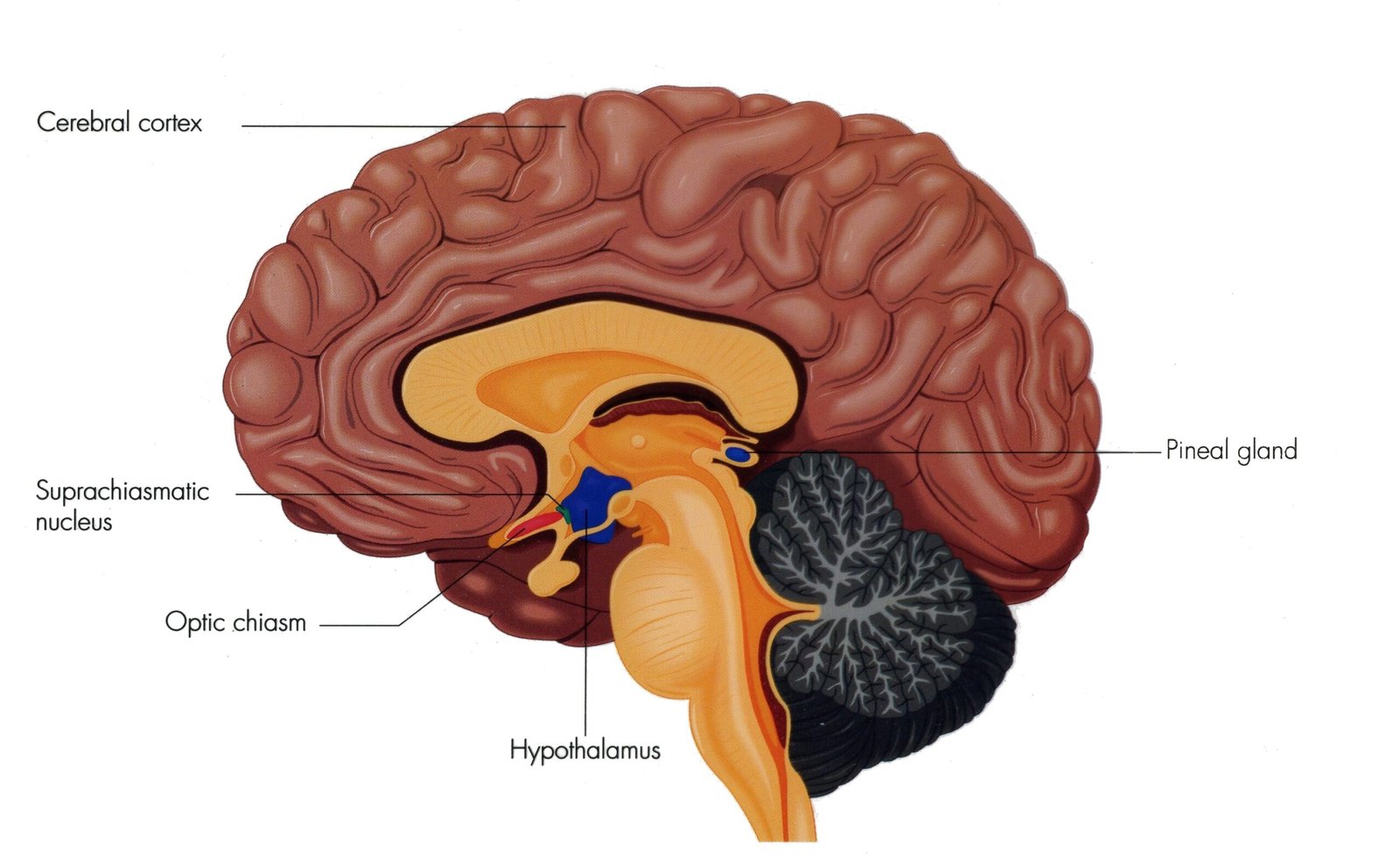
The suprachiasmatic nucleus, known as the SCN, is a bilateral structure located in the anterior part of the hypothalamus. It serves as the central pacemaker of the circadian timing system and regulates most circadian rhythms throughout the body. Think of it as the conductor of an orchestra – quietly synchronizing dozens of biological processes so they all fire at the right time.
The SCN’s major input tract is the retinohypothalamic tract, which originates from photosensitive ganglion cells in the retina. Efferent projections from the SCN then innervate structures such as the pineal gland, which produces melatonin during the night to induce sleep. The whole cascade, from perception to hormone release, begins with what your eyes absorb each morning.
Many aspects of mammalian behavior and physiology show circadian rhythmicity, including sleep, physical activity, alertness, hormone levels, body temperature, immune function, and digestive activity. Disrupting even one of these processes tends to ripple outward, affecting the others in ways that aren’t always immediately obvious.
Why Outdoor Light Is in a Different League

Most people spend their mornings in indoor environments, and they assume the light around them is adequate for their needs. Biologically speaking, it often isn’t. Outdoor light intensity on a clear morning can reach between 10,000 and 100,000 lux, while typical indoor lighting registers at somewhere between 100 and 500 lux, according to Harvard Health Publishing. The gap is enormous, and the body notices it.
The circadian rhythm is controlled by a small part of the brain that is powerfully influenced by light exposure. When light enters the eye, it is sensed by a special group of cells on the retina, which carry that signal to the brain and interpret it as information about the time of day. The brain then sends signals throughout the body to control organs and other systems in accordance with that time of day.
When exposed to only natural light, a person’s circadian rhythm becomes closely synchronized with sunrise and sunset, staying awake during the day and sleeping when it’s dark. Modern indoor life has pulled us far from that baseline, and our biology is still catching up.
The Cortisol Connection: Your Built-In Morning Fuel

Among the hormones regulated by circadian rhythms, cortisol plays a pivotal role in maintaining homeostasis. Secreted by the adrenal glands under the control of the hypothalamic-pituitary-adrenal axis, cortisol exhibits a pronounced diurnal pattern. Its levels peak in the early morning, promoting wakefulness, alertness, and metabolic preparedness, before gradually declining throughout the day to facilitate rest and recovery.
Research shows that the early morning transition from dim to bright light suppresses melatonin secretion, induces an immediate, greater than 50% elevation of cortisol levels, and limits the deterioration of alertness normally associated with overnight sleep deprivation. This isn’t a modest effect. It’s a dramatic hormonal shift that can happen in minutes.
Regular morning light exposure can help normalize cortisol patterns in people with disrupted stress hormone rhythms, potentially improving energy levels, mood, and stress resilience. The effects appear to be cumulative, with consistent daily light exposure producing more stable improvements in cortisol regulation than intermittent exposure.
Sleep Quality Starts at Sunrise, Not at Bedtime

Here’s something most sleep advice gets backward: the quality of your sleep tonight depends heavily on what you do with light this morning. Exposure to natural light, especially sunlight, can modulate sleep patterns by affecting the synchronization of the circadian clock with the external environment. Research has shown that light exposure during the day, particularly in the morning, is linked to improved sleep outcomes, including better sleep quality, faster sleep onset, and longer sleep duration.
A daily diary study among U.S. adults found that the timing of sunlight exposure predicted next-night sleep quality. Specifically, morning sunlight exposure, relative to no sunlight, predicted better sleep quality based on responses to the Pittsburgh Sleep Quality Index. The direction of causality matters here – light in the morning sets the stage for rest at night.
The results of one study highlight the importance of morning sun exposure for regulating sleep midpoint and overall sleep quality. The significant reduction in sleep midpoint with morning exposure suggests that sunlight may play a crucial role in adjusting circadian rhythms. Early morning light exposure can help align the internal circadian clock, contributing to healthier sleep patterns.
When You Don’t Get Morning Light: The Depression Risk

The consequences of skipping morning light aren’t simply a groggy start to the day. The biology runs deeper. Spending the morning hours in dim indoor lighting may cause healthy individuals to exhibit biological changes typically seen in people with depression. A study published in the Journal of Psychiatric Research indicates that a lack of bright light before noon can disrupt sleep cycles and hormonal rhythms. These physiological shifts suggest that dimly lit environments could increase a person’s vulnerability to mood disorders.
Research found that in healthy subjects, repetitive exposure to low-intensity lighting during pre-midday hours was associated with increased cortisol levels over the day and delayed slow-wave activity within nighttime sleep, changes known to occur in patients with depressive illnesses. Insomnia-like changes in sleep architecture may increase vulnerability to depression. This is notable because these were not people already struggling with mood disorders – they were healthy adults.
A bidirectional relationship exists between mood disorders and circadian rhythms. Mood disorders are often associated with disrupted circadian clock-controlled responses, such as sleep and cortisol secretion, whereas disruption of circadian rhythms via jet lag, night-shift work, or exposure to artificial light at night, can precipitate or exacerbate affective symptoms in susceptible individuals.
Cognitive Performance and the Circadian Edge
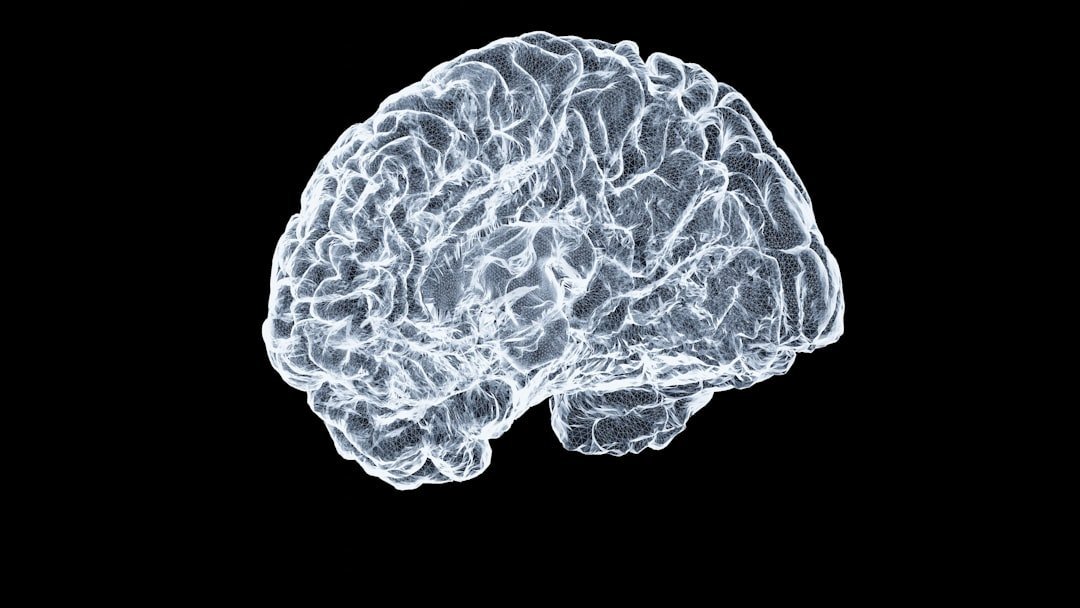
Circadian disruption doesn’t just affect mood. It takes a measurable toll on how the brain performs. Proper alignment of activity-rest and light-dark patterns allows for healthy bodily functions to occur at optimal times of the day. Disruptions to this alignment may cause poor sleep as well as physical, mental, and cognitive problems.
Lack of entrainment, or circadian disruption, has been associated with various maladies such as reduced insulin sensitivity, cardiovascular dysfunction, and sleep and mood disorders. Night shift workers commonly suffer from circadian disruption, which has been found to reduce executive function, sustained attention, visual motor performance, and processing times.
Sleep of sufficient duration, continuity, and intensity without circadian disruption is necessary to promote high levels of attention and cognitive performance during the wake period, and to prevent physiological changes that may predispose individuals to adverse health outcomes. Morning light, by anchoring the body clock, protects that entire system downstream.
The Scale of the Problem: How Many Adults Are Affected

Poor sleep tied to circadian disruption is not a niche issue. According to the CDC, roughly one in three adults in the U.S. is not getting adequate sleep, and the downstream consequences are serious. Emerging evidence links sleep deprivation to adverse cardiometabolic health and cognitive health and an increased risk of dementia among older adults, making it an important acquired risk factor in the 21st century.
Growing research indicates that racial and ethnic minority groups are disproportionately affected by sleep and circadian disparities, which exacerbate chronic disease disparities. Today’s 24-hour lifestyle, coupled with the pervasive use of electronics and social media, has normalized inadequate sleep among many children and adolescents, with uncertain effects on brain development, mental health, and vascular health.
Excess or poorly timed artificial light exposure can cause a person’s circadian rhythm to be misaligned with the day-night schedule. This can throw sleep out of balance and induce other concerning health impacts including worsened metabolism, weight gain, cardiovascular problems, and perhaps even an elevated cancer risk. The pattern is clear, and it starts with what light we receive – and when.
Light, Dopamine, and Daily Motivation

Beyond cortisol, morning light exposure influences the brain’s dopamine and motivational systems. In the morning and until the midafternoon, bright overhead lights facilitate the release of dopamine, norepinephrine, and epinephrine – molecules associated with motivation, attention, and drive – as well as optimal amounts of cortisol to maximize alertness and focus.
Scientific evidence published over the last four decades has shown that retinal light exposure influences physiology, behavior, and emotion. More specifically, it modulates human sleep, circadian rhythms, alertness, mood, neuroendocrine and neurobehavioral functions. The scope of what light does to the brain is far broader than most people realize.
Viewing sunlight within the first hours of waking increases early-day cortisol release – the ideal time for elevated cortisol – and prepares the body for sleep later that night. A morning spike in cortisol also positively influences the immune system, metabolism, and ability to focus during the day. That’s a notable list of benefits from a single, simple habit.
Light and the Body’s Peripheral Clocks

The SCN doesn’t operate in isolation. It coordinates far more than just sleep. As the master oscillator, the suprachiasmatic nucleus uses humoral and neuronal inputs to coordinate peripheral circadian clocks. Peripheral organs including the lung, liver, kidney, heart, and muscle all produce circadian gene expression based on the combination of photic input to the SCN and non-photic input such as the timing of food intake or motor activity.
Morning exposure to blue-rich sunlight enhances insulin sensitivity and mitochondrial function, making it an excellent time for nutrient-dense breakfasts. The link between light exposure and metabolism is increasingly well-supported, suggesting that circadian alignment through morning light may benefit not just the brain but the entire body.
Morning sunlight offers additional benefits beyond circadian regulation. This early-day exposure provides a natural form of red-light therapy, influencing mitochondrial function, reducing inflammation, and stimulating collagen production. Research in this area continues to expand, and the picture keeps getting more interesting.
How Much Morning Light Is Actually Needed

The good news is that the threshold for benefit is remarkably accessible. According to the Sleep Foundation, experts generally recommend between ten and thirty minutes of morning sunlight exposure daily to properly regulate circadian rhythms, though that range depends on weather conditions and light intensity. Overcast days still count – they just require a bit more time outside.
On a sunny morning, getting outside for five to ten minutes is sufficient. You can do more if time allows, and the outdoor time can be combined with exercise, walking, or a light breakfast. Even on overcast days, there is still enough sunlight to trigger positive effects, though you’ll need to increase the time outside to at least fifteen to twenty minutes.
Viewing sunlight for five to ten minutes within the first few hours of waking – even when it’s cloudy – allows for cortisol to release at the ideal time and prepares the body for sleep later that night. Consistency matters more than intensity. The daily repetition is what gives the circadian system its stability.
Conclusion

The science of circadian biology has grown considerably over the past few years, and one message keeps coming through clearly: light timing is not a minor lifestyle variable. It’s a foundational biological signal that shapes alertness, mood, sleep architecture, hormonal patterns, and cognitive performance – all from a single daily cue.
The sunrise isn’t just a nice way to start the day. It’s the body’s primary synchronization signal, and there’s mounting evidence that engaging with it consistently has effects that extend well beyond how awake you feel at nine in the morning. In a world full of productivity tools and optimization strategies, this one requires no subscription, no technology, and no expertise.
Step outside. Let the light in. The biology takes care of the rest.