

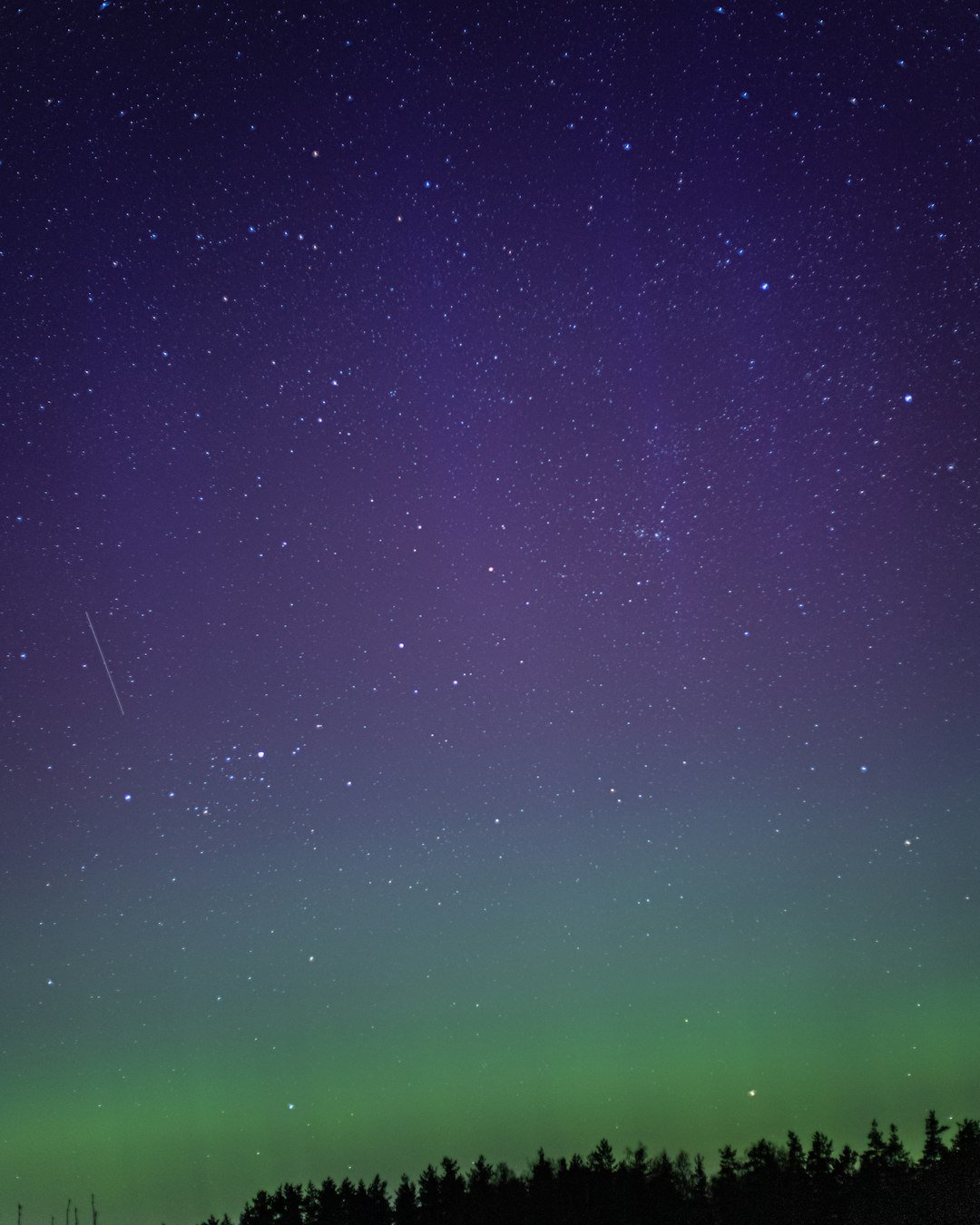
Ancient Origins of the Lyrids (Image Credits: Unsplash)
One of the sky’s earliest harbingers of spring, the Lyrid meteor shower returns each April, captivating observers with swift streaks of light. In 2026, conditions align particularly well for skywatchers, offering a dark, moonless backdrop during the peak. Active from April 15 to 29, the shower promises memorable displays for those who venture out at the right time.[1][2]
Ancient Origins of the Lyrids
Records of the Lyrid meteor shower date back over 2,700 years, making it one of the oldest known celestial events observed by humans. Chinese astronomers first noted it in 687 B.C., describing fiery displays from the Lyra constellation. The shower stems from debris shed by Comet C/1861 G1 Thatcher, discovered by amateur astronomer Alfred E. Thatcher in 1861.[1]
Thatcher follows a 415-year orbit around the sun, stretching far beyond the outer planets. Earth crosses this dusty trail annually in April, igniting particles as they burn up in the atmosphere at 49 kilometers per second. Planetary gravity occasionally concentrates the debris, sparking rare outbursts of up to 100 meteors per hour, though the next such event remains years away.[1]
2026 Peak: Timing and Sky Conditions
Astronomers predict the 2026 peak at 19:15 UTC on April 22, placing the optimal viewing window after local midnight into predawn hours. The radiant – the point from which meteors appear to stream – rises in the northeast before midnight near brilliant Vega in Lyra. By dawn, it soars overhead in the Northern Hemisphere, maximizing sightings.[1][3]
A waxing crescent moon sets soon after midnight on the peak night, yielding pristine dark skies. The first quarter phase arrives April 24 at 2:32 UTC, ensuring minimal interference. Expect 10 to 15 meteors per hour under ideal conditions, with rates potentially higher during active periods.[1]
Tips for Spotting the Lyrids
Success hinges on preparation and patience. Seek locations far from city lights, classified as Bortle 2 or darker on sky darkness scales. Allow 30 minutes for eyes to adapt to the night, then recline to scan the entire dome overhead – Meteors can streak anywhere, though they trace back to the radiant.[1]
Comfort matters for long sessions. Bring blankets, warm drinks, and a reclining chair. No telescopes or binoculars needed; naked-eye viewing captures the full spectacle. Track fireballs – exceptionally bright meteors – via organizations like the American Meteor Society for citizen science contributions.[1]
- Arrive post-sunset to acclimate eyes.
- Face east after midnight toward Vega.
- Watch until dawn for highest radiant elevation.
- Photograph with wide-angle time-lapses if equipped.
- Report sightings to EarthSky or similar sites.
Signature Features and Global Reach
Lyrids stand out for their speed and brilliance. Meteors often glow in vivid hues – green, yellow, red – from ionized metals. Persistent trains, glowing ionized gas trails, linger seconds after passage, especially in moist air. Fireballs rival Venus in luster, delighting observers.[1]
Northern Hemisphere viewers enjoy prime prospects, with the radiant climbing high. Southern observers see fewer, as the radiant hugs the northern horizon pre-dawn. Still, scattered meteors appear worldwide during the active period from April 15-29.[1]
Key Takeaways
- Peak after midnight April 22 under moonless skies for 10-15 meteors/hour.
- Source: Comet Thatcher’s debris; known for fireballs and trains.
- Best in dark Northern Hemisphere sites; no equipment required.
The 2026 Lyrids offer a reliable spring treat, blending ancient history with cosmic fireworks. Mark your calendar for April 22 and step outside to connect with the universe’s enduring rhythms. What do you think about it? Tell us in the comments.